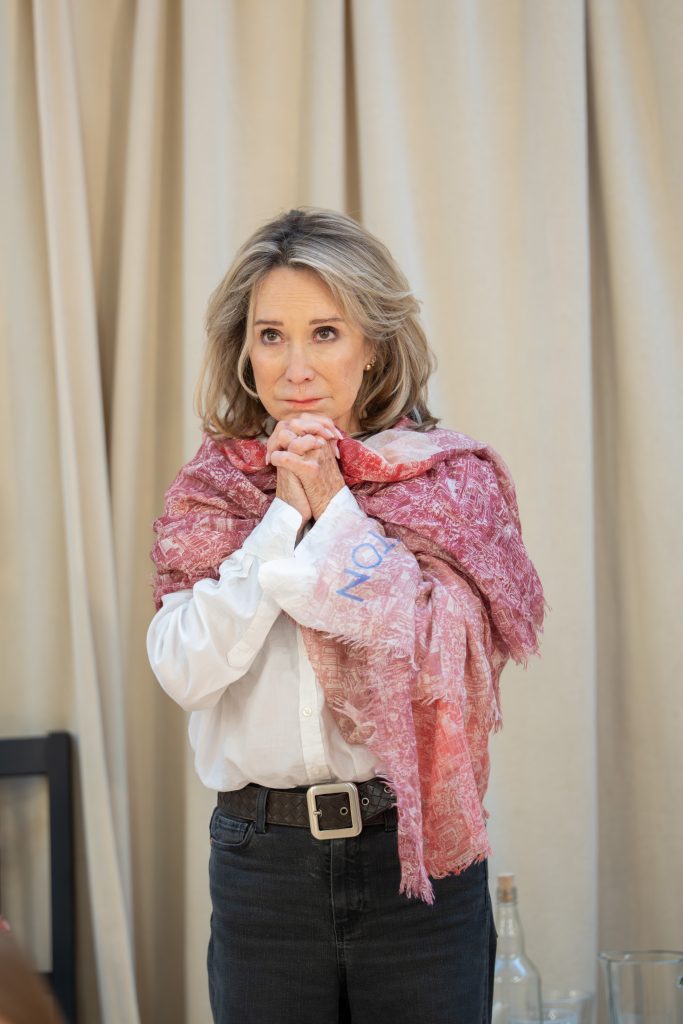
If you have ever wondered who might qualify as a stand-up citizen of Chelsea, then Felicity Kendal can take a bow. In the past few years alone, she has lent her celebrity name to give publicity oxygen to multiple worthy local battles: the houseboat owners’ fight against their “predatory” landlord, the M&S development, road safety on Cheyne Walk, save the fire station, save Tite Street, save Battersea Bridge. And these are just the battles that Yours Truly has asked her to help out with.
Now 79, Felicity first moved to Chelsea in the mid-1960s. She’s not quite sure which year because, she admits, she’s “bloody useless on dates and stuff”. After spending her childhood on the road in India acting in her parents’ Shakespeare touring company, Chelsea became her first real home town and she has lived here pretty much ever since, by way of short stays in Shepperton, Putney, Fulham and Maida Vale.
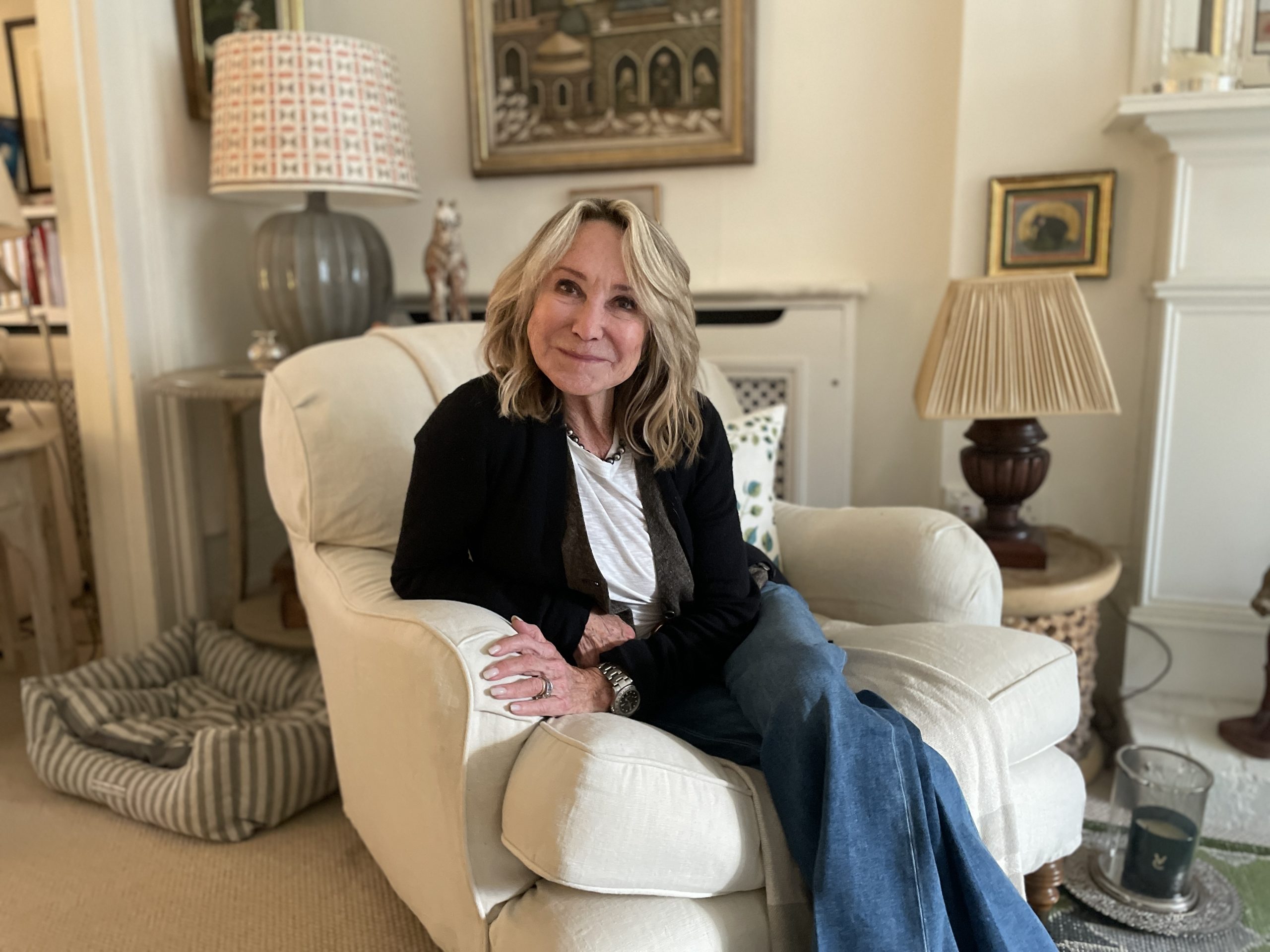
For this piece, we chatted in the living room of her exquisite Chelsea house. It is light and homely and lacking in any pretension, or modernisation. There’s no iceberg basement dig out here, with their signature spa and cinema. High ceilings (14ft?), soft neutral furniture, splashes of bright colour, Indian artwork on the walls. She moved here in 1993, and Chelsea has become her permanent home and a dearly loved location.
Our full conversation may run as a podcast, just as soon as The Chelsea Citizen’s YouTube channel (CCTV. Tah ting) is launched. Until then, here are some key extracts about Felicity’s sixty years of the good life in Chelsea.
Felicity opens tonight in the late Tom Stoppard’s play Indian Ink at Hampstead Theatre. On until 31st January. Book HERE
“The flat was teeny and had nothing in it, but I thought I’d died and gone to heaven”
‘I never had anywhere that I could say, That’s mine, I’m closing the door and you can’t come in. There was never a key to a house or anything. We were always on the move in India throughout my childhood. My home was a hotel, or a room in someone’s house, or a space on the floor of a train. Then I moved to England when I was about 17, and I stayed in little digs. I think my first place was a terrible little rat hole in Earl’s Court. I just got the cheapest I could.
‘I stayed once with a very posh, sweet gay friend of mine in his amazingly gorgeous, antique-filled flat in Knightsbridge. Then he had another house in Shepherd Market by the Curzon, where I used to get picked up regularly. I didn’t know it was a pick-up street. I just thought, they’re very annoying, these old men that keep coming up and saying, “Would you like a drink?” I said, No, thank you.
‘Then eventually, I got a few jobs, and I rented a one-bedroom, teeny flat in Swan Court by Albert Bridge for very little money. It cost eight pounds (per week), I think. It was on the fourth floor, overlooking the river. I rented it from an actress for about a year because she went to America to try and get a job. I’ve forgotten her name! She was quite well known. She was in films. I’d met her on the circuit. I was just at the beginning of working as an actress, so she let it to me for hardly anything.
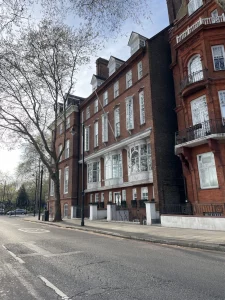
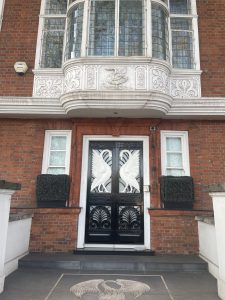
‘The flat had nothing at all, except a little fridge and a big, ornate, gilt mirror and a single mattress on the floor, and that was it. These were the hippie times. I just loved it. I thought I had died and gone to heaven. I’ve never been so happy. A year later, she decided not to come back, and she sold it to me. I thought it was a fortune, but it was for nothing, and that was my Chelsea base for about four years.
‘My sister (Jennifer) also had a flat in Swan Court and, in the end, my mother had a flat there as well. So there were three flats that we had at various times over the years. Sybil Thorndike lived there at the time and so did the great theatre critic – you know. Oh what’s-his-name? I can’t bloody remember that either!’ (It was Harold Hobson. Here to help).
“We were all broke, but being broke in the 1960s was not as hard as it is now for young people”
‘I was a young, mostly out of work, impoverished actress, but Chelsea in the 1960s was the most buzzy, fun, comfortable, easy place. It was just heaven on earth. It was full of students, full of old-age pensioners, full of a complete mixture, but it was also a residential place. There weren’t any big shops. I think Boots was probably the biggest, and that was tiny (maybe she means Woolworths, which was on the King’s Road, opposite Duke of York Square in the 60s). There was Russell and Bromley, and that was terribly posh.
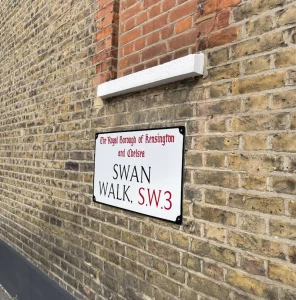
‘There was the art shop, a hardware store, a butcher off Swan Walk. Flood Street had pubs, and there were wine shops where you could go in and ask for a glass of wine. I mean, all that was very new. Then on the weekends, you’d get the superstars, like Twiggy, and the models walking up and down, and sports cars. It was a really fun place to be. It was absolutely buzzy.
‘We’d go to the pizza shop on Flood Street, and a pub on the corner, which isn’t there anymore. I’d eat at the Chelsea Kitchen and Stock Pot because you could go and get a meal for nothing, and you knew you wouldn’t be hungry when you came out. There was usually somebody you knew in there, because we were all in the same boat. You had one meal and a glass of water, or a cup of tea. And it was fun, it was lovely. Most actors were broke, but having no money was not as bad as it is now for people. I think the young people now need more just to be broke!
‘After I got married (to Drew Henley in 1968), we lived in Shepperton and then in Putney. When I divorced Drew, I had a flat in Rivermead Court near the Hurlingham Club in Fulham. After that, I went to Warwick Avenue to live, and then I came back to Chelsea. I rented this house at first and then I bought it privately from the owner.’
“Chelsea Green is still like a little traditional village with the butcher, the baker, the grocer and the candlestick maker”
‘Chelsea has got busier over the years, and the shops have got bigger, but it still has the little individual eccentricities that you expect in a small town or a village. Luckily, this sort of thing is working beautifully in Chelsea Green and it is thriving. The council built the little fountain and some new seats a while ago, and it all works beautifully.
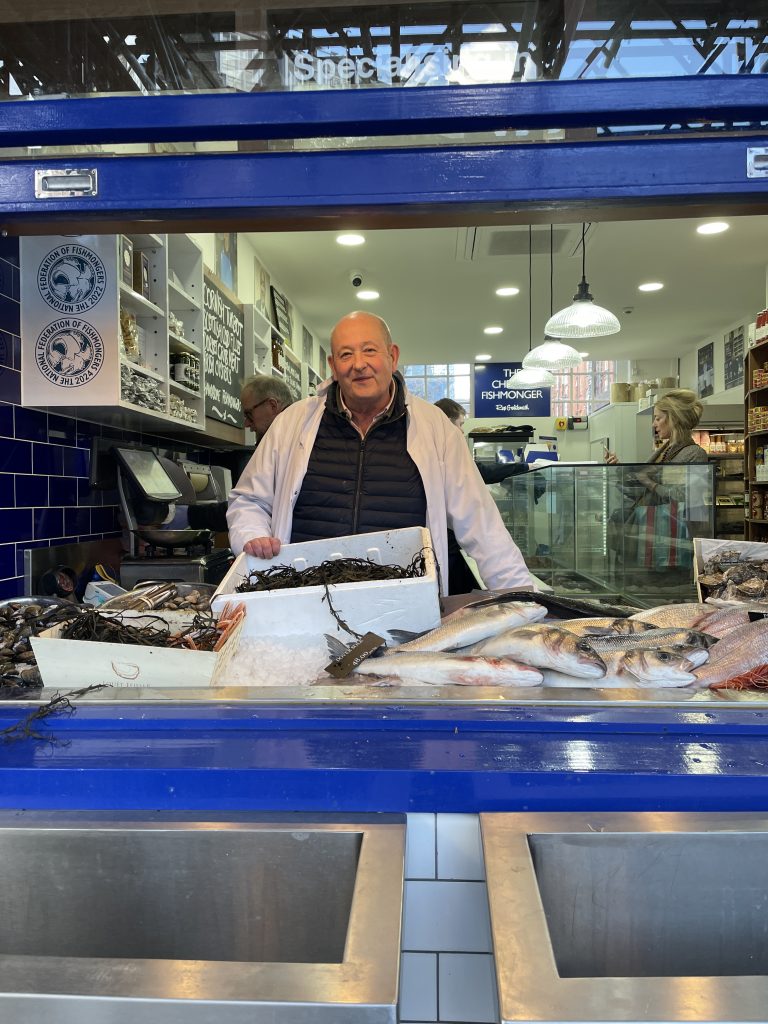
‘They haven’t been able to build those horrible flats (at Sutton Dwellings). It still has a fishmonger (Rex Goldsmith at The Chelsea Fishmonger). You ask him, and he will tell you how to cook something, and you have a conversation. That’s just how it should be. You’re not standing there going Ping at some machine. In a supermarket, you just go Ping, Ping, Ping all the time. I mean, the poor people working there all day long, their little brains are being pinged out of any kind of sense.
‘There, there’s the best greengrocer in the world – Andreas. I go there all the time. There’s no plastic, it’s all paper, they care. Andreas has every single thing you can imagine, and one apple from there is nicer than two from anywhere else.
-

- Rex Goldsmith
-
- Birley Bakery

-
- Finns

‘Then you’ve got the dry cleaners, and Birley Bakery, which is amazing and always completely full. Then you’ve got a little coffee shop called Finns, where everything is completely homemade. I often get a takeaway meal for dinner, which is always totally delicious.
‘Chelsea Green isn’t the cheapest area in the world, but in order to survive in that spot, they have to be a little more expensive. But at least they are there in a combination that serves the community. You know – chemist, butcher, baker, candlestick maker. They’re all wonderful.’
“Ebi the chemist runs the most invaluable establishment for the community. Everyone talks to him. He holds all the secrets of Chelsea!”
‘There is so much I love about Chelsea. Green and Stone – I have used them for yonks. I was always in there when they were on the King’s Road and I still go to the Fulham Road shop. All the art stuff for my grandkids was bought there, and all the artwork in the house was framed by them. Wonderful people – and they have the best selection of cards. It’s just a beautiful place to visit and be inspired.
‘Then there is Ebi, who has been the I.T. Lloyds chemist on the King’s Road for 30-odd years. He is Muslim and has a multi-cultural staff of wonderful people. Ebi is the star of Chelsea. People quietly talk to him about medical conditions and life. He is funny and wise. He holds all the secrets of Chelsea! I’m sure that if you mention him to anyone in Chelsea, they will know Ebi. He got an OBE and with good reason. He and his staff run the most invaluable local establishment.
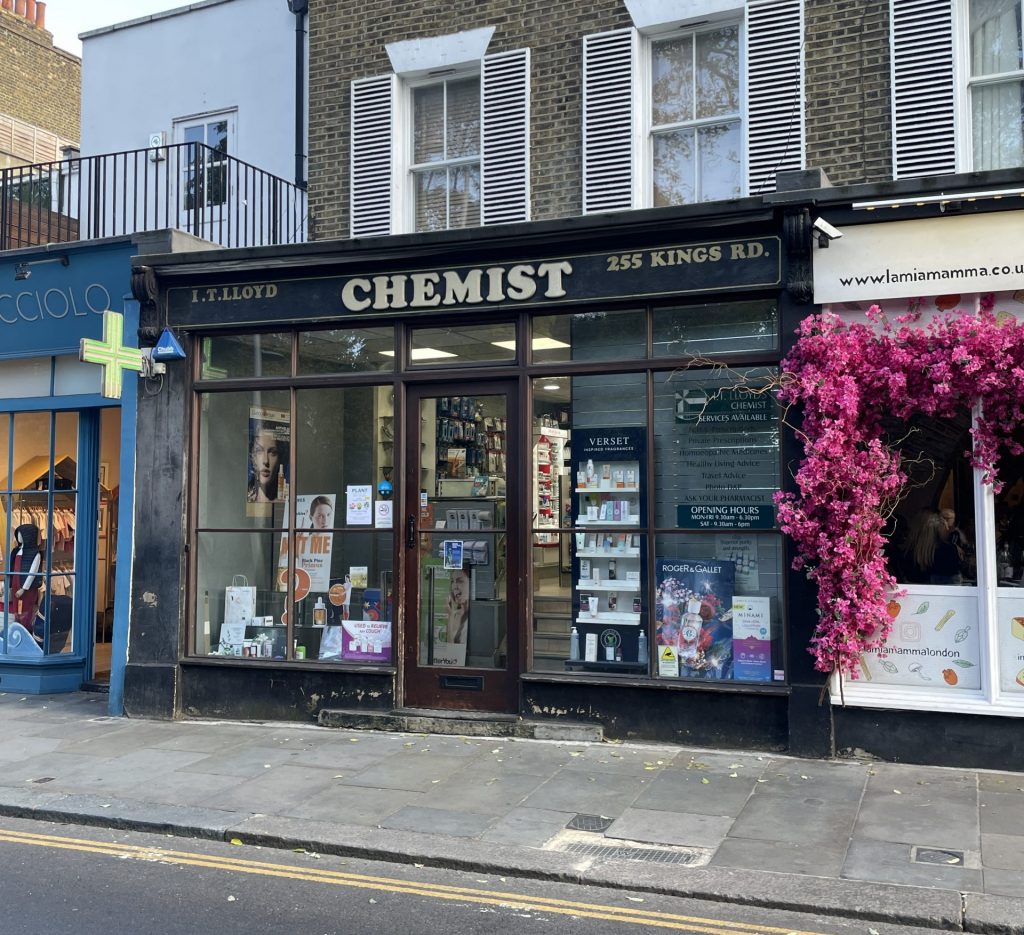
‘Near there is Chelsea Food Fayre (Londis), which is run by an Indian family and has everything from newspapers, to butter and booze, to tape measures and shirt buttons, and is open all hours. I have needed them for more emergencies than I can remember.
‘John Sandoe is the best book shop in the world. The knowledge and experience of the staff are extraordinary. I went in a while ago and told them a line from a book, but I didn’t know the title, and they found it for me in a flash! There are piles of exciting books stacked everywhere, with students and all kinds of people browsing and reading. Such a wonderful place for words.
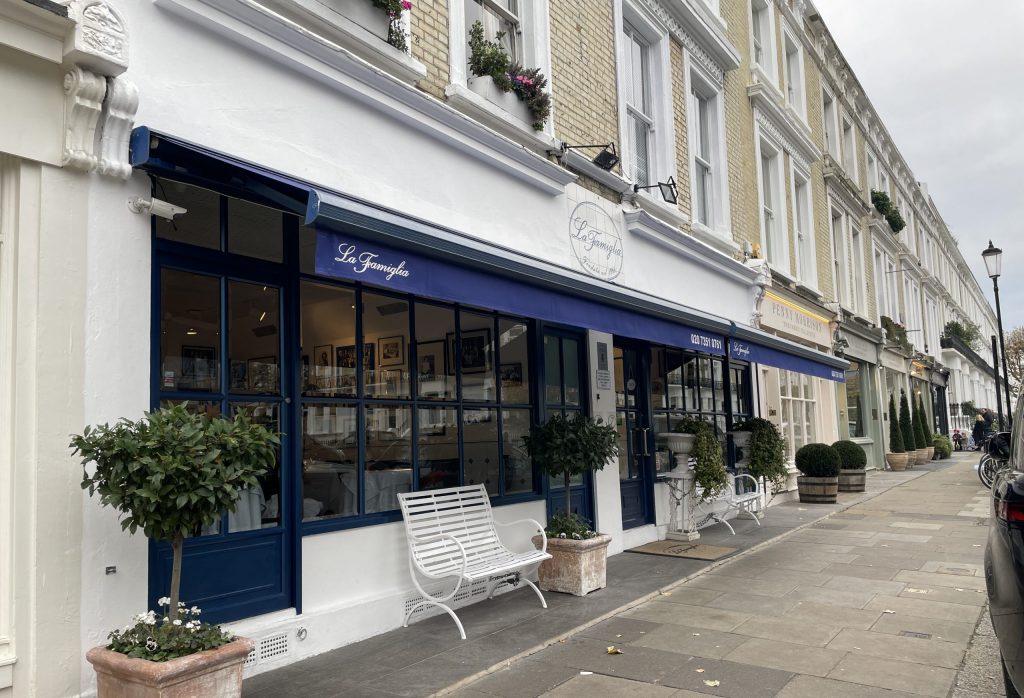
‘There are so many fabulous places to eat out in Chelsea. Michael and I used to go to La Famiglia every week and I still love it. Spaghetti vongole for me and lots of wine. Then there is Riccardo’s and La Delizia for pizza. Colbert on Sloane Square is always fun. Michael Winner took us to Daphne’s a few times, which was hilarious. He was such a character.’
-
- The deliciously iconic La Famiglia restaurant
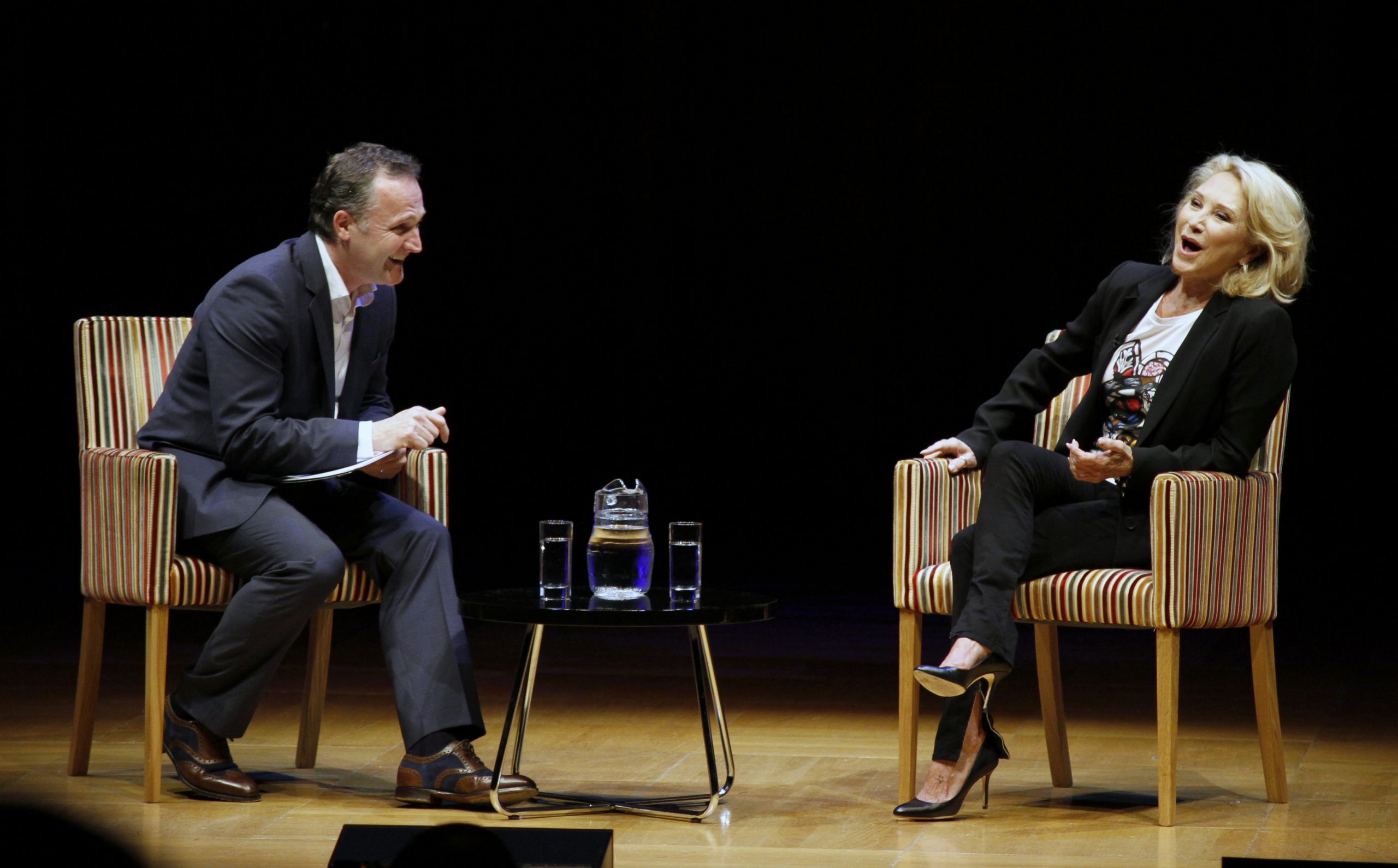
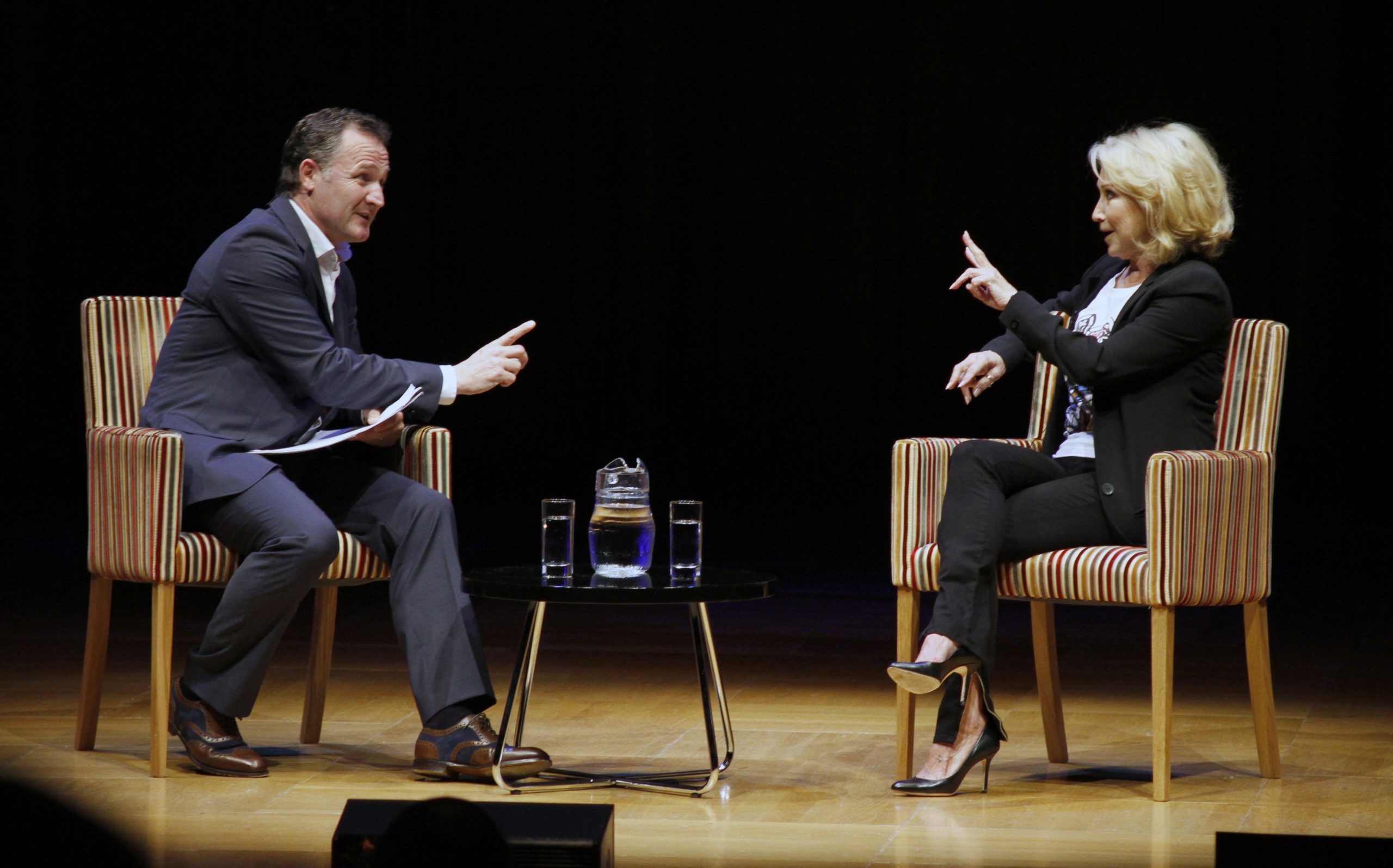
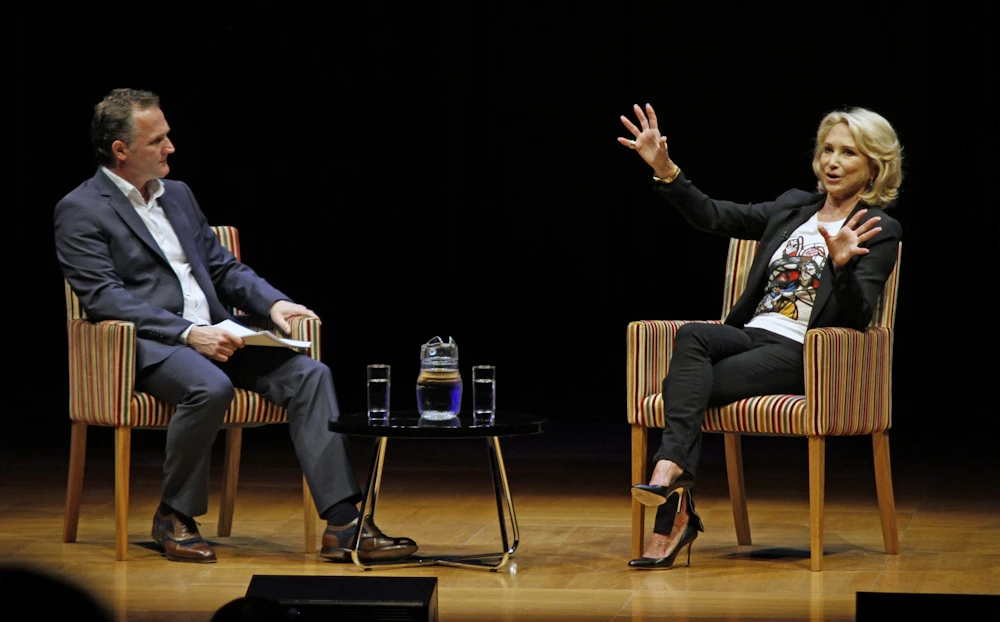
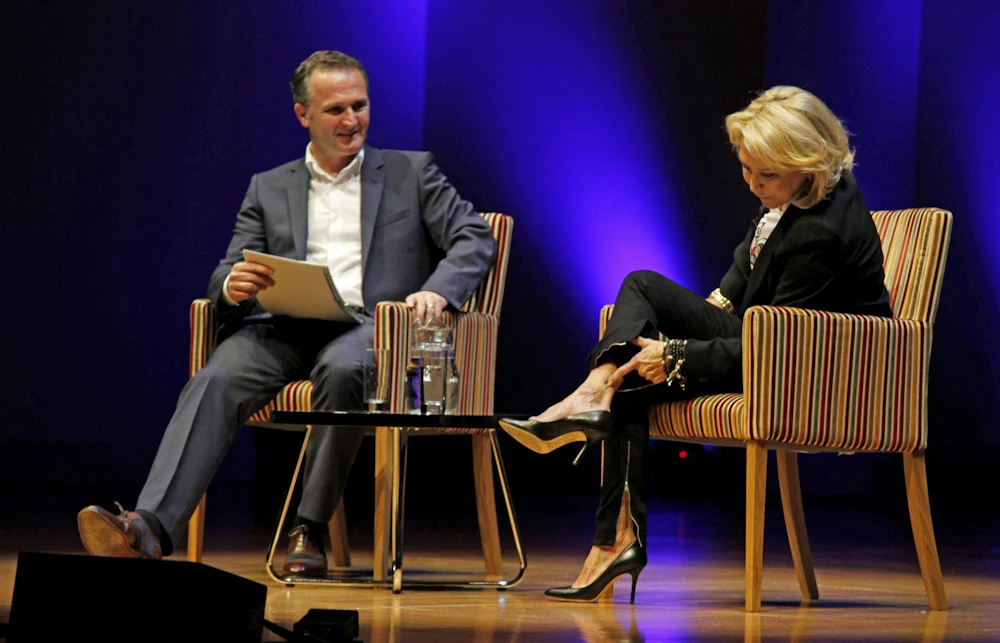
Rob McGibbon interviews Felicity Kendal at Cadogan Hall in 2012 Photo © Hattie Miles
“The house is too big for me, and I will move at some point. I will probably stay in Chelsea. We shall see…”
‘Not all things have changed for the better in Chelsea. I have noticed how many homes are empty these days. I walk my dog, Rufus, at night, and you’d be hard pushed to find a light on in some streets. There’s nobody in them at night – unless they go to bed very, very early! It’s terrible because it means people aren’t living in an area. It’s just so sad that these beautiful homes are not used. It is pure extravagance and profit-making. What if half of Chelsea was owned by people who didn’t live here? It will be dead.
‘I would change the fact that there are so many big empty houses. I don’t know how to change that. It is crazy because it’s a waste. I hope the council can do something. My big worry is how the younger people will ever be able to afford to live here.
‘Crime has definitely got worse around here. There are muggings and phone snatches, and it is appalling. Within three days, I saw three snatches of phones. One on the King’s Road, one by Draycott Avenue and another one in Sloane Square.
‘I was walking Rufus one evening, and three bikes went on the pavement, smashed a car window, and then somebody screamed. It was sort of boom, boom, boom, and it was over. They got the phone and something else.
‘I was just parking near Draycott Avenue the next day, and there was a young lady walking. Again, three or four push bikes surrounded her. It was like Spaghetti Junction. She gave a shout, and I thought, this can’t happen, so I banged on the horn like an idiot and started shouting. They got so far, they threw it down, and she got her phone back!
‘Whatever changes have happened, I still love living in Chelsea. This house has been a very kind house and a very easy one. I don’t know what’s going to happen to it eventually. It’s too big for me, and I’m not sure the family want to take it on.
‘When the time is right, I will move. I think that I have one more gorgeous place to live in. There’s something about staying in the same place too long that doesn’t sit well with me, and I have been here a long time. Chelsea is special, so I will probably stay in the area, maybe somewhere by the river, somewhere with skies and less traffic! I don’t know yet…’

-
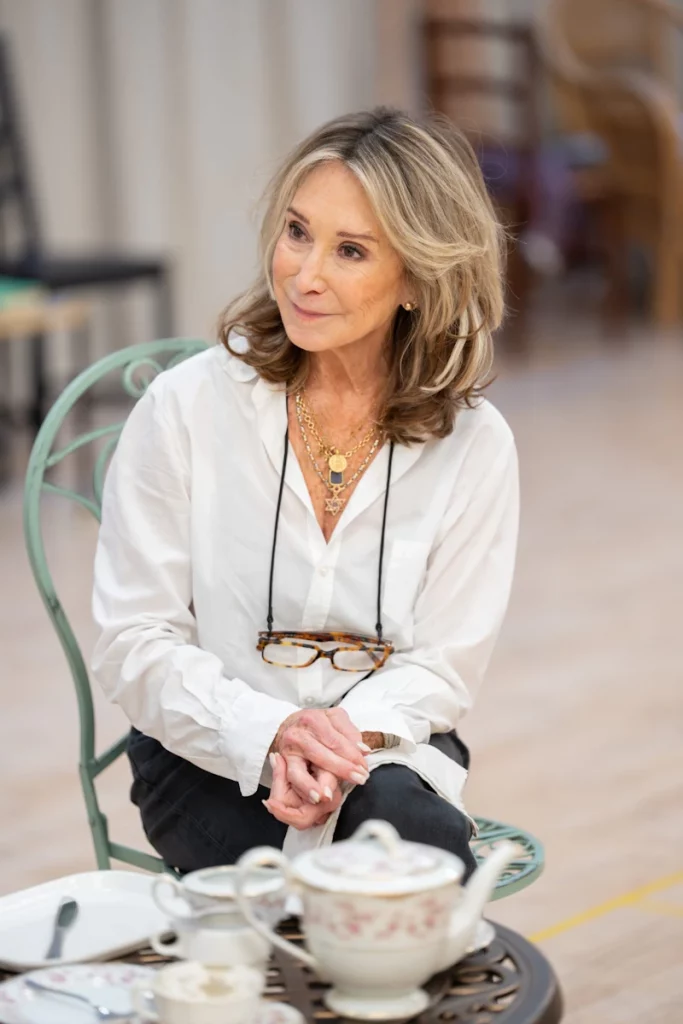
- Photo Johan Persson
All Cadogan Hall photos ©Hattie Miles