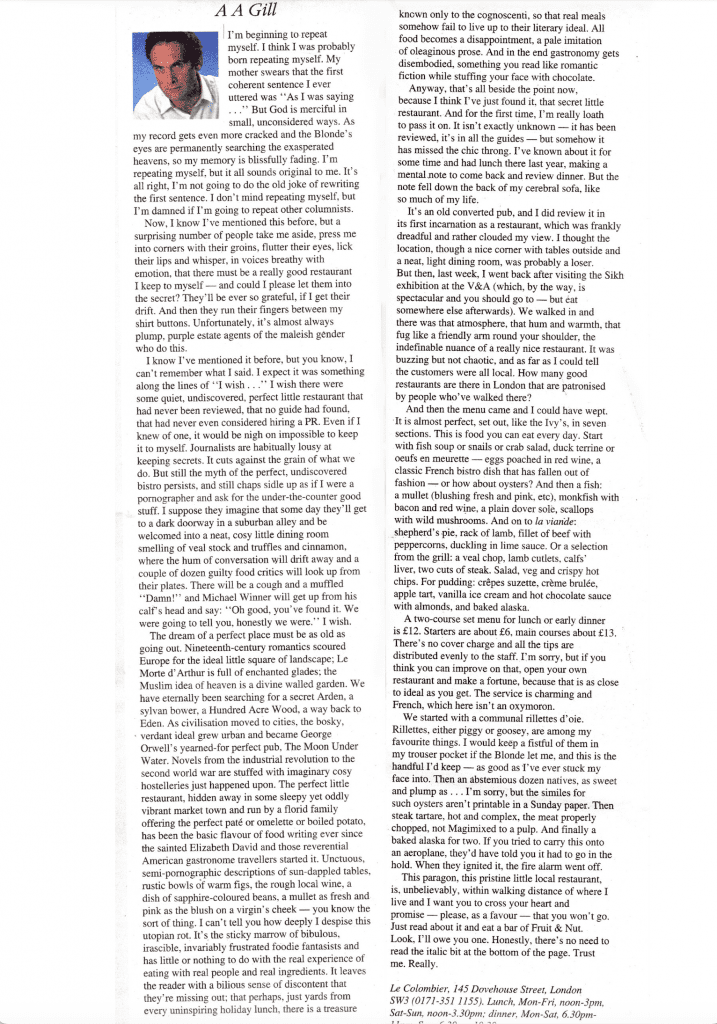
For nearly three decades, Le Colombier has been one of Chelsea’s most cherished open secrets — the sort of restaurant whispered about between friends, protected like a family heirloom, and loved for its unfussy French elegance. AA Gill once called it “that secret little restaurant… as close to ideal as you can get.” Now, its legendary proprietor, Didier Garnier, has decided to call time.
“I’m very happy to finish at the top,” he told The Citizen, settling into a quiet upstairs room with the relaxed air of a man who has finally found peace with a difficult decision. “I’ll be 70 in January, so I think it’s time for me to go.”
When Garnier opened Le Colombier in 1998 in Dovehouse Street, tucked just off Chelsea Square, he imagined a classic neighbourhood French restaurant — good food, great wines, and a commitment to hospitality that felt deeply old-world. What he built was far more than that: a loyal community eatery anchored by impeccable cooking and one of the finest wine cellars in London.
The secret to its longevity, he says, has always been the people.
“I’ve had a good team for many, many years,” he smiles. “My manager Olivier has been with me 33 years. Two head chefs for over 17 years, my sous chef for 20. The secret of a good restaurant is to keep your staff.”
Garnier is quick to underline that it is his customers and their loyalty that has been at the heart of Le Colombier’s success. “It’s a club,” he explains. “Everyone knows each other. They create the atmosphere. I just make sure that the menu and wine list are right for them — simple and good. It doesn’t need to be fancy. A great dover sole, a fine fillet steak. Do the classic dishes well, with the best produce and ingredients. My role has been to be the chef d’orchestre – the conductor. It is a role I have loved.”
Everything about Le Colombier was reassuringly analogue, right down to the reservations, which has given it a timeless, relaxed edge.
“You can’t book online. You have to ring us,” Garnier says proudly. “So straight away, there’s a connection. We know your table, your favourite dishes. We have two customers who come five days a week for lunch. They probably spend around £170 every day.”
That intimacy is partly why news of its demise was greeted in Chelsea with all the disappointment of a sunken soufflé.
“Customers were devastated,” he admits. “Some even offered finance — a lot of finance to help me start a new restaurant. I could have raised £5 million. Everybody wanted Le Colombier to carry on.”
Surely he was tempted?
“No,” he says firmly. “If I’d been 10 or 15 years younger, definitely. But not now.”
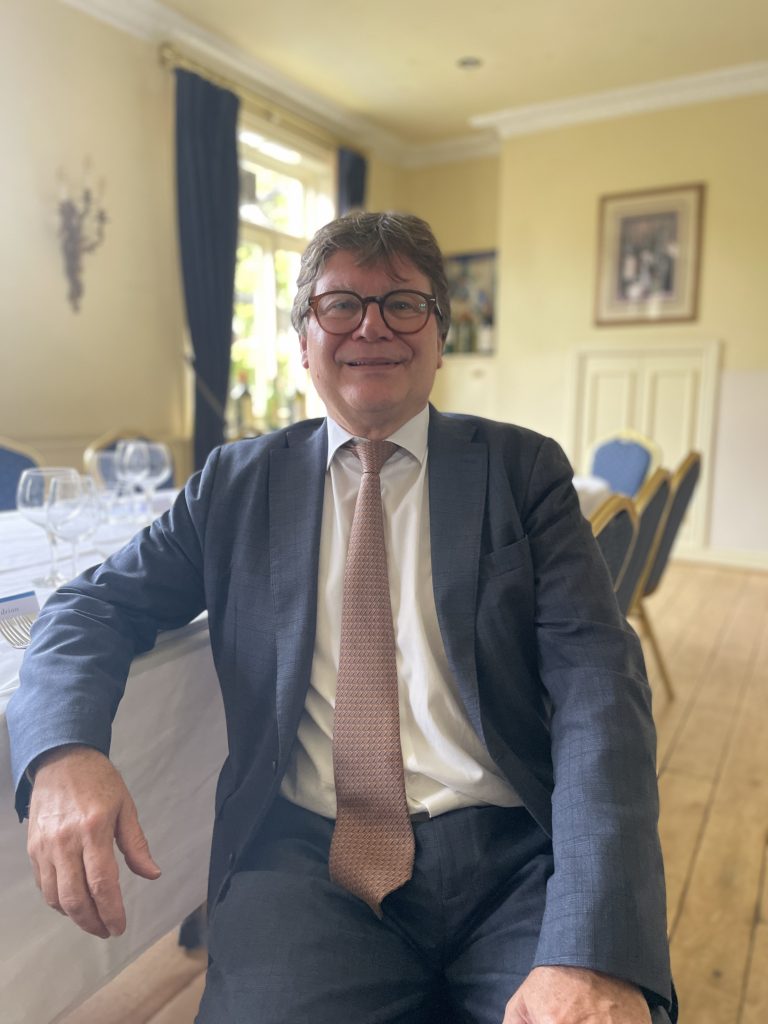
Upstairs in the private dining room of Le Colombier ©Rob McGibbon
Garnier’s fondest memory involves one of the most influential restaurant reviewers of the 1990s. In 1999, AA Gill’s glowing Sunday Times write-up (see below) catapulted Le Colombier into the spotlight — so much so that even Gill struggled to get a table.
“His secretary called to book sometime after the review was published and I said, ‘I’m sorry, but we have no tables — and it’s all his fault!’” Garnier recalls, laughing. “Of course, we managed to find him a table. His review puts us on the map and changed everything very quickly.”
Garnier’s own journey to Chelsea began in Angers, in France’s Loire Valley, where he grew up in a family of restaurateurs. He arrived in London as a commis waiter, impressed his bosses, rose swiftly, completed national service in France, then returned to manage some of the capital’s smartest dining rooms before striking out on his own.
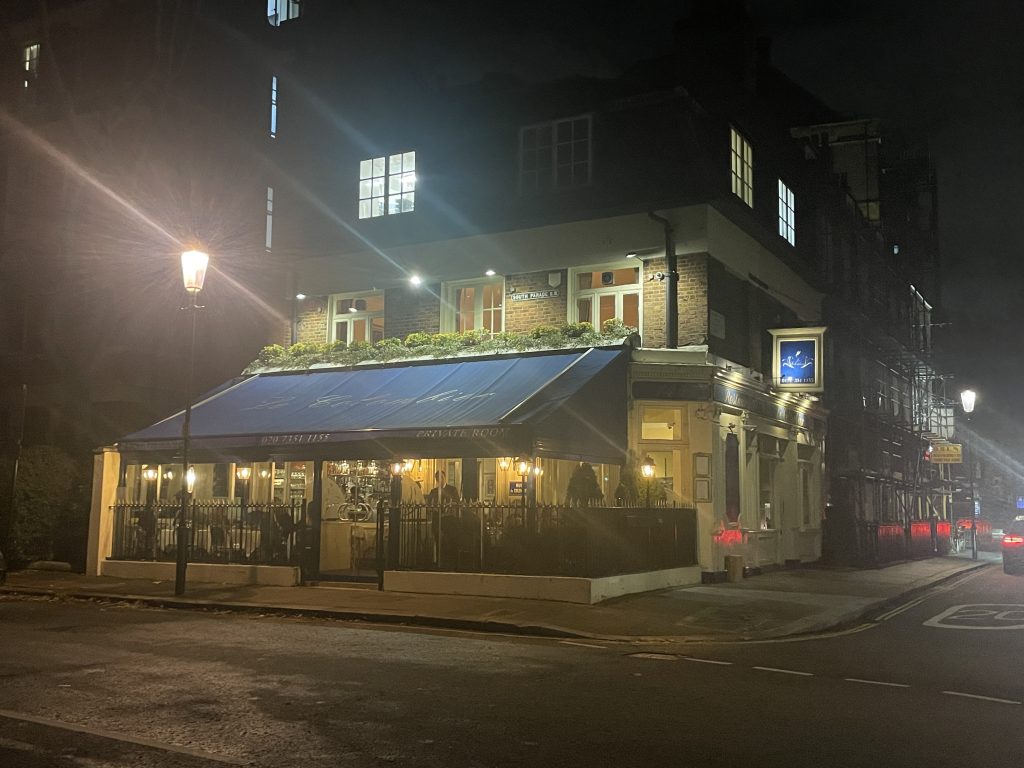
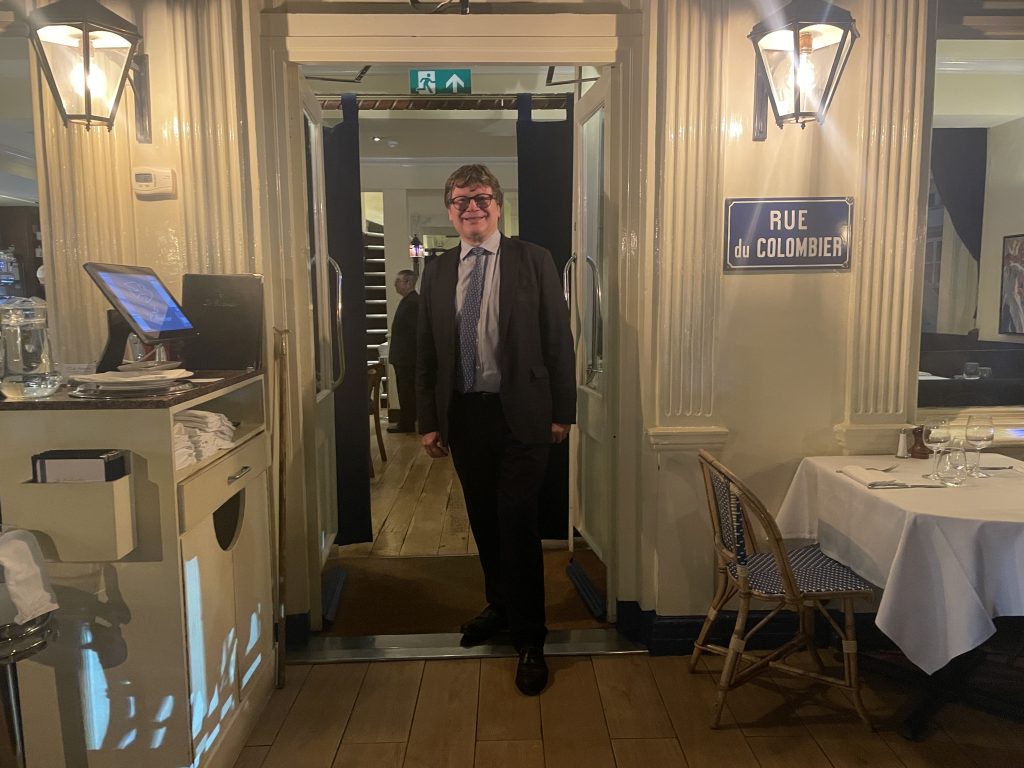
Le Colombier translates as “the dovehouse” and is named after a chic street on the Left Bank of Paris, where Garnier was walking one day as he pondered his new venture. The street sign was indeed “a sign”! The restaurant has consumed his life, but there has long been tension with the property’s landlord.
After 15 years of rent reviews, two court cases, and a failed attempt to buy the lease in an auction, Garnier has been forced to step away. There were rumblings of a local campaign to save the restaurant, but he dismisses them. “It’s settled now. It’s done. Finished.” He will receive a reasonable “goodbye” settlement from the landlord, but that fee is nothing when you consider that the business would be worth more than £5m if he owned the lease.
The “closed” sign will go up for good on December 31st and the site is destined to become a coffee shop, with offices or flats on the upper floors. Ever since the closure was announced, the restaurant has been fully booked for lunch and dinner, and is now the hottest booking to get in Chelsea. Each sitting, Garnier says, has a wonderful “end of days” party atmosphere. Le grand farewell.
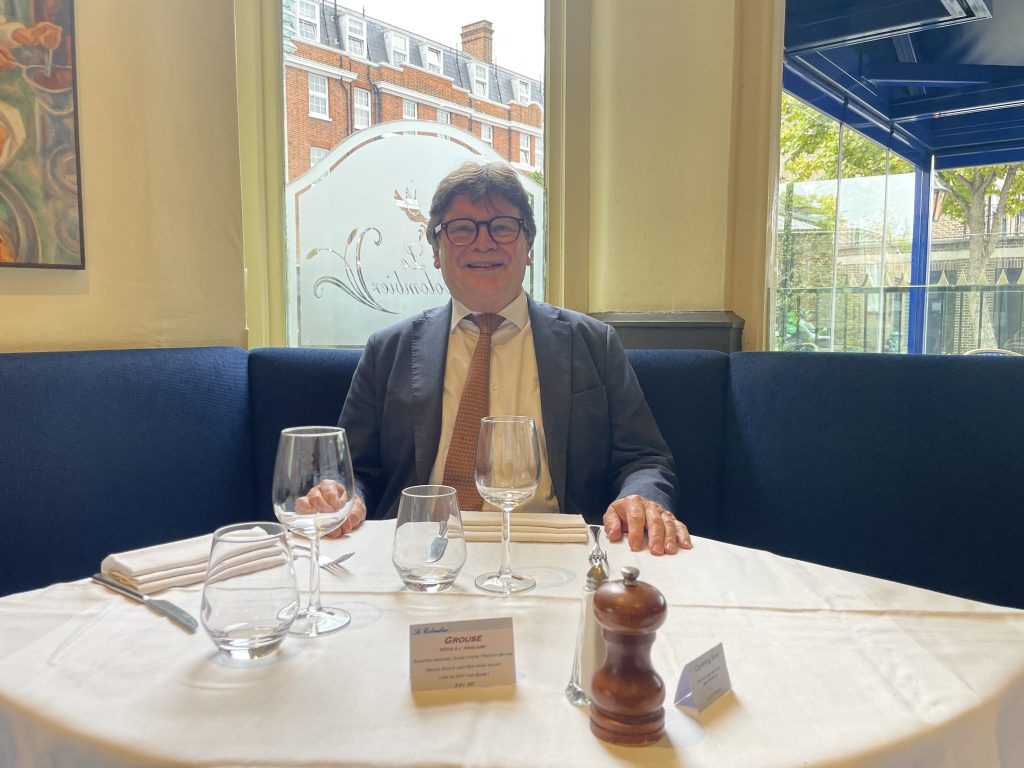
Top table. Didier in a prized corner window table ©Rob McGibbon
So how does a man who has spent a lifetime on his feet — sometimes 95 hours a week — adjust to life without the constant hum of a dining room?
“I want to travel,” he says. “Europe, India, Egypt. I want to read more. I want to spend quality time with my girlfriend and my mother and take things easy. ”
He also plans to continue judging restaurant competitions and position himself further as an expert of the restaurant world. He also has thoughts about writing a book. But mostly, he’s looking forward to relaxing. Is he relieved?
Didier pauses: “Now,” he nods quietly, “yes I am.”
-

- The Paris street sign that inspired the restaurant’s name
-
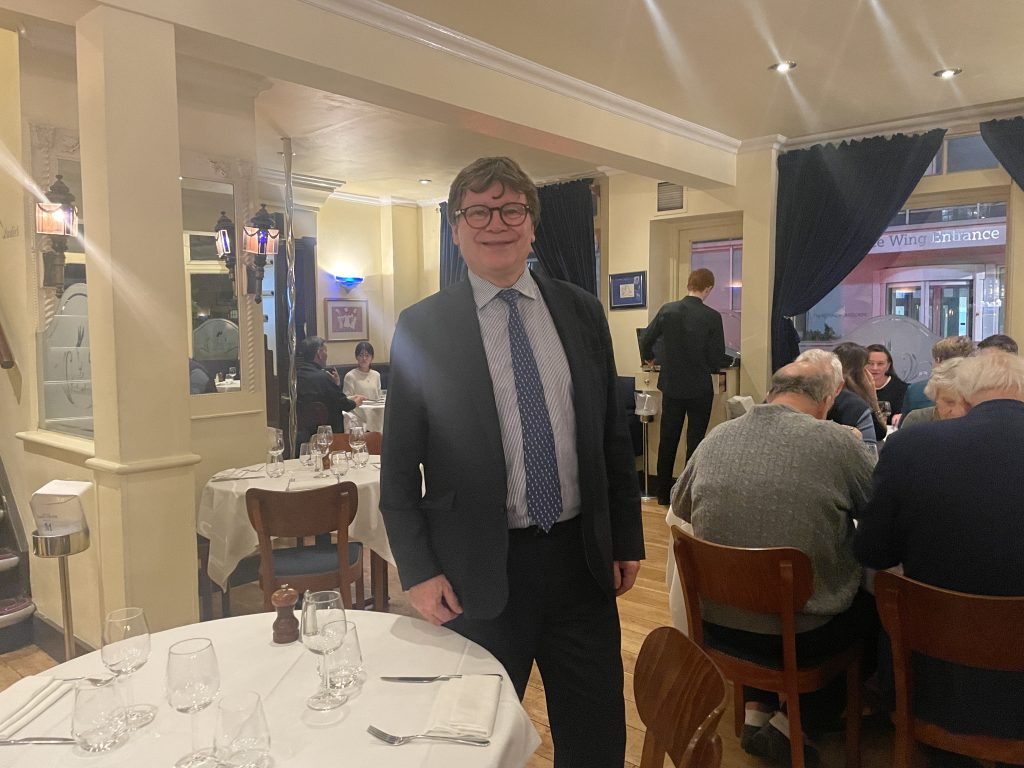
- The chef working the room
All photos © Rob McGibbon