For months, baffled Kensington residents have been asking the same question: Where did the bravery plaque for bomb-disposal hero Captain Roger Goad go?
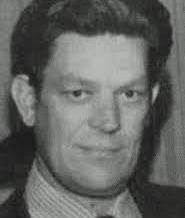
The courageous officer was killed in August 1975 while trying to defuse an IRA bomb placed in the doorway of the shoe shop in Kensington Church Street.
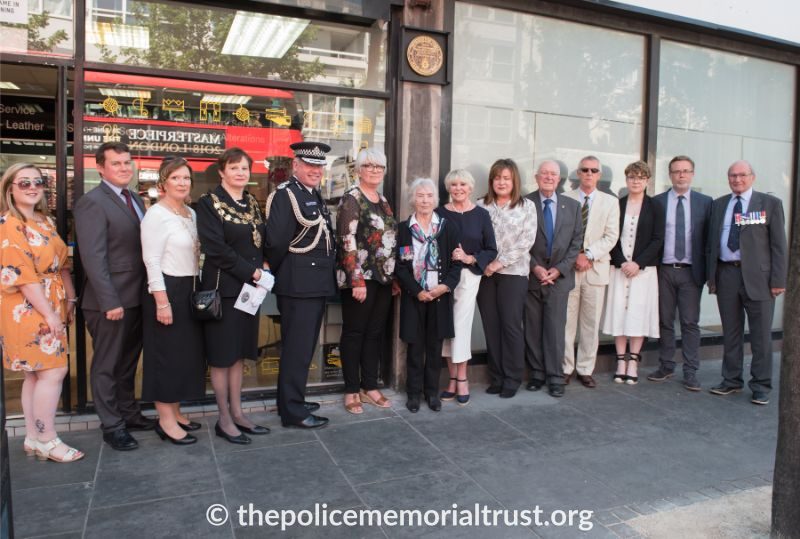
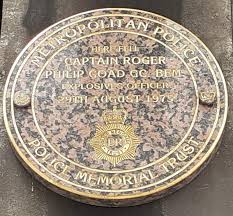
He was later awarded the George Cross — the nation’s highest civilian gallantry honour — and a plaque was installed on the shopfront seven years ago.
It stayed there quietly, respectfully, for years, but then the bulldozers moved in. The shop at numbers 225-227 Church Street came down and the plaque seemed to disappear.
This sparked worry — and a flurry of questions from local groups, including the Kensington Society, who demanded answers and insisted the hero’s memory must not be lost in the rubble. Preservation bodies even listed the plaque as missing.
But now The Citizen can reveal the truth.
After making enquiries, we tracked down the memorial — safe and sound — with the Police Memorial Trust, the charity founded by the late film director Michael Winner – a long-time resident of Holland Park, in the house now owned by pop star Robbie Williams. A spokesperson for the Trust told The Citizen:
“Contrary to reports, the memorial is not missing. We were informed by the property owners that redevelopment was due to begin, so arrangements were made to remove the plaque for safekeeping before work started. The memorial will be returned to its original location once building work is completed.”
The night was the 29th August 1975 when members of the six member Balcombe Street Gang planted a bomb in the doorway of a K-Shoes store on Church Street — part of a brutal IRA terror campaign that also included the Guildford pub bombings and the London Hilton attack.
A warning call was made to the Daily Mail newspaper at 9.35pm. Police found the device, evacuated nearby buildings and held back hundreds of onlookers behind cordons.
Captain Goad, the senior bomb-disposal officer on scene, moved in to neutralise the threat. At 10.12pm, the bomb exploded and he was killed instantly. He was just 40 years old, married, with two children.
Whether the blast was caused by a timer or an anti-handling device remains unknown. What is known is that Goad’s actions likely saved lives. His George Cross citation was published in the London Gazette in October 1976. The four IRA terrorists behind the attack were later jailed for life and released in 1999 under the Good Friday Agreement.
Now, thanks to The Citizen’s digging, Kensington residents can now breathe easy. The plaque is safe. The hero will continue to be remembered. Mystery solved.

The bravery plaque will be re-instated once the building is finished