Here, Mark Palmer, a highly respected veteran of travel journalism, joins The Citizen to give readers an insight into travelling to the Seychelles. He lays out his top tips for enjoying a memorable holiday in this exquisitely beautiful region and why it is the perfect choice for some winter sun.
When it comes to winter sun, there’s nowhere quite like the Caribbean. At least, that’s what I’ve always thought – but after a week in the Seychelles it’s time to think again.
Yes, it’s further away and there are no direct flights from the UK, but that all leads to one key advantage: it’s cheaper. Also, you are travelling pretty much north to south, rather than east to west, so there is no jet lag.
Even more important is that the beaches are superior; it’s virtually crime-free; there’s little mass development; the rock formations are spectacular, and the people are kind and welcoming. Even the cocktails give Caribbean rum punches a run for their money.
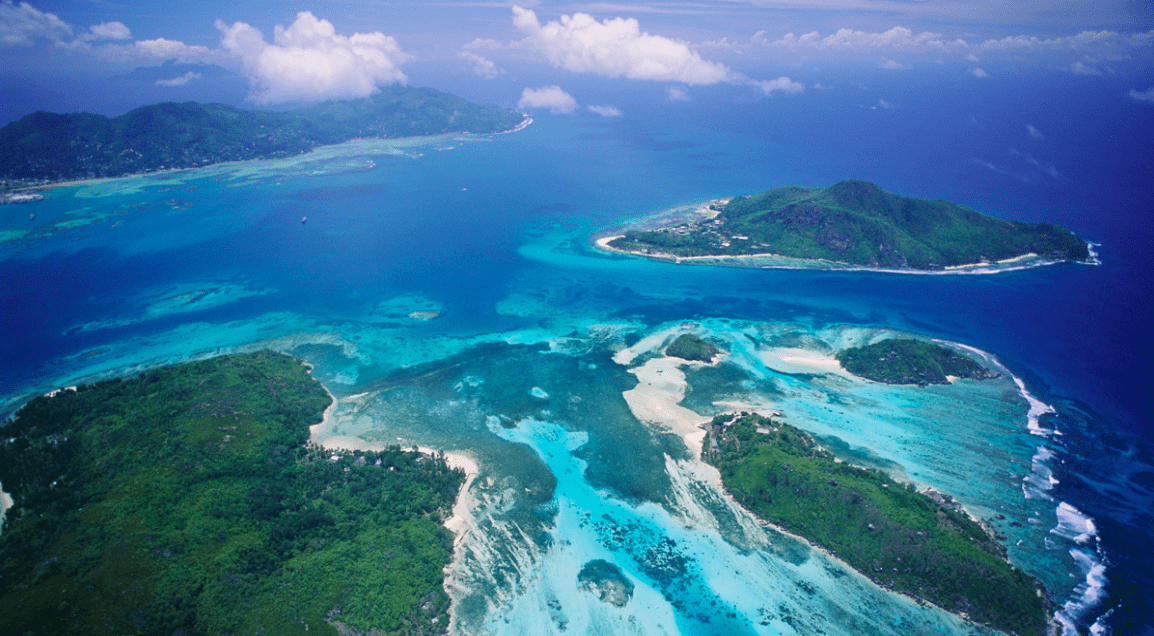
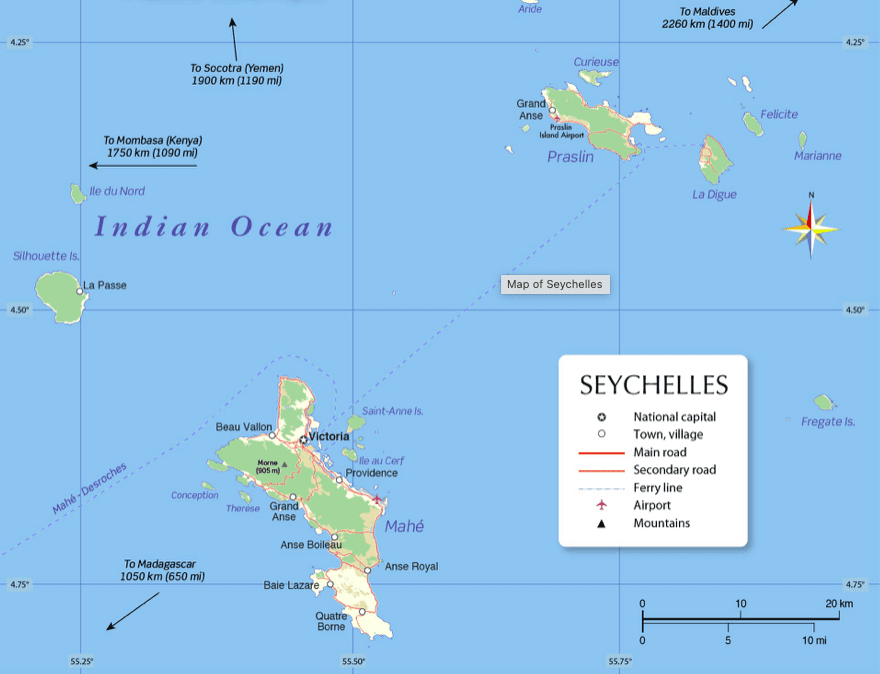
The Seychelles sits in the Indian Ocean southwest of the Maldives and north of Mauritius and Madagascar. There are 115 islands, of which 30 are inhabited. It’s warm all-year round but gets plenty of rain – in short bursts, hence the lush green landscapes.
Fewer than 100,000 people live there. Even more surprising is that universal suffrage was only introduced in 1967 and full independence from Britain came as late as 1976. Prince William and Kate spent their honeymoon on North Island, but largely the Seychelles has kept out of the limelight.
Mahe is the biggest island and where you’ll find buzzy Victoria, one of the smallest capitals in the world, but in which around a quarter of the entire country’s population lives. A 20 minute flight away is sleepy but ravishing Praslin, from which a 15 minute ferry ride takes you to La Digue, where the main mode of transport is still the bicycle. Island hopping is an option and ferries are reasonably priced.
WHERE TO STAY
My wife and I stayed at two Constance hotels – Lemuria on Praislin and Ephelia on Mahe. They are completely different, but we loved them both.
Lemuria is small in comparison to Ephelia but wonderfully spacious amid immaculate gardens and with its own 18-hole golf course. Two pristine beaches await here – one is rugged, with strong tides and not advisable for swimming, while the completely unspoilt Anse Georgette beach is a healthy hike or lazy buggy ride away.
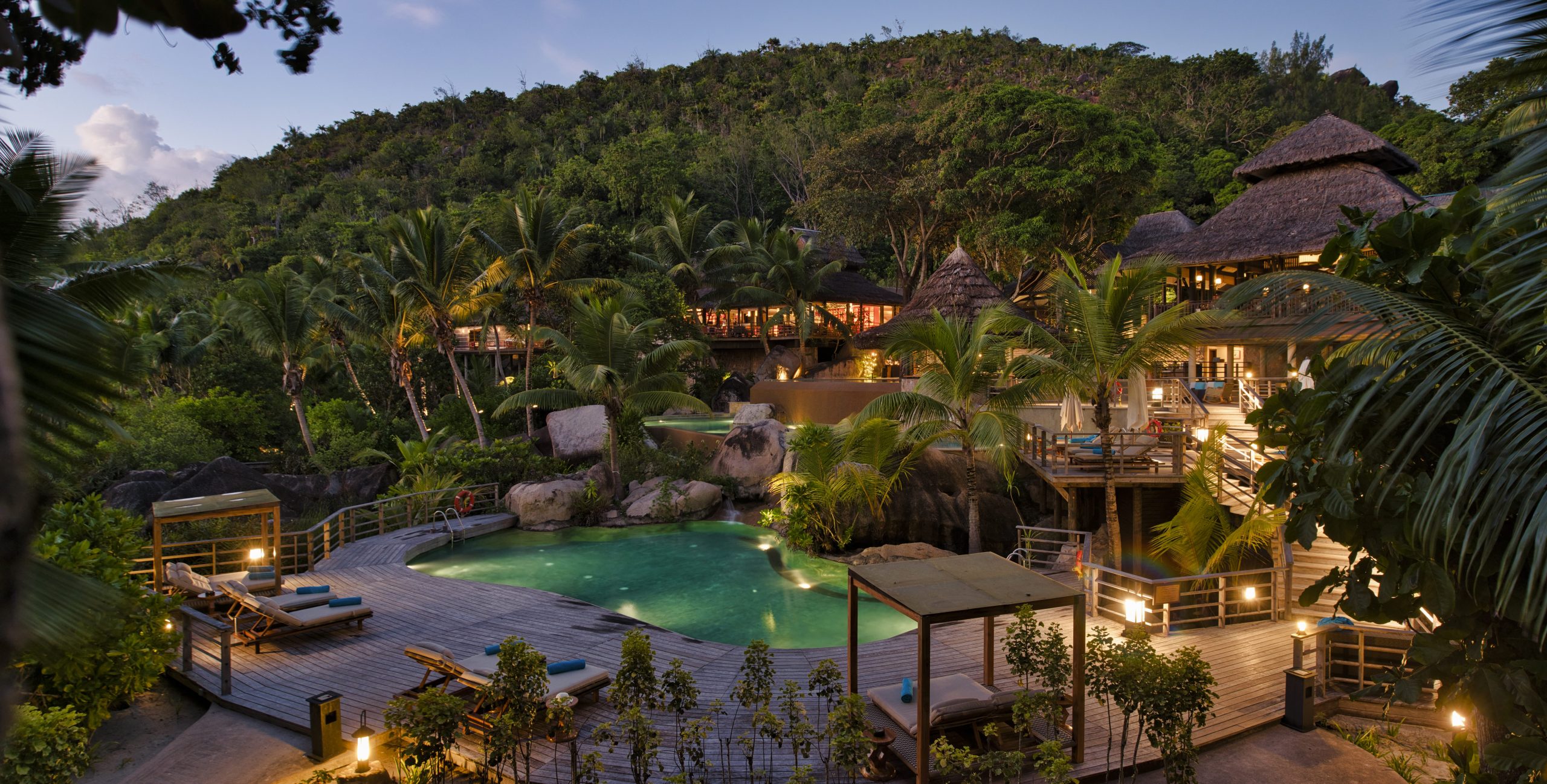
The stunning pool setting at Constance Lemuria
We were astonished by the service. After less than 24 hours, the staff seemed to know exactly how I liked my coffee in the morning and practically had made my negroni in the evening before I had asked for it.
There are four restaurants, including Takamaka on the beach (so named after Takamaka rum, which is distilled in the Seychelles). Diva is Michelin Star level and the Nest, serving traditional creole dishes, is a giant tree house overlooking the beach.
Ephelia, on Mahe’s southwest coast, occupies a huge area and comprises five beaches. But it never feels crowded. There are 313 rooms, suites or villas, all in low-lying buildings, some starting at just over £330 for half board. You won’t find such quality at that price in the Caribbean.
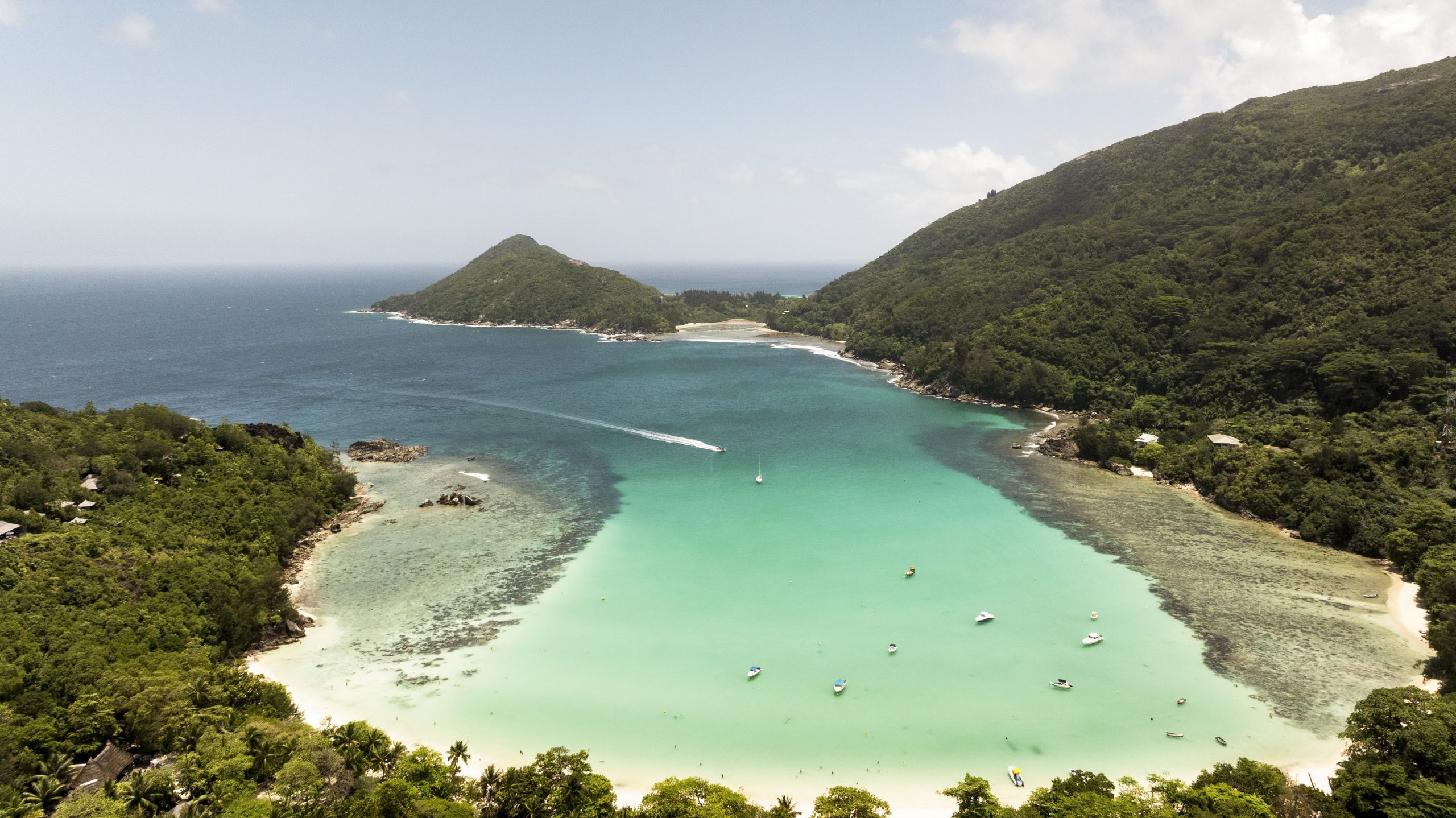
Turquoise sea and white sand beach at Constance Ephelia
An expansive mango forest occupies the centre of the resort and there are hikes galore. I walked down to a beach called Lans Koken and never saw another soul. Children will love the climbing and zip-lining.
If you take one of the villas high above the main swimming beach, you’re given a buggy, otherwise you get around by bicycle or hitch a ride in a mini electric vehicle. The spa is a highlight and there are tennis and padel courts. Stay a week and you won’t need to eat in the same restaurant twice.
GRAND DESIGNS
One of the country’s most dramatic and distinctive features is the giant granite boulders. They are reputed to be 500 million years old and cling in spectacular fashion to mountains and frame many of the beaches. At times, it’s like being on a film set, making it one of the most photogenic geological landscapes in the world.
BLISSFUL BEACHES
The sand is white; the water is warm. Sprawling, high-rise resorts have no place in the Seychelles. Instead, the backdrop to most of the beaches is a swaying and undisturbed array of palm trees and tropical plants.
The poster beach is Anse Source d’Argent, within the Union Estate on La Digue. Turn right off the ferry and follow the road until you come to a bridge, after which no bikes are allowed. After Source d’Argent, there are other similar beaches all sharing the sublime turquoise water.
On Praslin, Anse Lazio, on the northwest coast, is regarded as the number one beach and is popular at sunset. Also on Praslin, the long stretch of sand known as Anse Volbert is a joy.
HISTORIC TIES
Locals tend to speak three languages: Creole, French and English, reflecting much of the country’s history. The French had control from 1756-1810, before the British took over, administered as a dependency of the already colonised Mauritius.
In 1816, the population was 7,500, of which 6,600 were slaves. The abolition of slavery in 1835 meant an influx of freed slaves, mainly of African descent. The opening of the international airport in 1971 put the Seychelles on the tourist map – and it’s now the biggest industry, followed by fishing.
WILD THINGS
Giant tortoises from the island of Aldabra have now been moved to several other islands. I came across two beside the main road on La Digue. My interest in them was in sharp contrast to their lack of interest in me.
Hawksbill turtles are widespread in the Seychelles, and the birdlife is spectacular. Many of the remote islands are globally important seabird breeding colonies, and an assortment of magnificent birds arrive during the migrations because the islands are the only lands in a huge expanse of ocean.
My favourite was the Madagascar fody, also known as the red fody, thanks to its bright red plumage. We hoped to see the Seychelles’s national bird, the black parrot, on Praslin but it escaped us.
THE MOST HUMAN OF PALMS
You can’t visit Praslin without spending time in the Vallee de Mai, a UNESCO World Heritage Site in the middle of the island. The star attraction is the Coco de Mer, which are distinctly male or female.
The male towers over the female and can reach a height of more than 30 metres, with fan-shaped leaves six metres long and four metres wide. The female produces erotically shaped double-lobed nuts, the largest fruit in the plant kingdom, weighing on average twenty-five kilos.
The palm takes at least 25 years from germination until it bears fruit – so woe betide anyone who picks one up and tries to take it home in their hand luggage.
TRAVEL FACTS
Turquoise Holidays offers a combination of three nights half board in a junior suite at Constance Ephelia and three nights B&B in a junior suite at Constance Lemuria (See all Constance hotels and resorts here – constancehotels.com) from £3,590 per person. This includes return international flights, internal flights and all private transfers (turquoiseholidays.co.uk, 01494 678400).
For more information about Seychelles visit Seychelles.com.
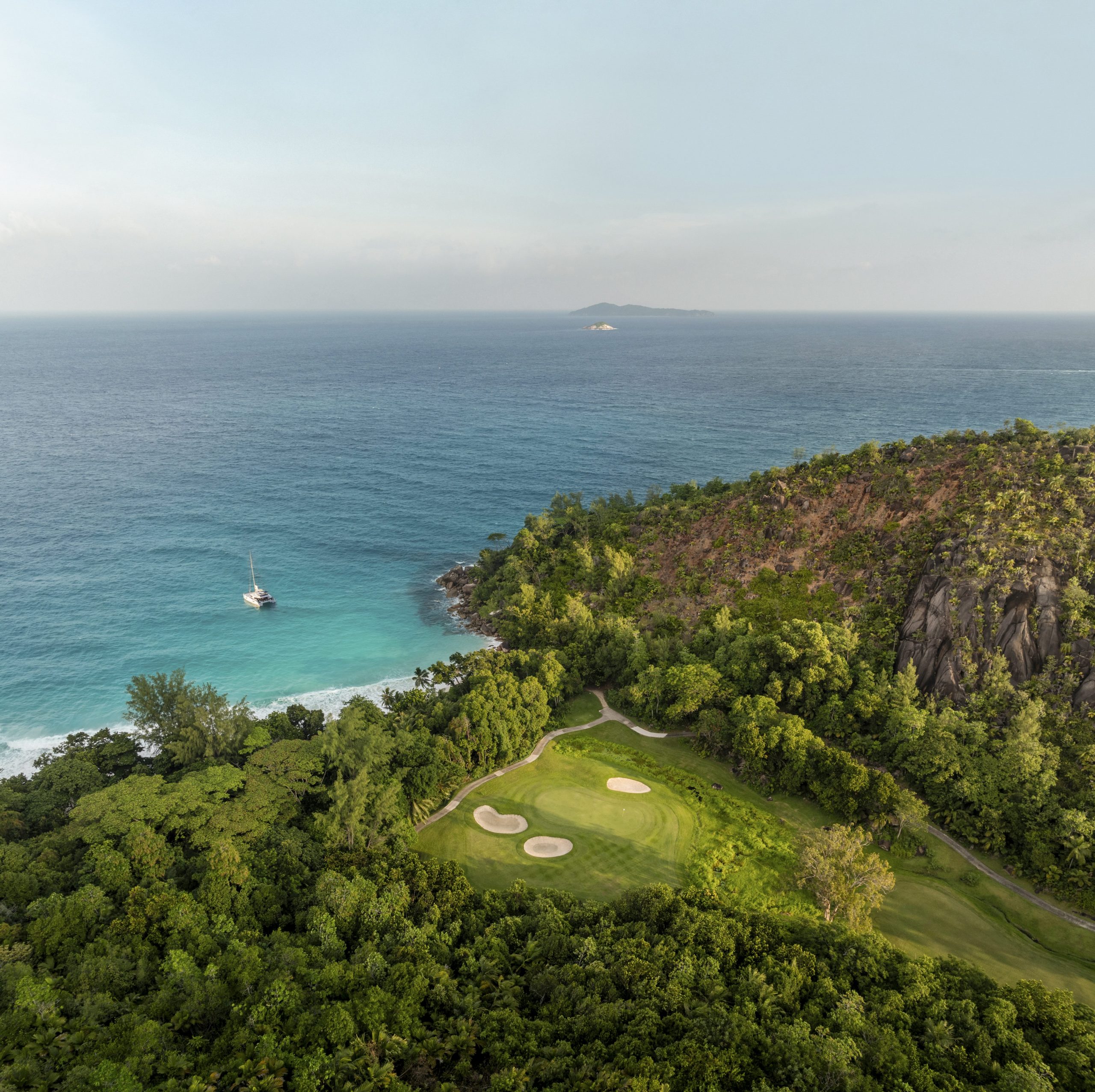
The backdrop to golf at Constance Lemuria
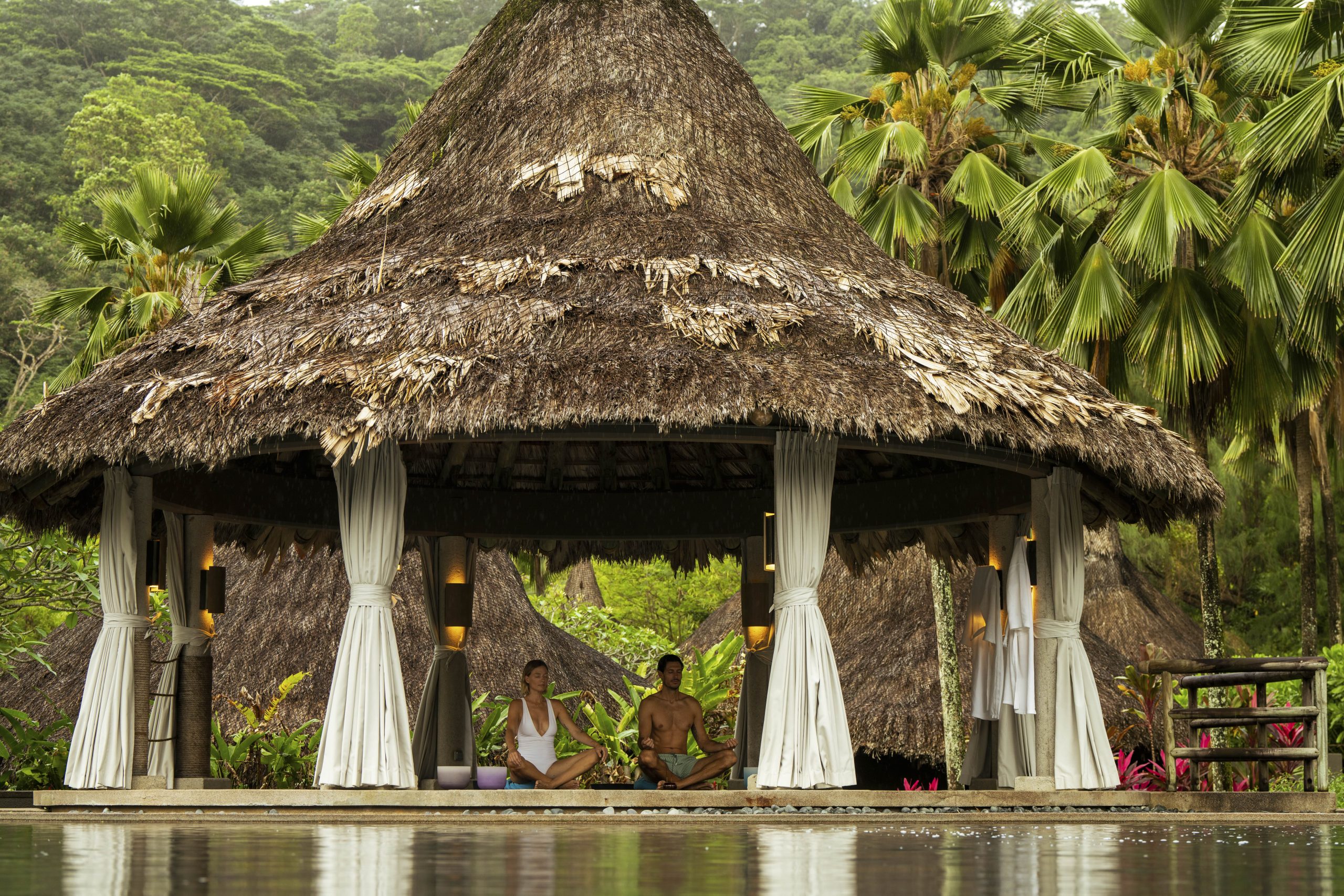
A yoga and exercise area in the spa at Constance Ephelia