The eighth Chelsea History Festival officially opened on Wednesday evening (30th September), bringing together figures from across the community for an evening of storytelling, performance and music at the National Army Museum.
Hosted by Gill Webber, Director of the Chelsea Heritage Quarter, alongside sponsor Cadogan Estates and the museum’s Deputy Chairman Sir George Norton, the launch marked the beginning of four days of events across Chelsea where history is woven into its streets, institutions and communities.
Lord Edward Cadogan opened proceedings with a speech from the temporary stage reflecting on why preserving that history matters – not simply as a record of the past, but as a way of understanding the present.
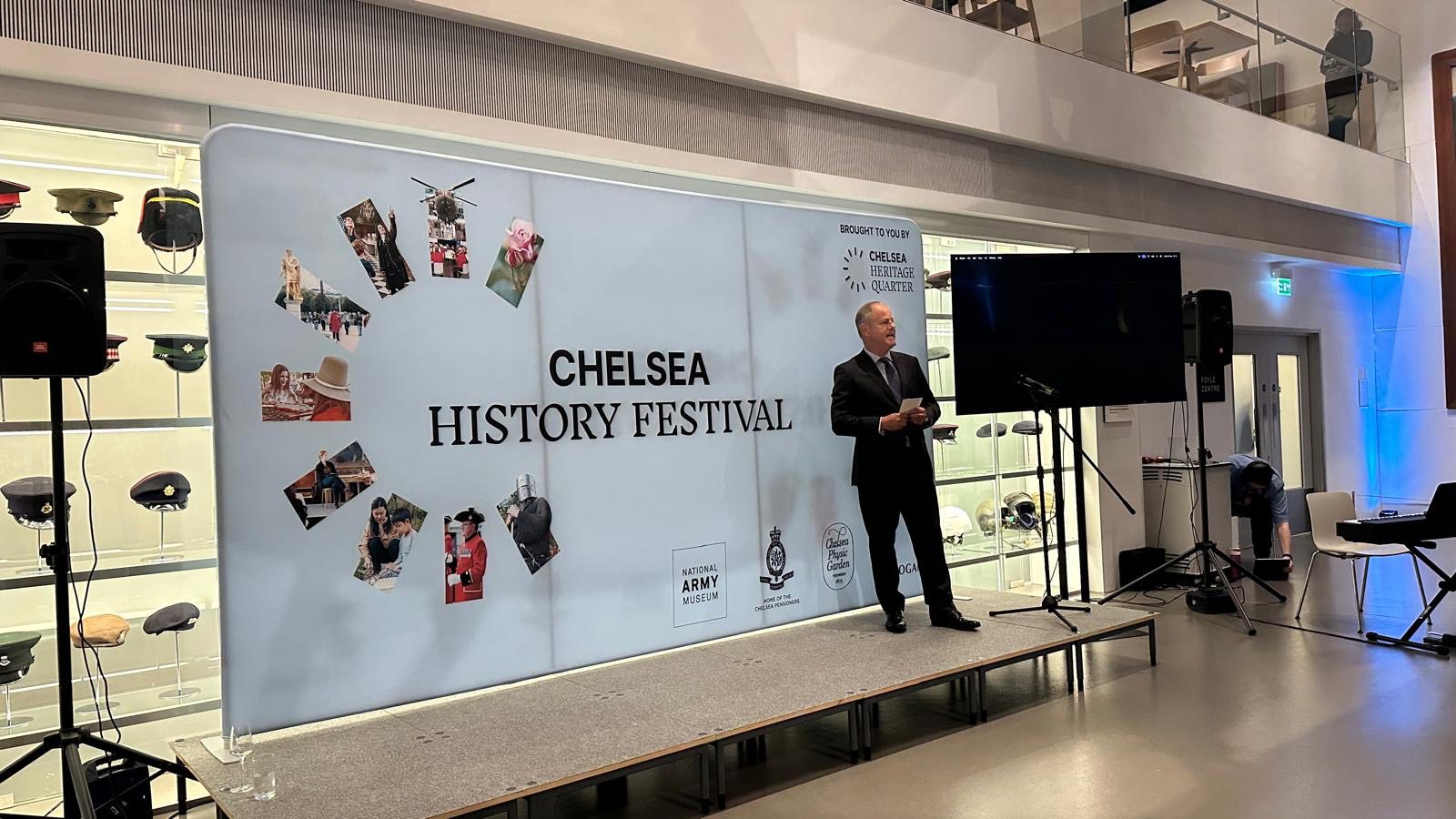
Lord Cadogan opens proceedings with a poignant reflection on history
Referring to the venue for the event, Lord Cadogan told guests: “This place is our history. And it’s the history not just of the Army, but of the country, and indeed of the people who have served it. It tells the stories of the people, as well as the great events, and it brings that history alive.
He continued: “It’s hugely important that we understand our history, because unless we understand where we’ve come from, it’s very difficult to understand where we are today and, indeed, where we might be going in the future.”
Addressing the guests, Sir George Norton said:. “This is the Nation’s Museum, which by way of its collections, its art and its archives tells the story of our army, its soldiers and their families, and its centuries of history.
“This place is designed to commemorate, to celebrate, and to inspire.” Turning to the wider value of looking to the past, Sir George added: “History provides perspective in uncertain times. Now, uncertain times, I think, is one way of describing the world in which we live – but I will say no more than that!”
The crowd of dignitaries were treated to a specially recorded address from BBC World Affairs Editor and this year’s Guest Curator John Simpson. Simpson – a much-admired TV news veteran who has covered some of the biggest moments in history during his 60 years at the BBC – referenced his love of history for taking on the Guest Curator role. He also spoke warmly of his love for Chelsea, where he had a house in Paultons Square for more than 25 years, before moving to Oxford. He still rents a flat in Chelsea where he stays when working in London.
Among those attending the opening party were Cllr Elizabeth Campbell, Leader of the Royal Borough of Kensington and Chelsea, Ben Coleman MP, Deputy Leader Emma Will and Cllr Josh Rendall. Riverside Ward was represented by its full contingent of councillors – Laura Burns, Max Chauhan and Heena Bellara. Also in attendance were Cadogan Estates CEO Hugh Seaborn and the Mayor of Kensington and Chelsea, Cllr Janet Evans.
-

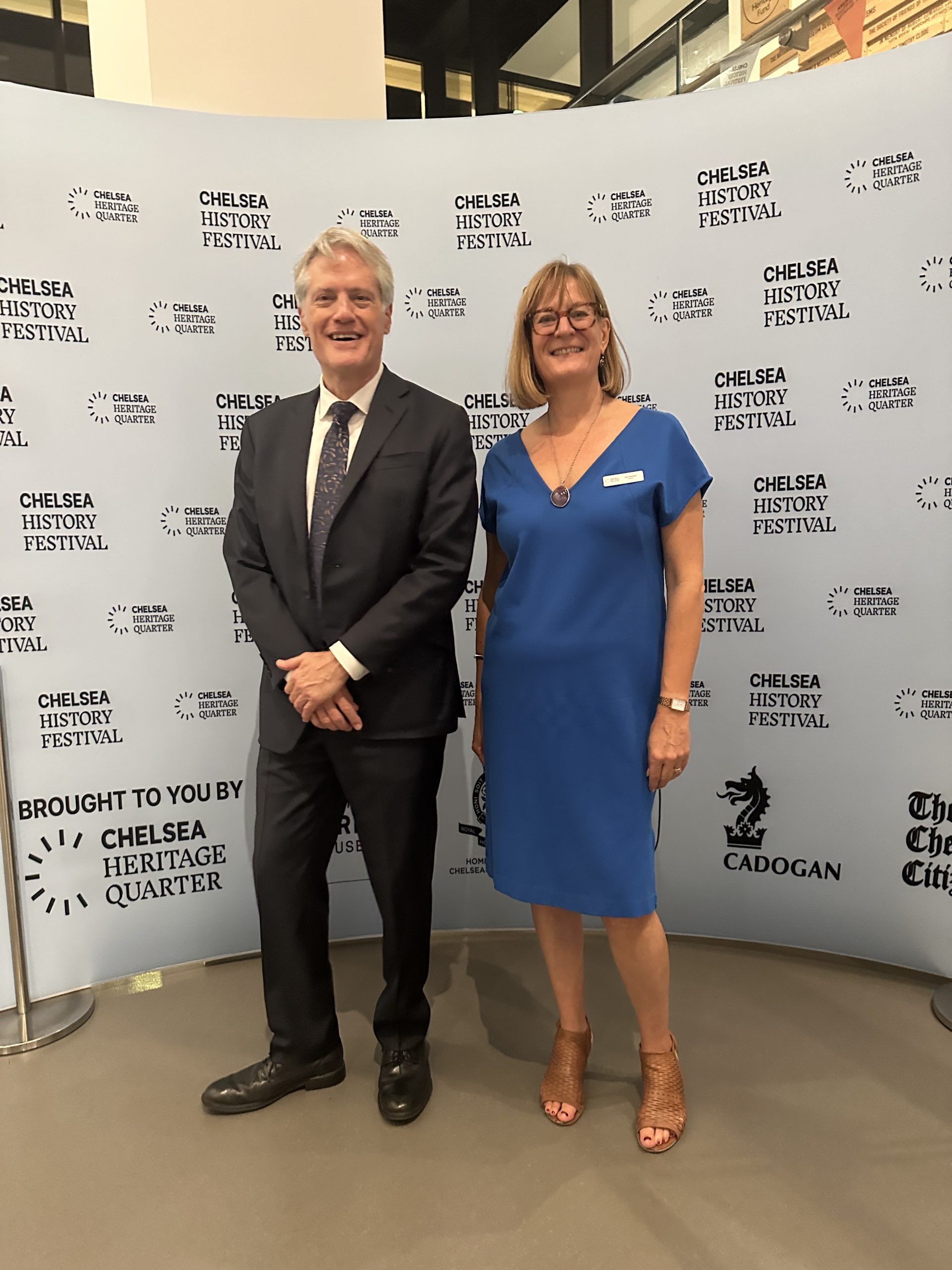
- Ben Coleman and Gill Webber
-
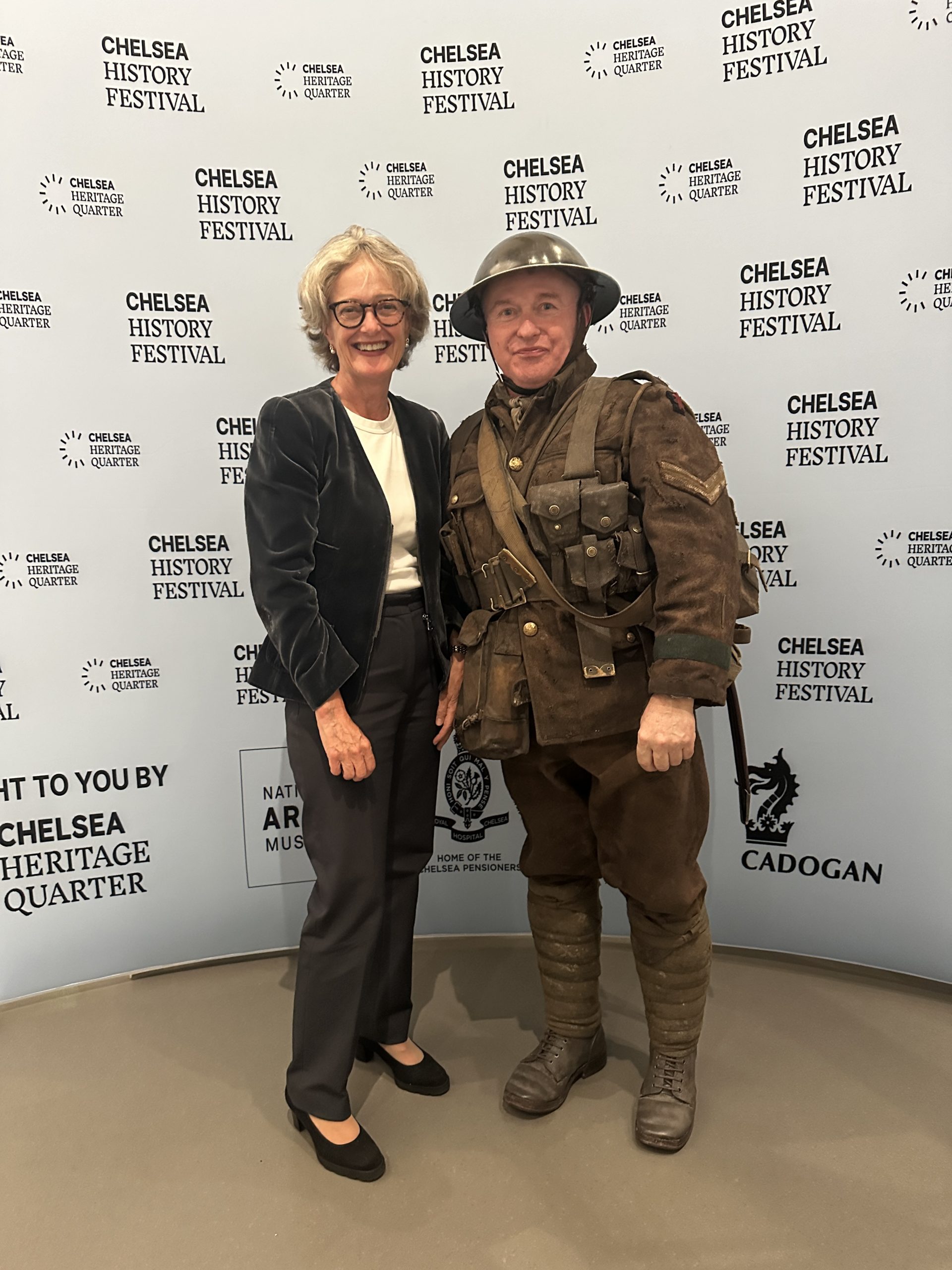
- Cllr Elizabeth Campbell and Michael Hughes
-
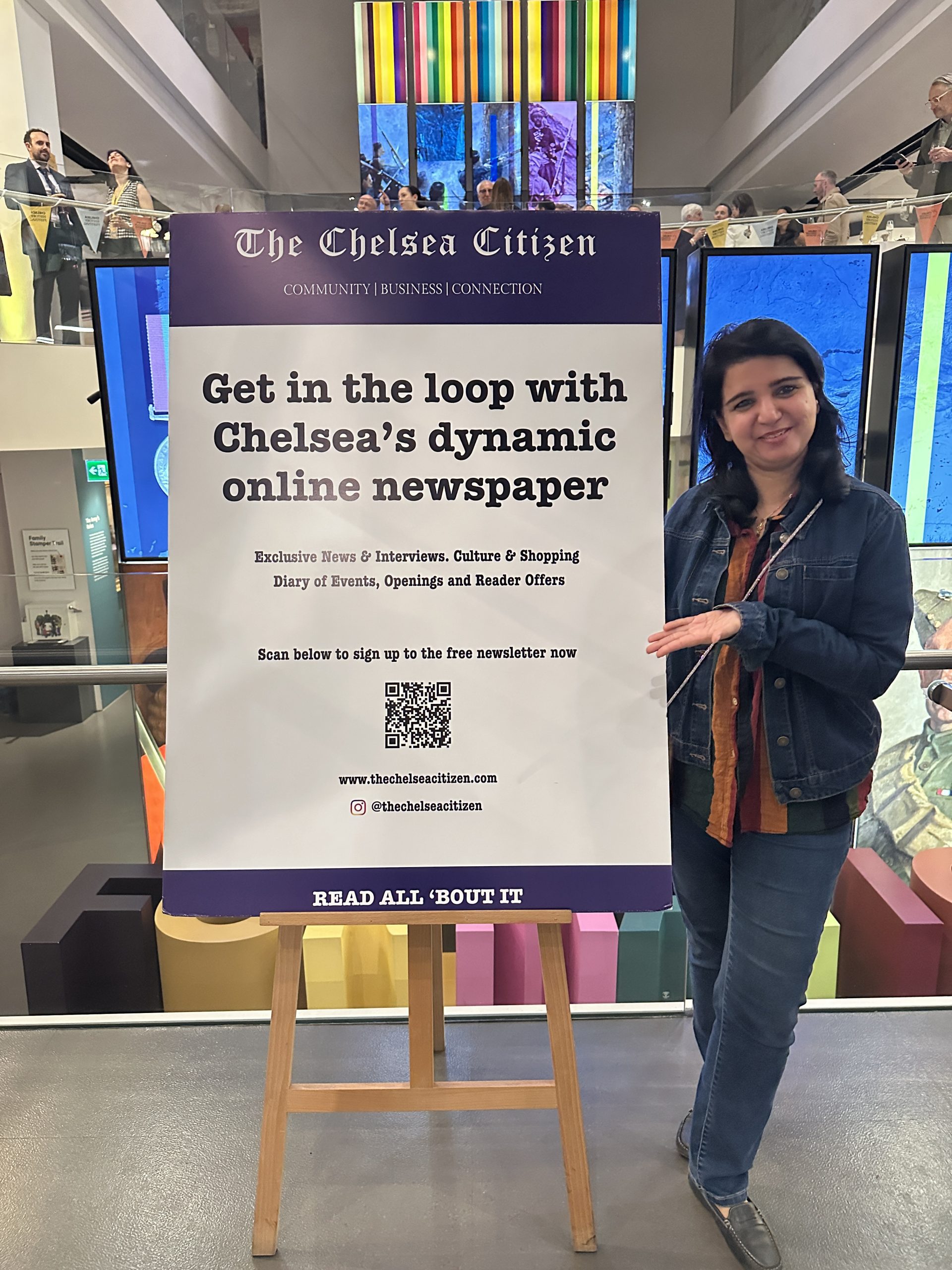
- Riverside Cllr Heena Bellara
That relationship with the past extends well beyond the museum itself. Chelsea’s long history can be found throughout the area; in its historic institutions and buildings, and in the lives of the people who have called it home. It was a point picked up by John Simpson, who broadened the focus from the museum to the neighbourhood around it in his recorded speech.
“Chelsea is made up of history,” he said. “Wherever you go, somebody famous has been there.”
Simpson recalled how the garden of his former home in Paultons Square, off the King’s Road, backed onto what had once been Sir Thomas More’s orchard, one example of how centuries of national history sit alongside everyday life in Chelsea.
Drawing on his own decades reporting some of the defining events of modern history, Simpson also reflected on the way the significance of events can change with time.
“History is made in small things which turn into much greater things afterwards,” he added.
The evening also featured a programme of live performances, including drummers and an appearance from Michael Hughes, the writer and performer of the one-man play, The Last Bantam. Guests were also treated to a vocal performance from Purcell’s Dido and Aeneas, accompanied on keyboard by Andrew Macmillan, Director of Music at Chelsea Old Church.
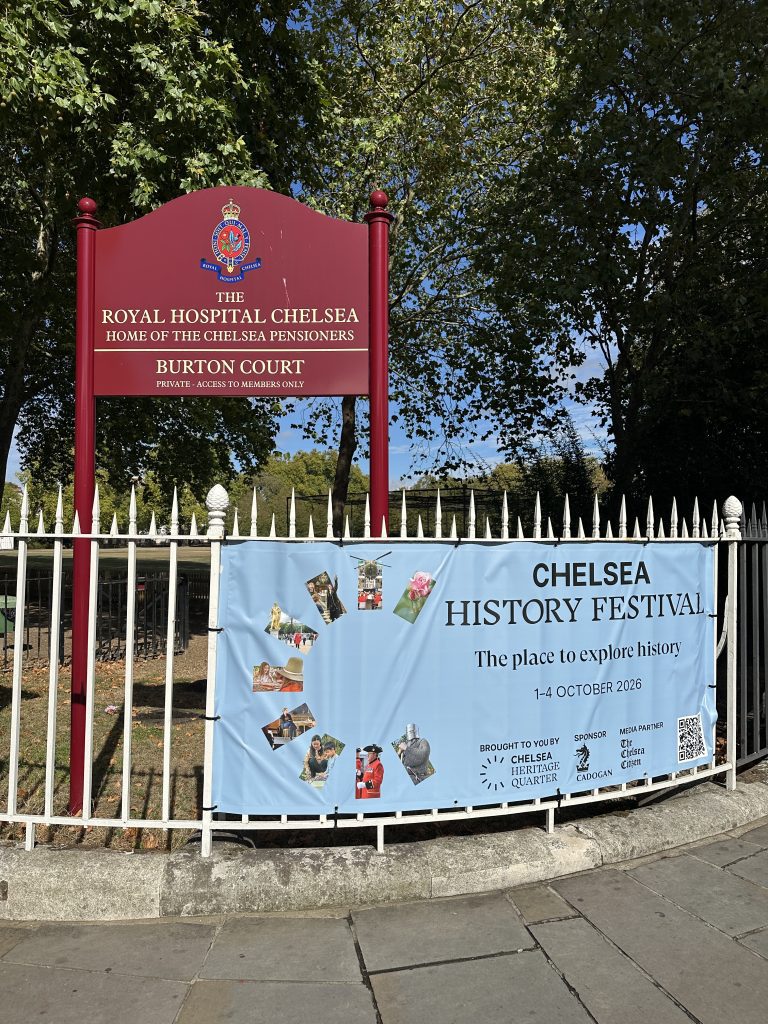
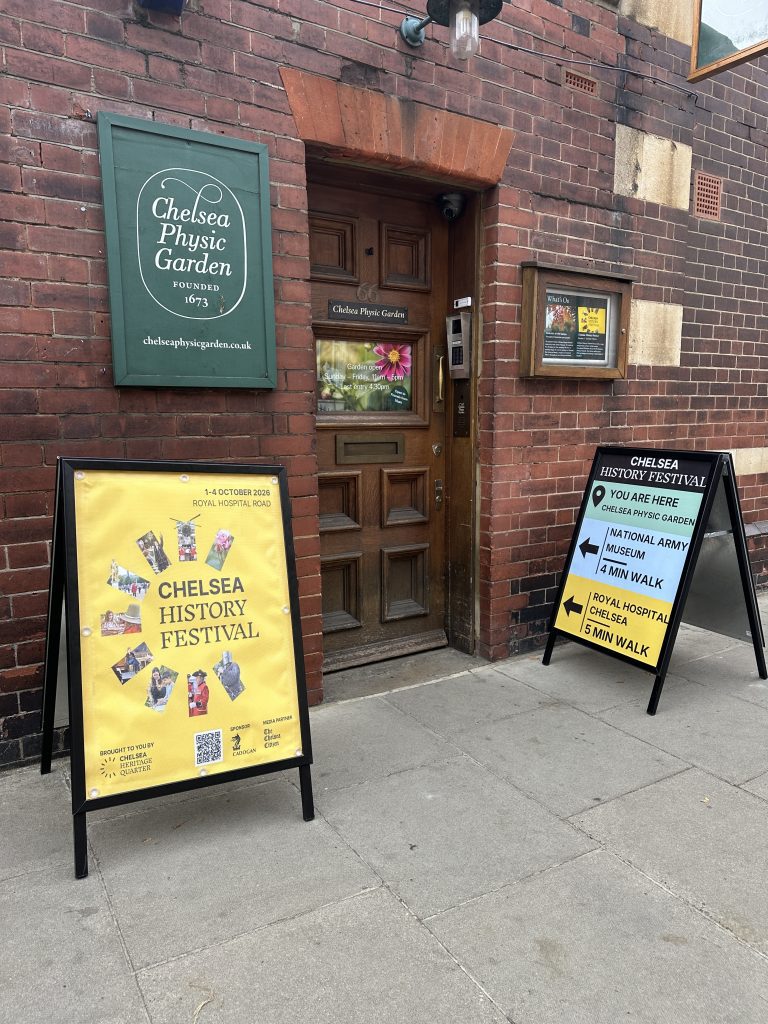
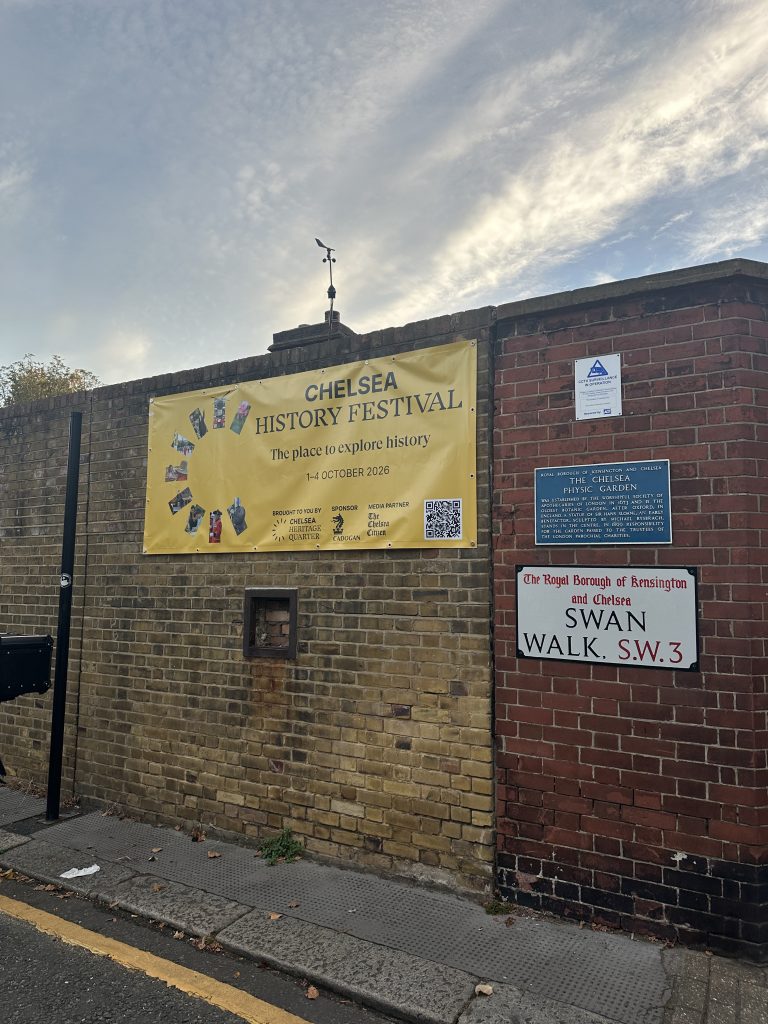
Running from 1–4 October, the Chelsea History Festival brings together historians, writers, broadcasters and other leading voices for a programme of talks and events across Chelsea, using the area’s own historic institutions as a backdrop for exploring stories from both the local community and further afield.
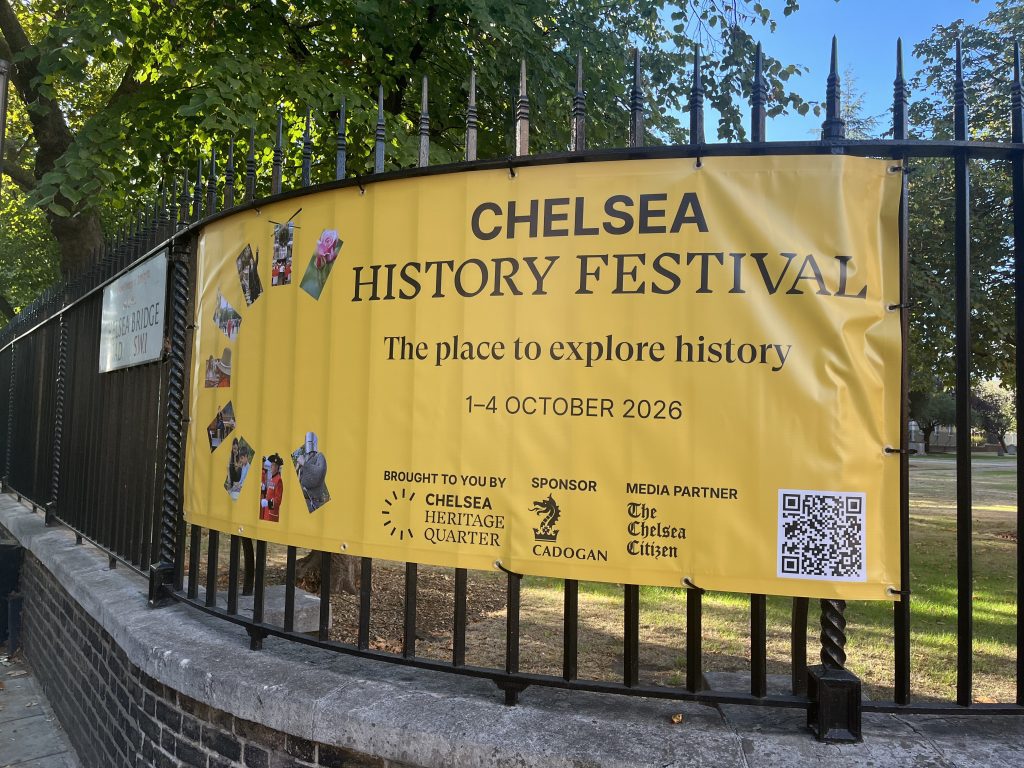
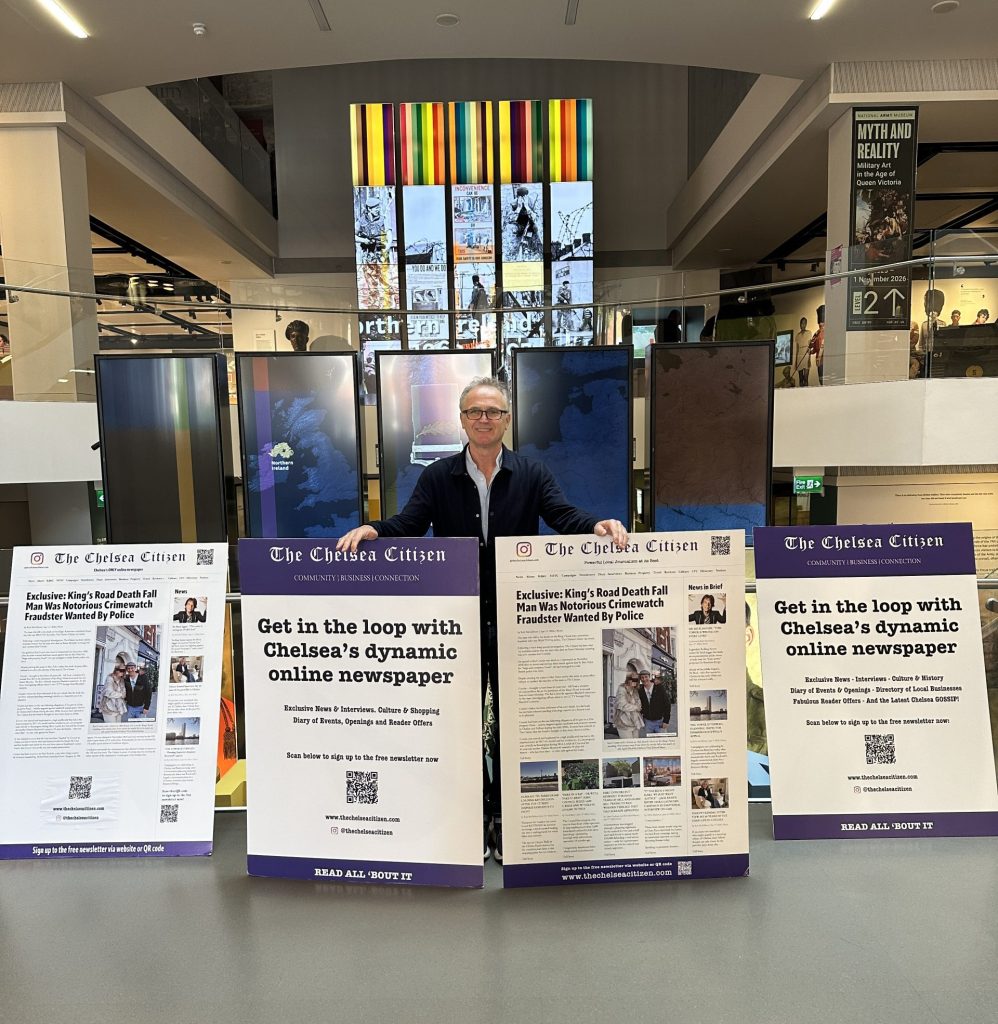
The Chelsea Citizen is the official media partner of the 2026 festival and will be covering events throughout the programme.
https://chelseaheritagequarter.co.uk/chelsea-history-festival/
Poster Boy and Propagandist: The Chelsea Citizen’s Editor Rob McGibbon