The great evergreen oaks that have shaded mourners in Brompton Cemetery since the reign of Queen Victoria are being cut down — victims of a destructive Mediterranean insect now advancing through one of London’s most historic landscapes.
A devastating total of 41 holm oaks are being felled after a severe infestation of Nidularia pulvinata, a sap-sucking insect more commonly found in the heat of countries in central Europe, such as Turkey, Spain and France, than in the shades of SW10. The trees are thought to have been planted on or around the time the cemetery was consecrated and opened in 1840.
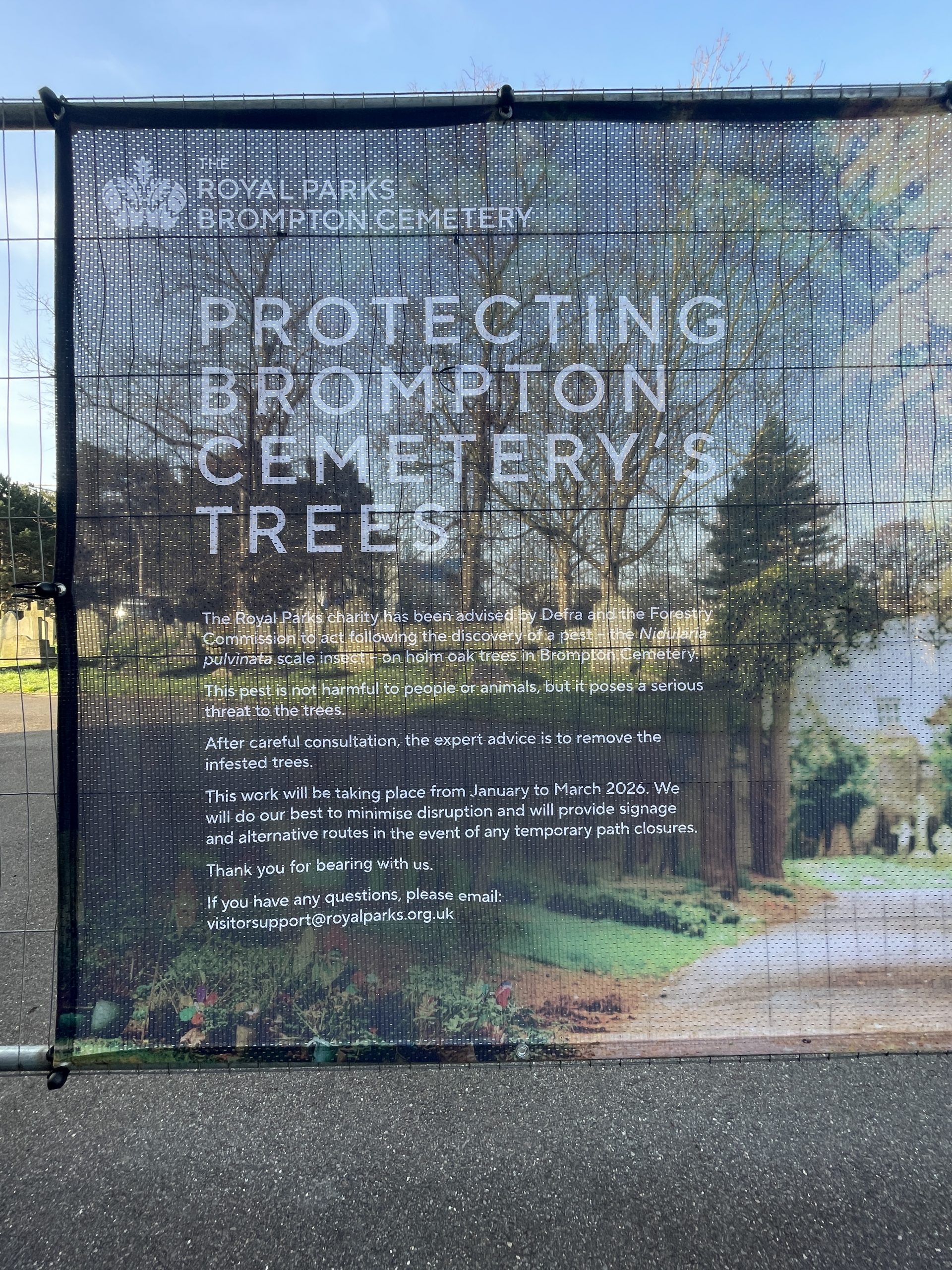
The Royal Parks charity, which manages the Crown-owned burial ground, has been acting on the tree felling advice from the Department for Environment, Food and Rural Affairs (Defra) and the Forestry Commission. Sadly, there is no alternative to the cull because there is currently no effective treatment to eradicate Nidularia pulvinata in Britain.
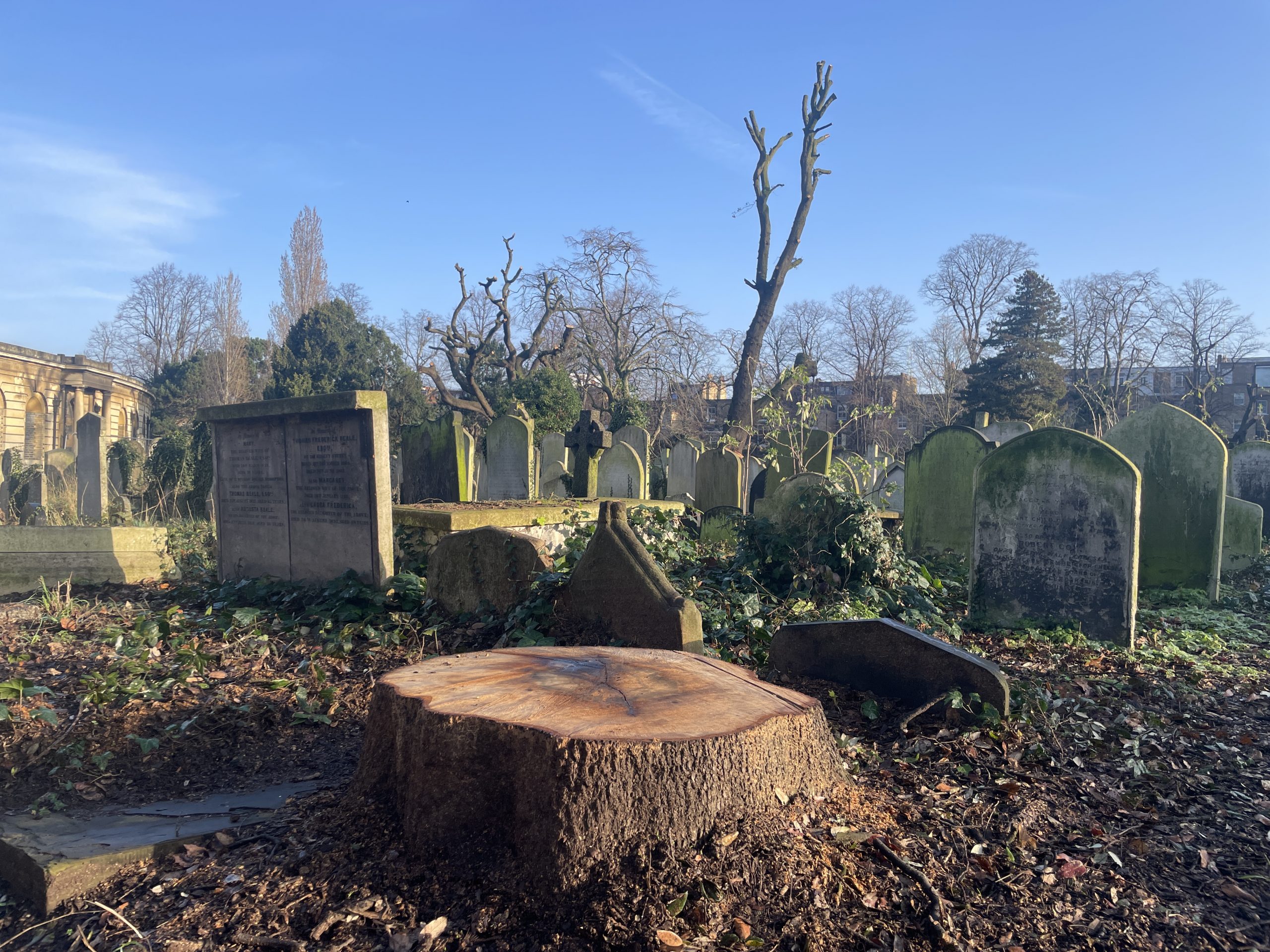
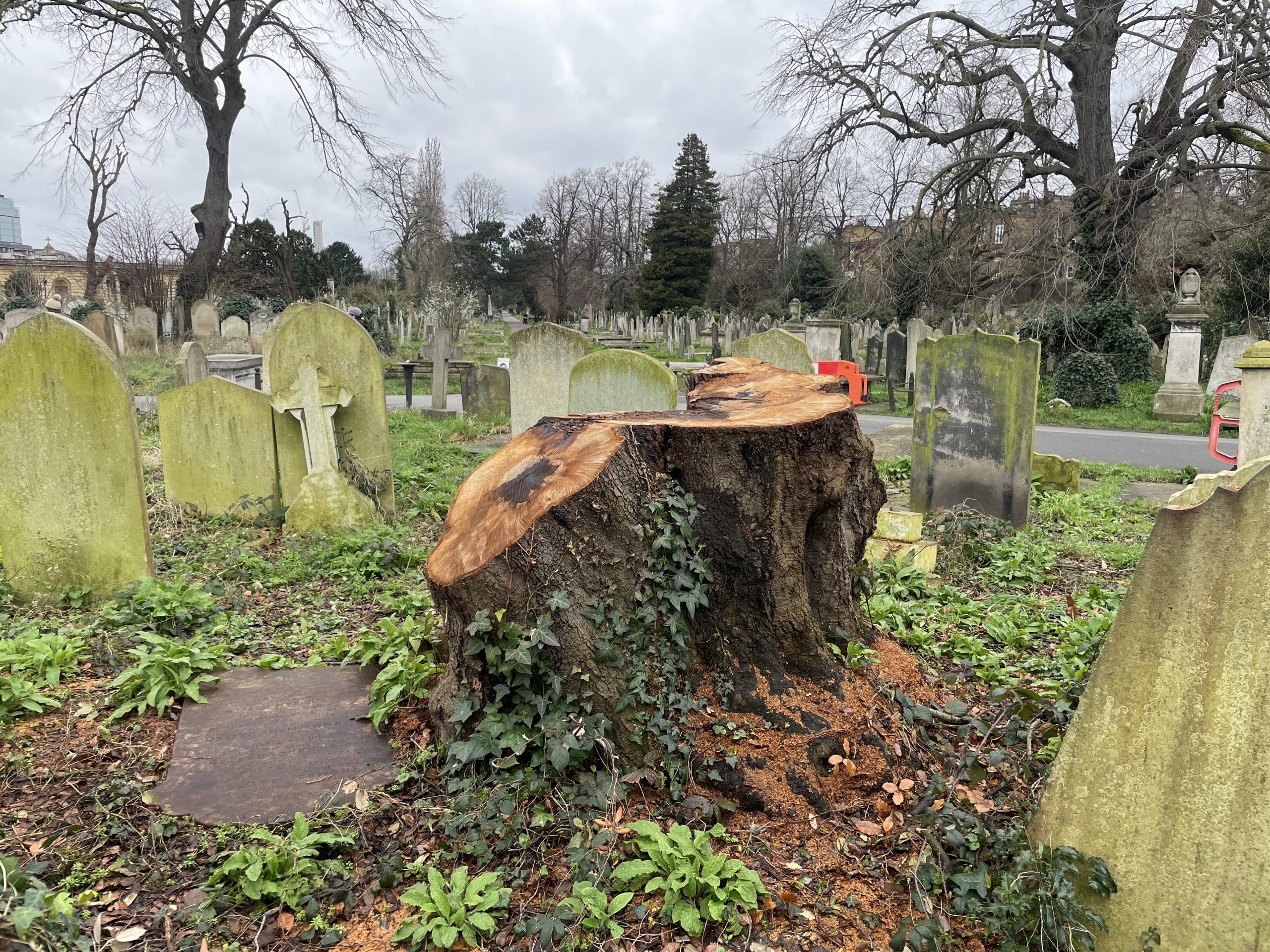
Stumped: The sad remains of one of the 41 doomed trees and the ghostly skeletons of tress already lobbed Photo ©Rob McGibbon/TCC
Felling began in the Autumn of 2025, but has been moving ahead at pace during the past few weeks. All the dead trees are being taken down branch by branch by a giant ‘Merlo’ tree cutting machine, which will have completed its grim task by the end of March. So far more than 20 have been cut down.
The operation has been going on quietly across the 39-acre space between Old Brompton and Fulham Roads without any press attention until alarmed residents alerted The Citizen after witnessing chainsaw teams hacking through the cemetery’s precious vegetation.
Interior designer Julia Palmer, 55, was dismayed when she saw what was going on. She said: “We loved those trees. It’s so tragic. The landscape is being destroyed. The wildlife can’t reside in the trees. We just want to know what’s going on.”
So, The Citizen did some digging of our own and our investigation has unearthed another disturbing fact: the bug is infecting trees elsewhere in the Royal Borough and Hammersmith and Fulham.
The holm oaks — Quercus ilex, also known as holly oak or evergreen oak — long defined this corner of west London’s great garden cemetery. Evergreen and broad-shouldered, capable of reaching 20 metres with a vast domed crown, they provided year-round shelter for birds and an architectural foil to Gothic monuments. Among those buried nearby are cultural icons including Emmeline Pankhurst, cricketer John Wisden and manager of The Who, Kit Lambert.
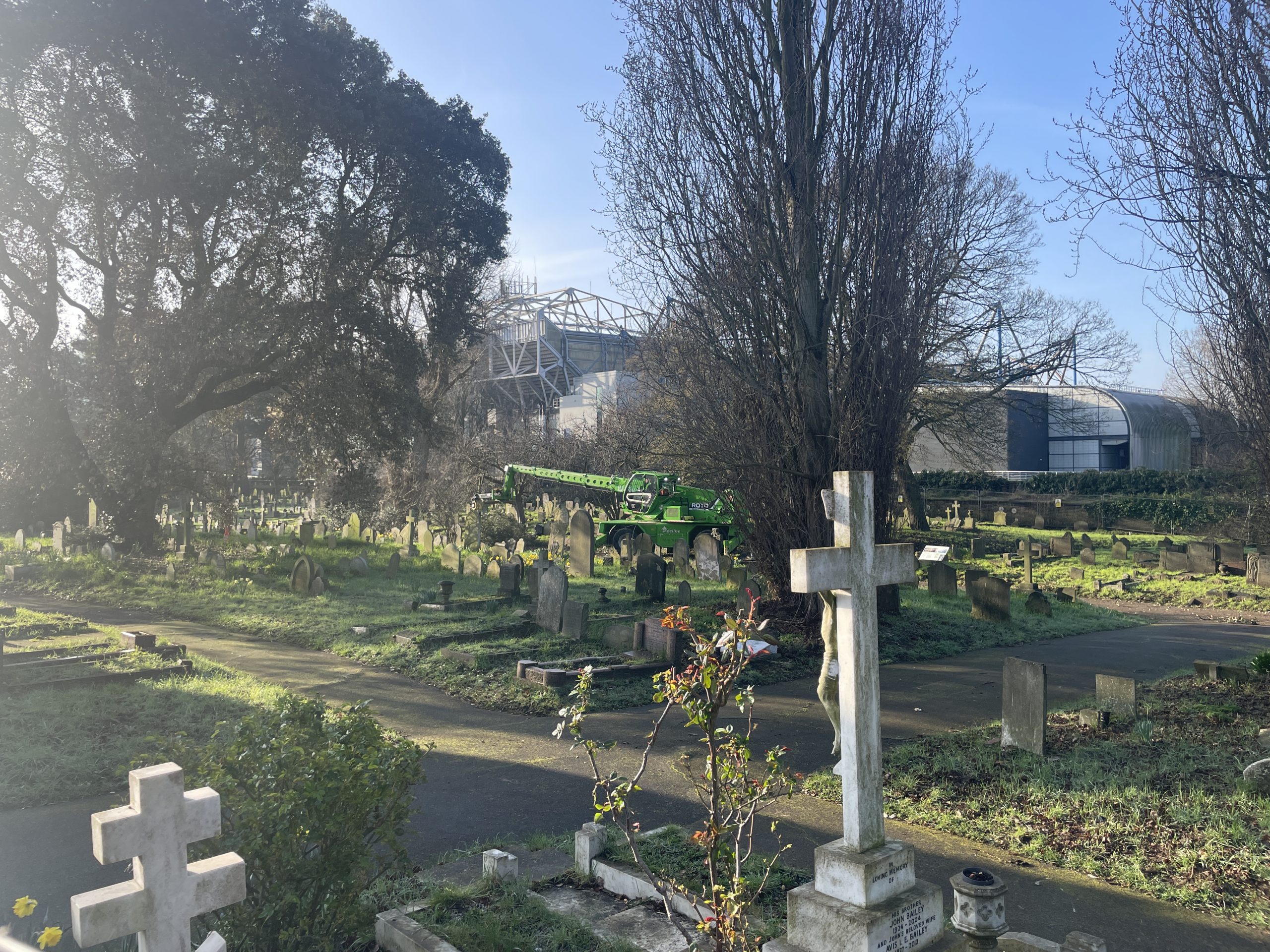
The Merlo tree cruncher goes about its work in the shadow of Chelsea football stadium Photo ©Rob McGibbon/TCC
The insect responsible is tiny — oval, brownish-red when mature — and attacks holm oaks exclusively. The females attach themselves to the bark, feeding relentlessly on sap until leaves wither and turn brown and branches fail. There is, officials say, no proven pesticide regime in the UK capable of halting its spread.
Brompton Cemetery is a much-loved feature of Chelsea, frequented daily by dog walkers and joggers alike. It has also become a regular backdrop for numerous films and over the decades including Goldeneye, Johnny English, Mission Impossible and the first instalment of director Guy Ritchie’s Sherlock Holmes franchise starring Jude Law and Robert Downie Jr. About 205,000 people are buried in graves and there are 35,000 monuments, 28 of which are Listed.
Emma Sparre-Newman, manager of Brompton Cemetery, has been overseeing the work to clear the trees. She told The Citizen. “What has happened is devastating and everyone is upset that so many trees have had to be cut down.
“But we are trying to look to the positive. We will be implementing an extensive planting programme that will provide a a beautiful future for the cemetery. It will take many years, but it will be worth it and the new trees will be more resilient.
-

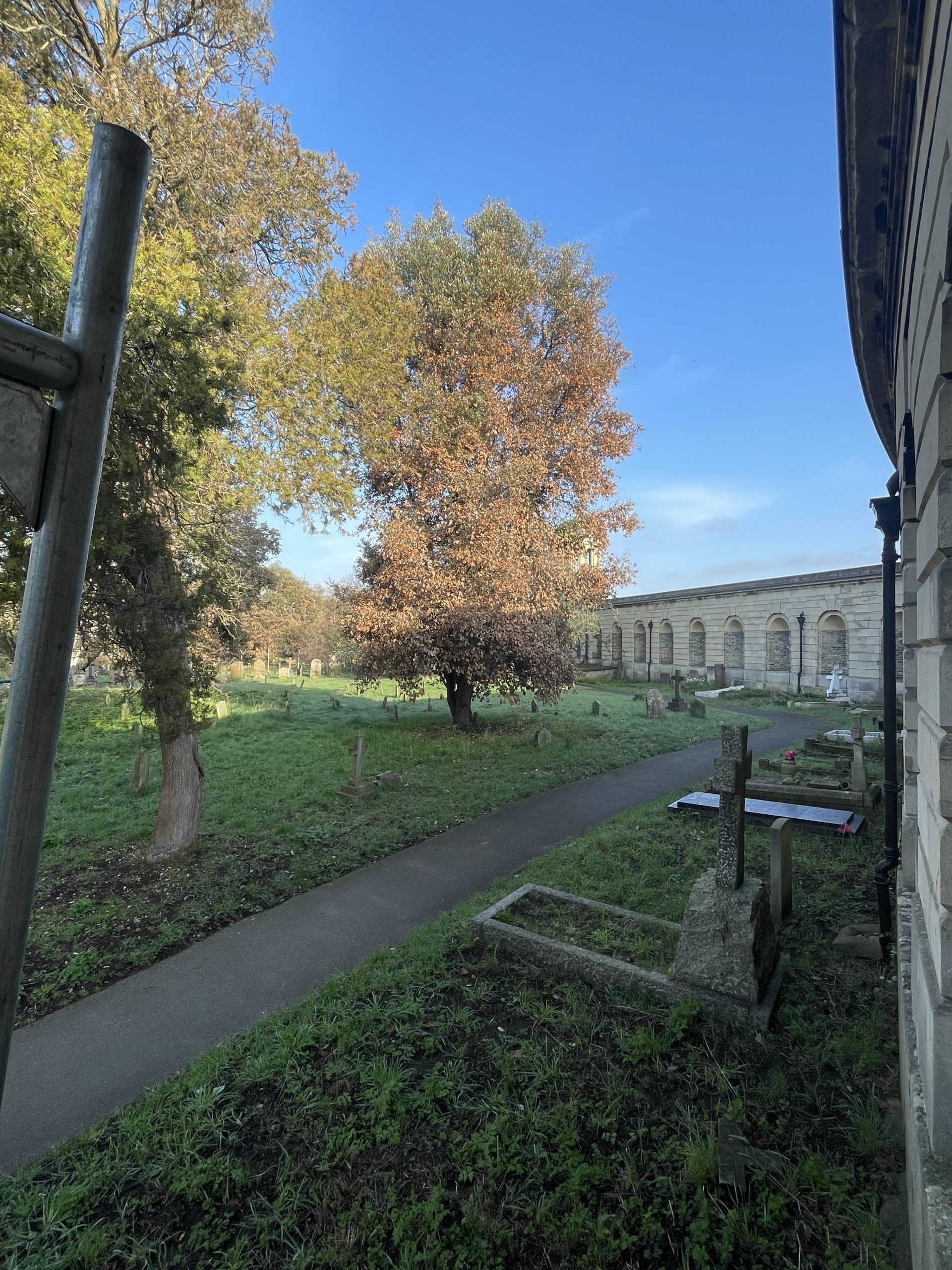
- A tree destined for cutting
-
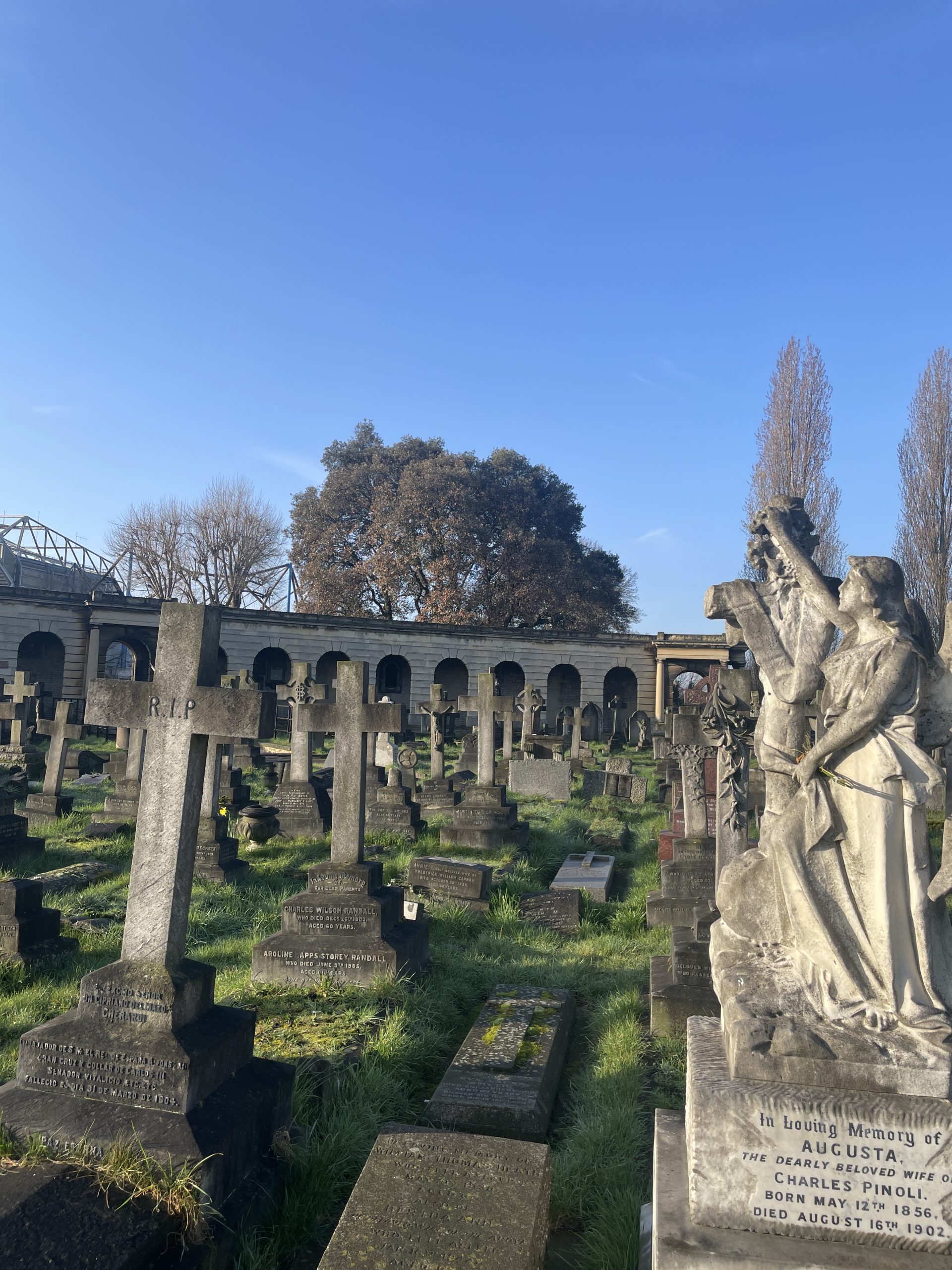
- Another doomed oak
-
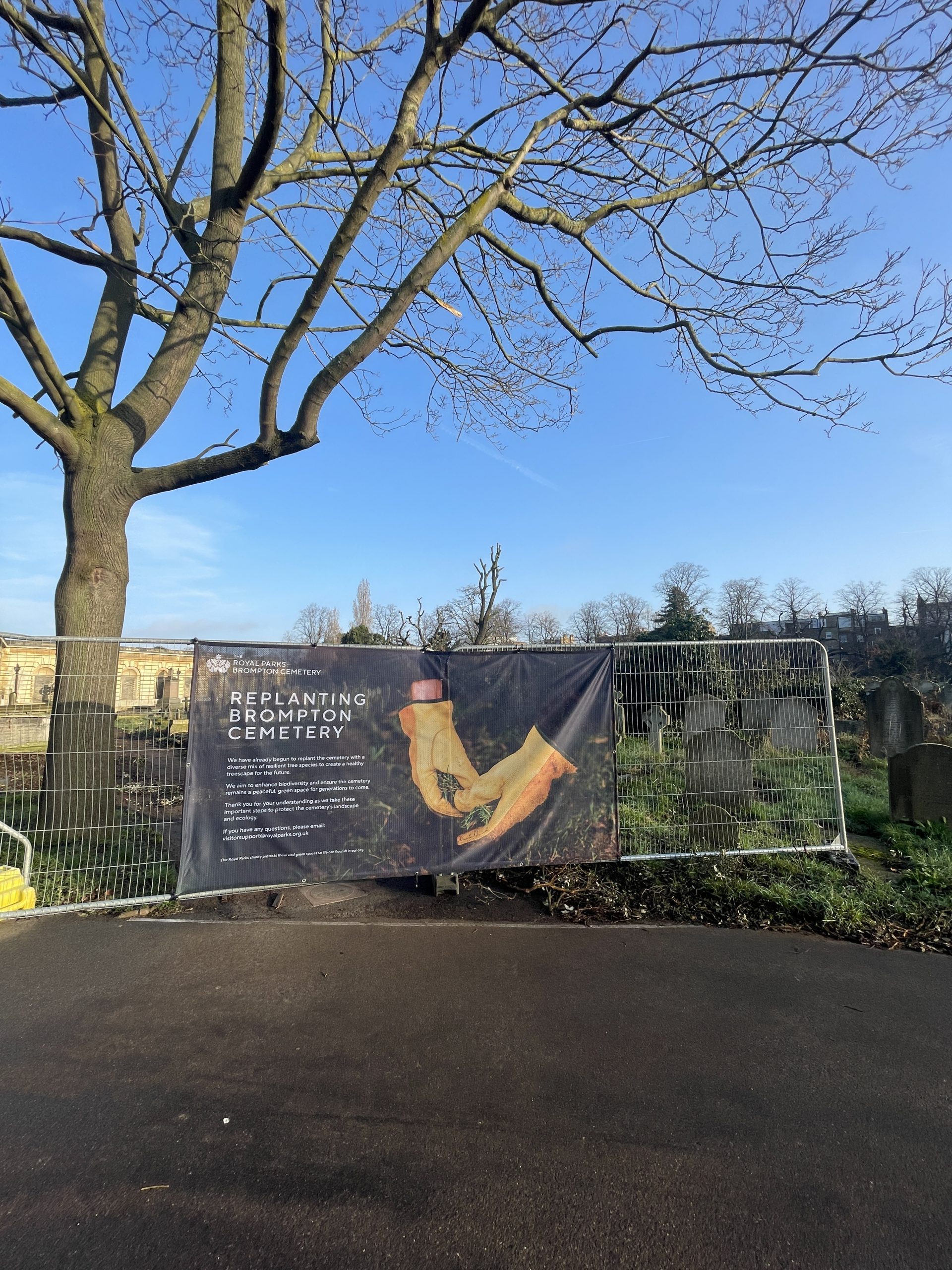
- Cordoned off all Photos ©RM/TCC
“For the moment, we are focusing on the fact that visitors will be able to enjoy views of the cemetery that the Victorians saw when it first opened. This will reveal aspects of the cemetery that have been lost for more than 100 years.”
If the Nidularia pulvinata insect lives in the southern Mediterranean, the pressing question is obvious: how did it reach Chelsea?
A Royal Parks spokesperson said: “We cannot be 100 percent certain how the pest arrived in the cemetery. Defra and the Forestry Commission have reported that the most likely origin is from private planting, cut foliage, or wreaths, potentially from one of the countries it is known to inhabit.”
Could it have arrived via plants laid down by Royal Parks gardeners, or even by mourners attending graves?
-
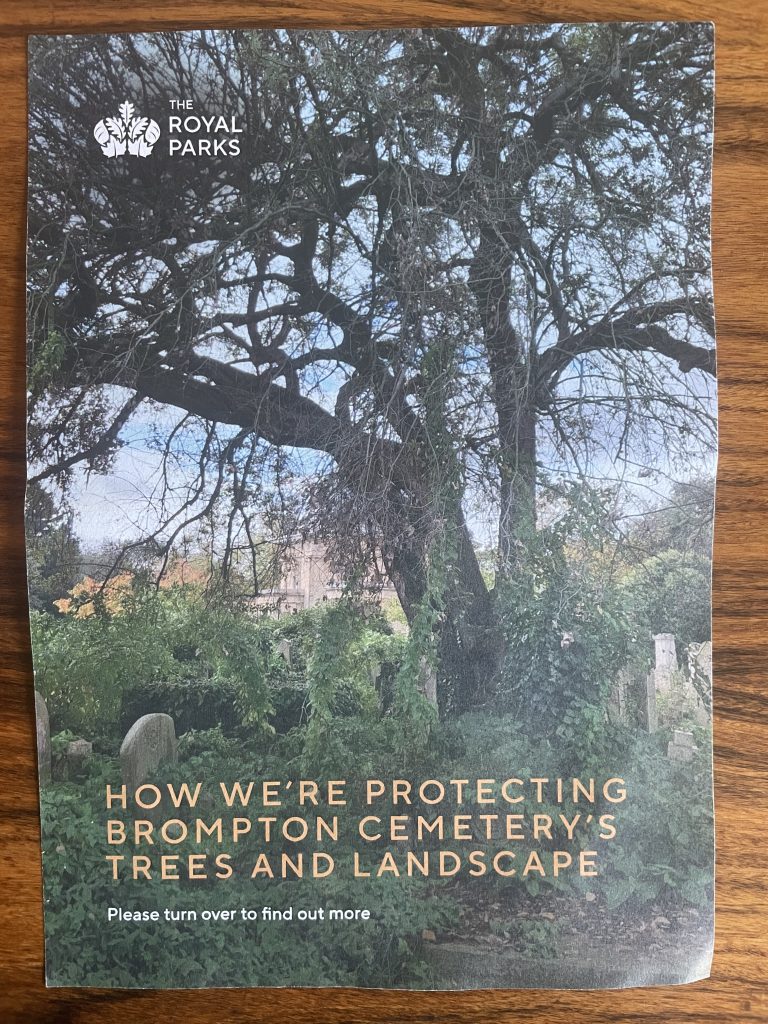
- Leaflets for visitors
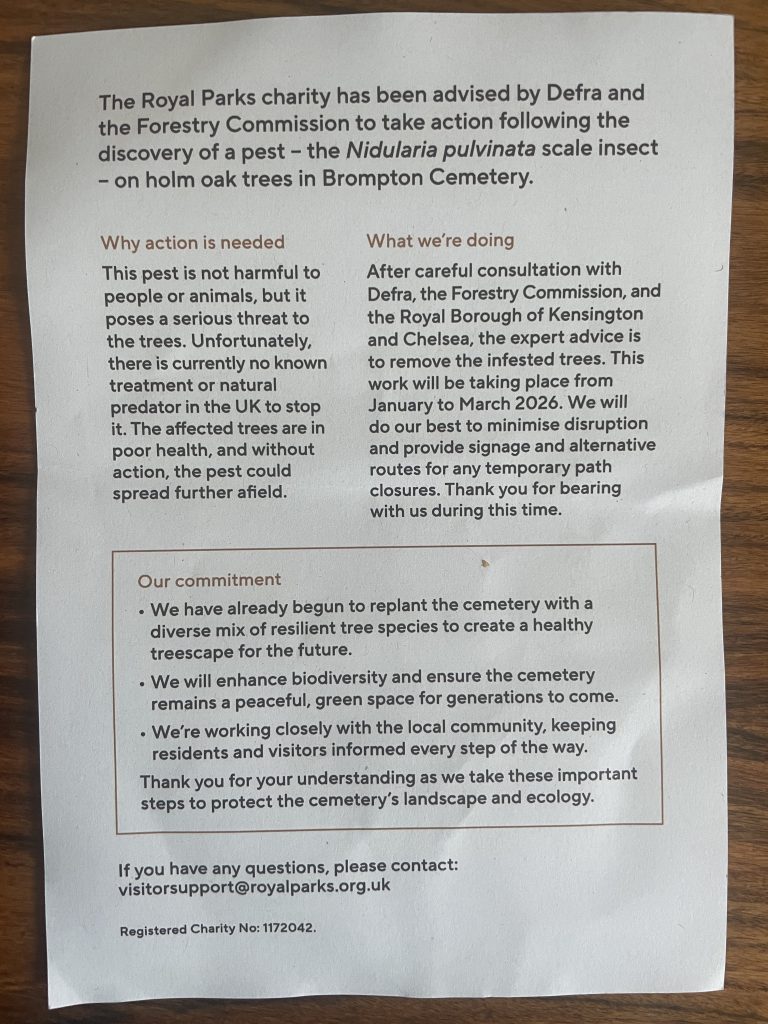
“The Royal Parks takes biosecurity very seriously and as such has a clear Biosecurity Policy and rigorous measures in place for plant procurement and planting such as purchasing from known supplies, plant passports, and knowing the origin of the specimens,” said the spokesperson.
“Although we cannot say for sure how this pest entered Brompton Cemetery, it has most likely been introduced through private planting, and this has highlighted the need for stricter enforcement of our graveside planting regulations.
“Cemetery regulations do not permit the planting, hedging, edging, or ornamentation of graves. We will be contacting leaseholders soon to ask them to abide by these rules more stringently.”
-
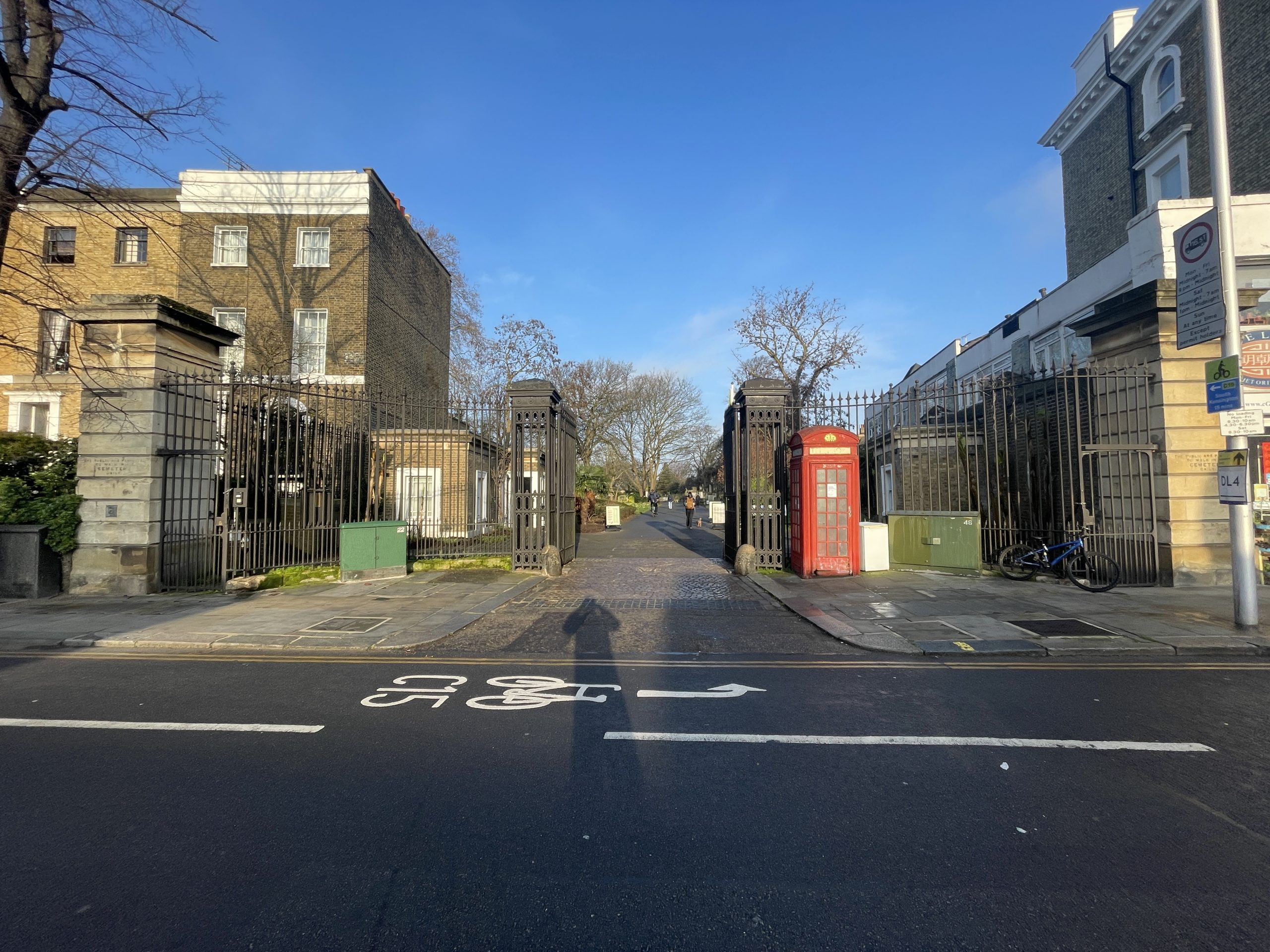
- South entrance to the cemetery
-
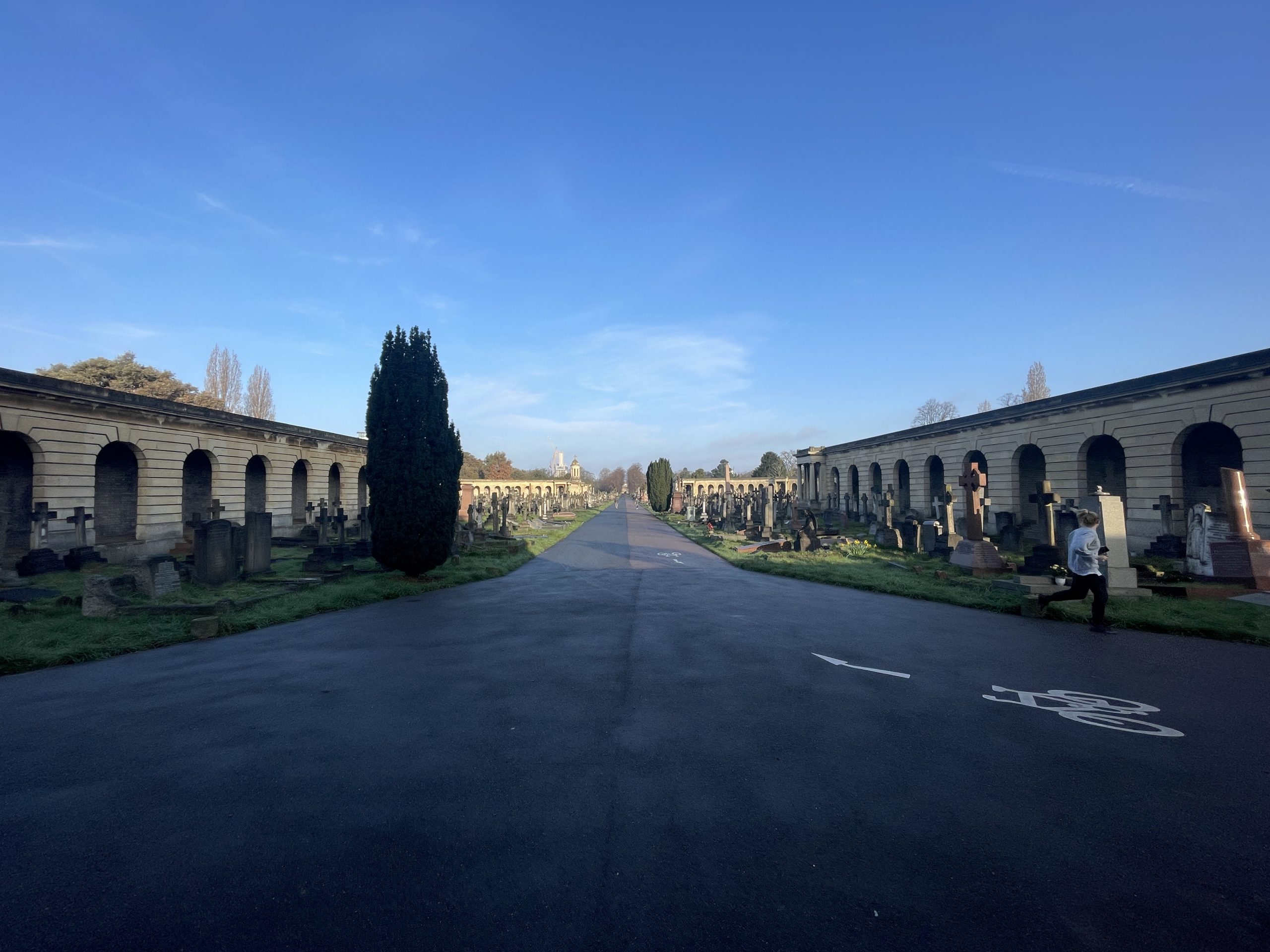
- The sweep of the central avenue
-
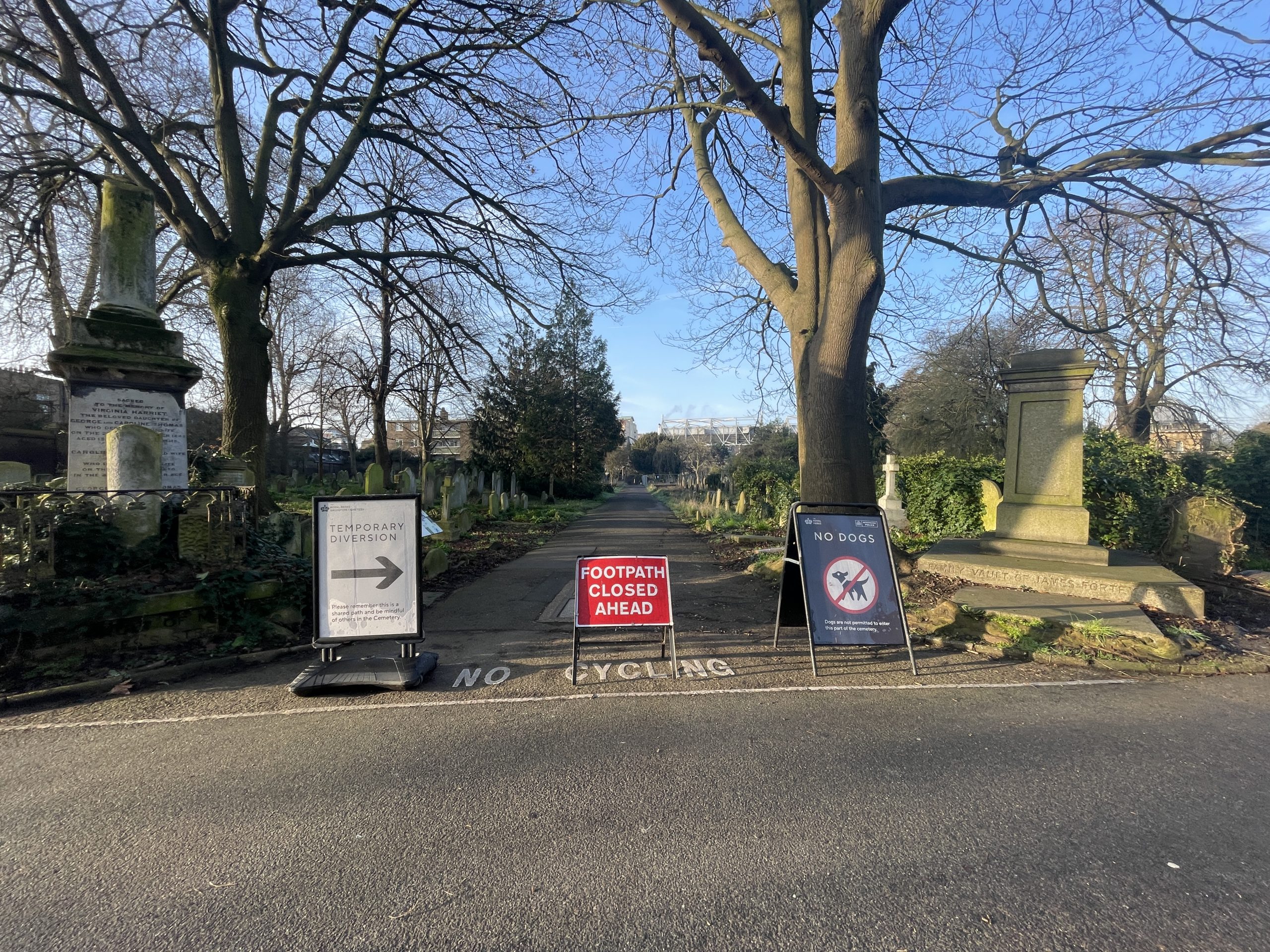
- Closures mark the cutting area
Visitors, including dog walkers, have noticed small white flags among the graves. The Citizen understands these mark where replacement trees are to be planted. The planting will be financed by the Friends of Brompton Cemetery charity.
The Royal Parks spokesperson continued: “We are taking this opportunity to further diversify the Brompton treescape with a range of evergreen, flowering, and climate resilient tree species. This will boost carbon absorption and enhance the biodiversity provided by Brompton Cemetery’s 60 plus existing tree species.
“We will reference some of the Victorian plant explorers such as the renowned Veitch family (18th century horticulturists and nurseries pioneers) by planting species they grew or introduced.
“We will be planting a variety of species including Arbutus (Strawberry trees), Meliosma veitchiorum, Aesculus californica (California buckeye) and Pinus engelmannii (Apache pine). These species have been chosen as they add to the cemetery’s diversity and will respond well to London’s projected climate. Over 15 trees have been planted so far with planting taking place periodically until winter 2027/28.”
The spokesperson also confirmed reports the insect has been discovered attacking holm oaks elsewhere in the Royal Borough and in Hammersmith and Fulham.
The spokesperson replied: “We are not percent certain that Brompton Cemetery is where it originated. Defra and the Forestry Commission are keeping an eye on the spread of Nidularia pulvinata and would be better placed to answer your questions about other locations where it has been recorded.”
-
- Stump imbedded with a grave stone ©Rob McGibbon/TCC
-
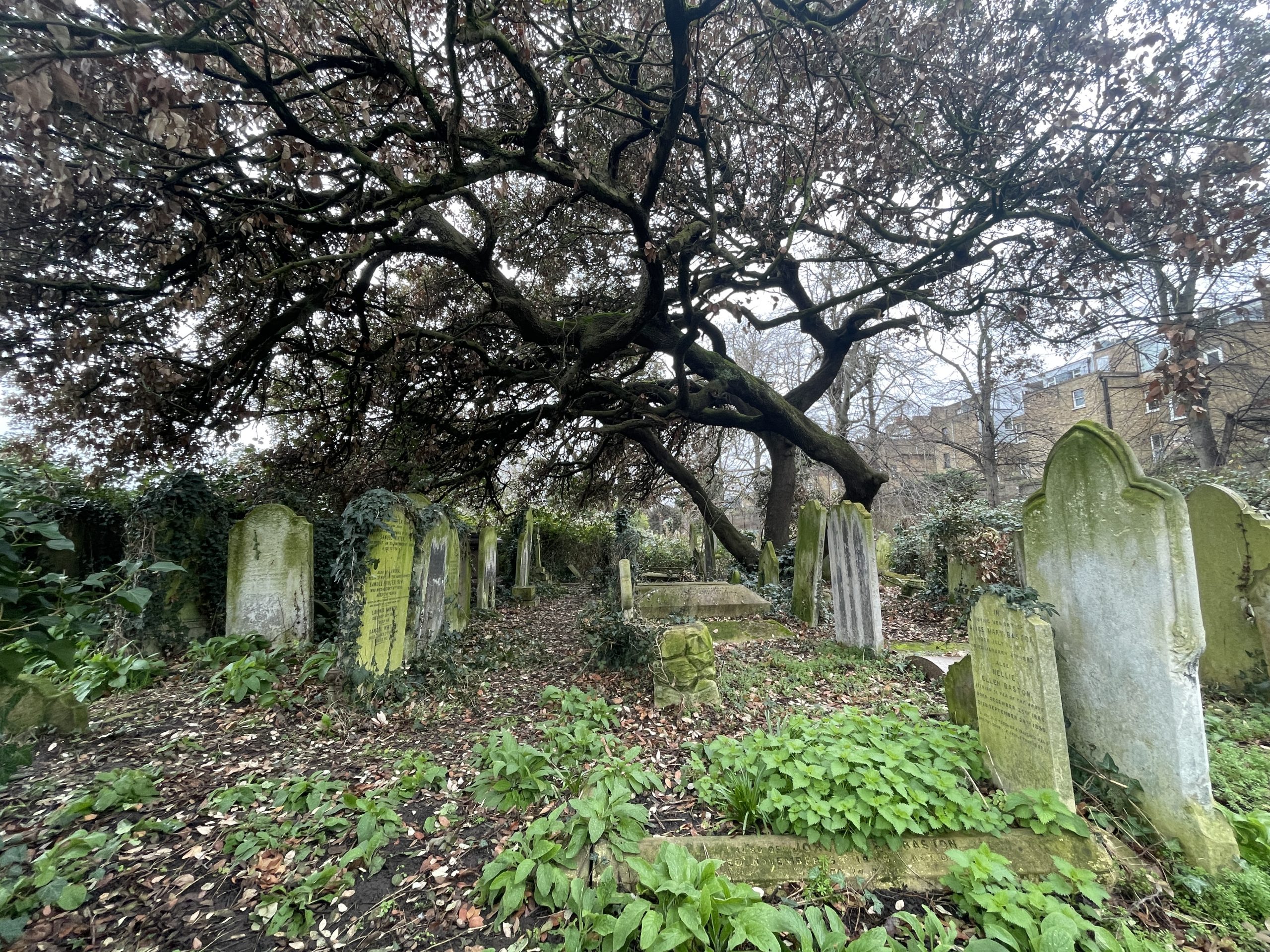
- Sad sight of a dying canopy ©Rob McGibbon/TCC
The Citizen contacted both Defra and the Forestry Commission, but neither responded to our questions so far.
London’s treescape has been reshaped repeatedly over the past century by imported pests and diseases. The most devastating loss came with Dutch elm disease, a fungus spread by bark beetles. In the 1970s, it swept through Britain, killing an estimated 25–30 million elm trees nationwide. London, once rich in mature English elms lining streets and commons, lost the overwhelming majority.
The latest major blow is ash dieback, caused by fungus and first identified in the UK in 2012. It is expected to kill up to 80 per cent of Britain’s ash trees. While ash is less dominant in central London than in the countryside, outer boroughs, cemeteries and green corridors are seeing steady removals for safety reasons.
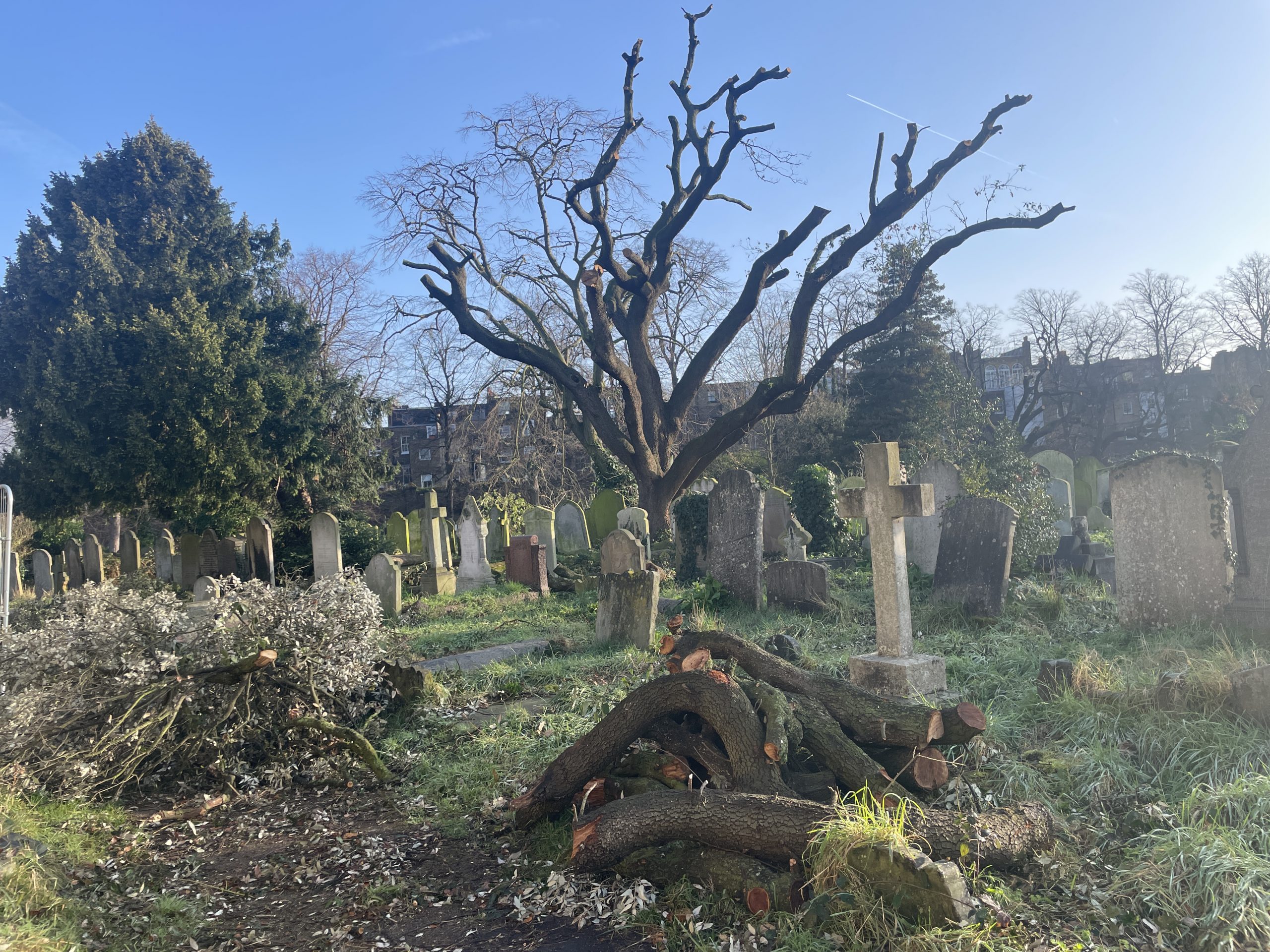
Dead wood: the branches of one cut tree are overshadowed by another waiting for the final chop Photo ©Rob McGibbon/TCC
-
- Sad sight of a dying canopy ©Rob McGibbon/TCC
The capital still has more than eight million trees. Yet history shows that the greatest threats often arrive quietly, unnoticed at first, until whole landscapes begin to change.
Brompton Cemetery’s holm oak is a Mediterranean heavyweight: evergreen, drought-tolerant, stoic. In antiquity its leaves were woven into crowns; its acorn symbolised fertility; its timber, dense and resilient, was prized by the Romans for wheels and tools. In Spain its acorns still sustain the pigs that produce Ibérico ham.
It is not a fragile species. It has endured empires and climate shifts.
In the filtered spring light of a Victorian cemetery, where the domes and colonnades stand unchanged, the sudden absence of those dark evergreen oak crowns is striking.
The nasty little bug that killed them is small. The loss is not.
The website for The Friends of Brompton Cemetery has a fascinating section about the history of the cemetery HERE. And readers can join the charitable group HERE
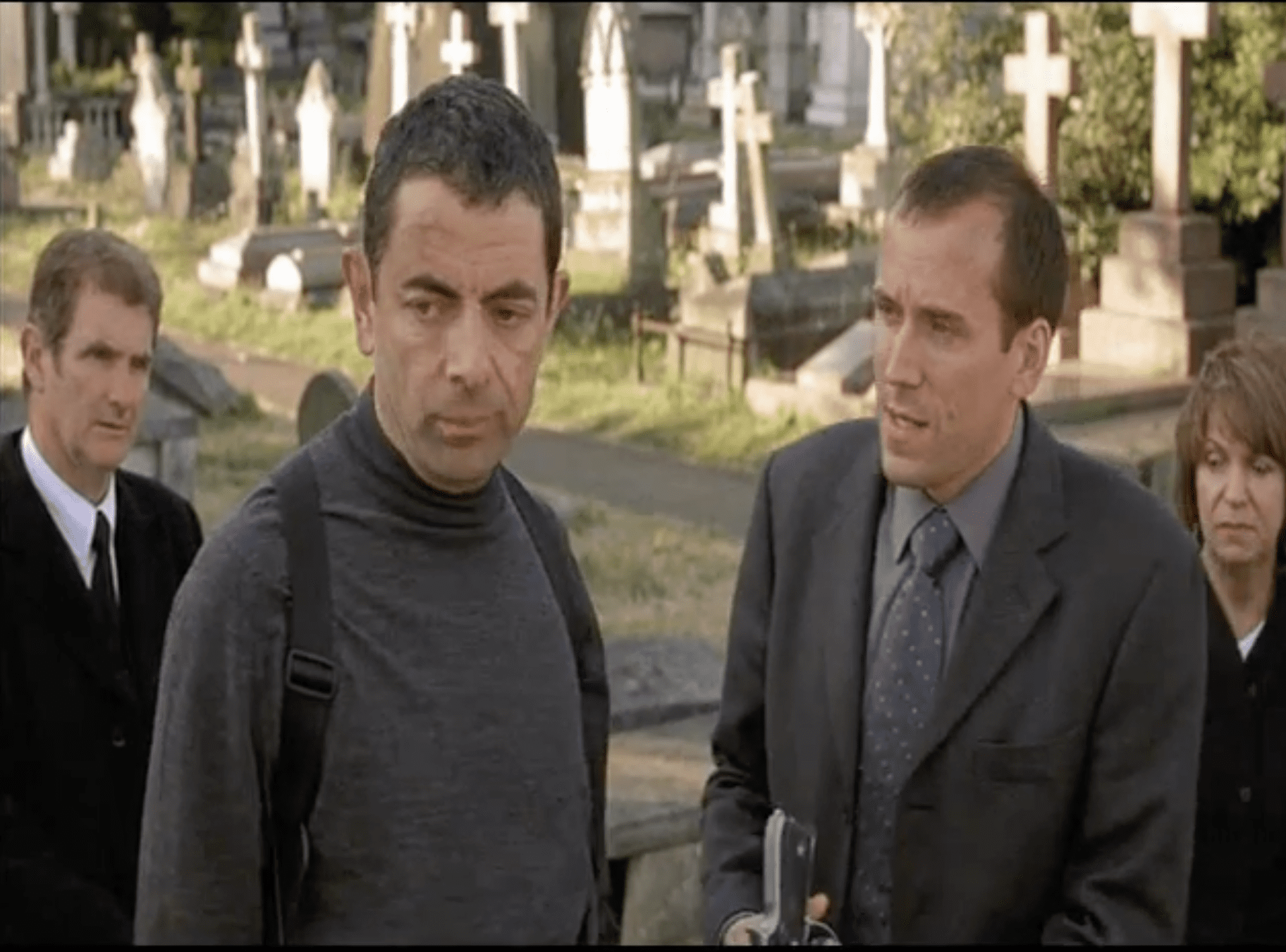
Rowan Atkinson and Ben Miller in a scene from Johnny English
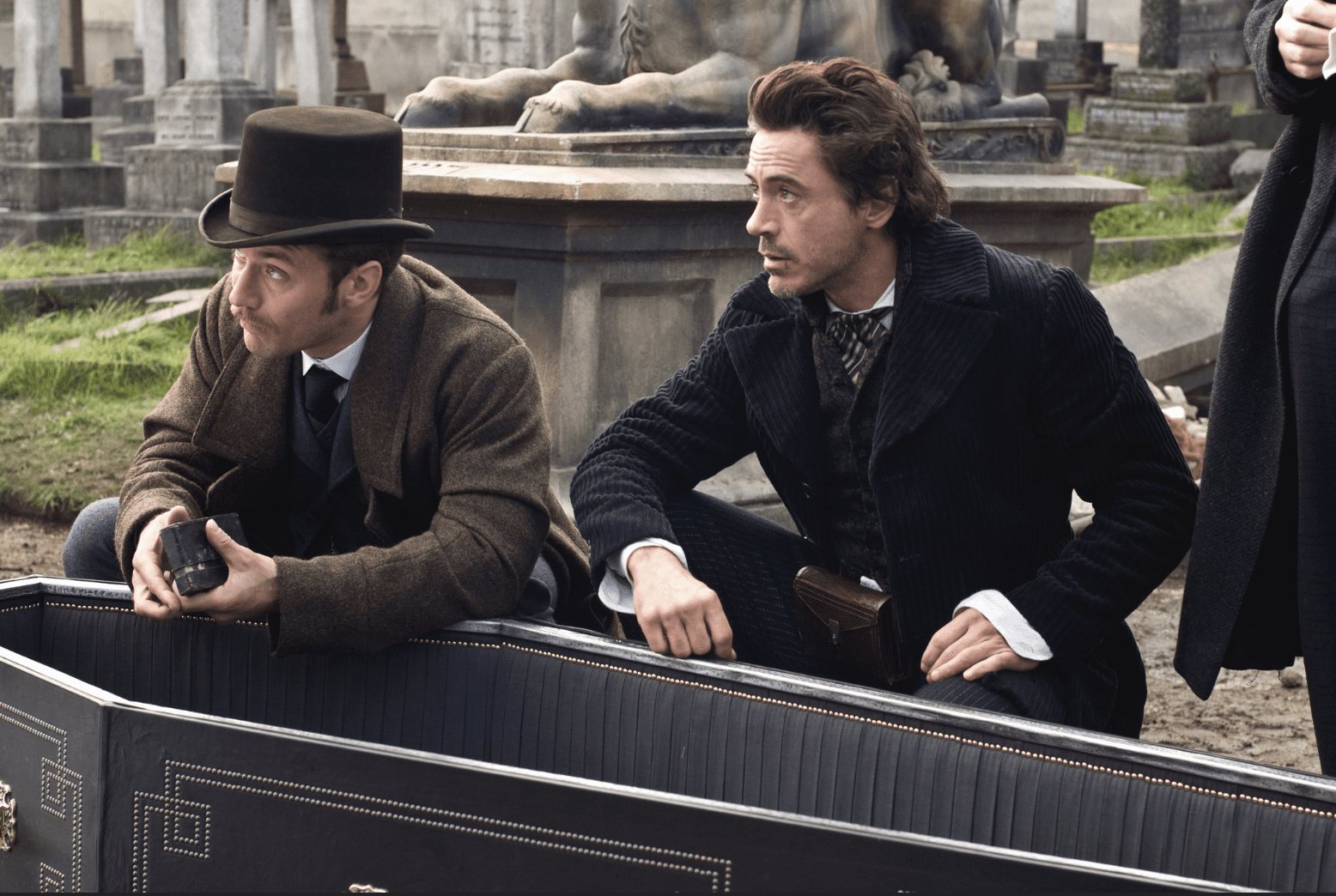
Jude Law and Robert Downey Jr in a scene from director Guy Ritchie’s first instalment of his Sherlock Holmes franchise
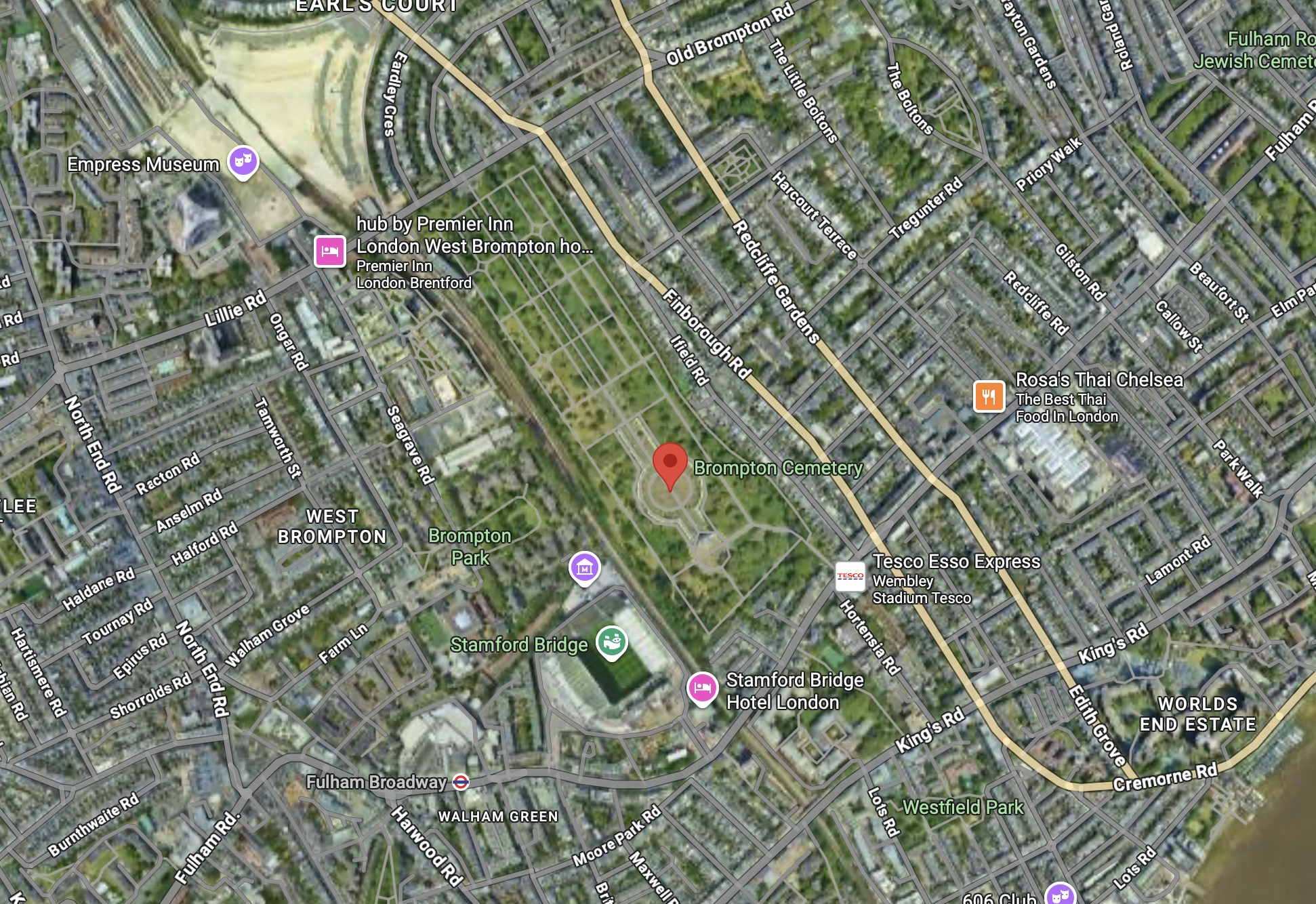
Map of the area occupied by the iconic 1840 Brompton Cemetery