Let me say right off the bat: Tokyo’s metro system isn’t for the faint-hearted. So if you’re a nervous person or feeling a bit off – forget it!
Day and night, crowds don’t walk — they surge. They pour relentlessly like an unstoppable tidal wave through endless tiled corridors where train announcements are heralded by ear-shattering electronic jingles like the opening bars of a video game you’re about to lose.
To reach one of Japan’s great modern marvels, I had to survive the mayhem of Shinjuku metro station in Downtown and make my way to Shinagawa — a principal departure point for the celebrated Shinkansen, better known as the bullet train.
If Shinjuku was metro hell, Shinagawa station was redemption. Calm. Ordered. Almost reverent.
The Shinkansen made its debut in 1964, linking Tokyo and Osaka in just over three hours to coincide with the Tokyo Olympics — a gleaming statement of Japan’s post-war recovery and technological swagger.

Back then it travelled at 130mph, which felt indecently quick. Today it slices through the landscape at up to 200mph, departing roughly every fifteen minutes with metronomic precision.
So punctual that a minute late prompts an investigation. In 2017, a crew was disciplined for leaving 20 seconds early. Twenty seconds?! In Britain we would probably hand them a medal for initiative.
My destination was Odawara — gateway to the sacred slopes of Mount Fuji.
Japanese efficiency begins long before departure. Your ticket tells you not only your carriage and seat number, but precisely where to stand on the platform where painted lines and digital boards shepherd you into position behind sliding glass doors. Trains stop only for between one and three minutes. That is not a suggestion — it’s “Shin” law.
Bang on time at 10:06 precisely — not 10:05, not 10:07 — my train materialised through the haze: a white, bull-nosed, 16-carriage serpent gliding into view. Less public transport, more spacecraft politely pretending to be a train.
The platform portals opened in perfect synchronicity with the carriage doors. No shoving. No elbowing. No raised voices. Just an orderly, almost choreographed boarding. Once seated, a ticket inspector — a young woman in immaculate uniform — bowed to us before checking tickets. As she exited into the next carriage, she bowed again. Can you ever imagine any British railway official ever bowing passengers?!
We slid away so smoothly it felt as if the world outside had started moving instead. Tokyo’s high-rises gave way to suburbs, then rice paddies — green and geometric like a minimalist painting.
There are rules on the Shinkansen, and they are followed. No smoking. Phones on silent. No voice calls allowed — though texting is fine. No booming, annoying “I’m on the train!” announcements. Bliss.
Contrary to myth, eating is permitted — and done with near-ceremonial discretion. I watched passengers unwrap exquisitely prepared bento boxes as if performing a tea ritual. Even the crinkling of packaging seemed to observe etiquette.
About thirty minutes into the journey came the moment. A subtle murmur rippled through the carriage as heads turned left.
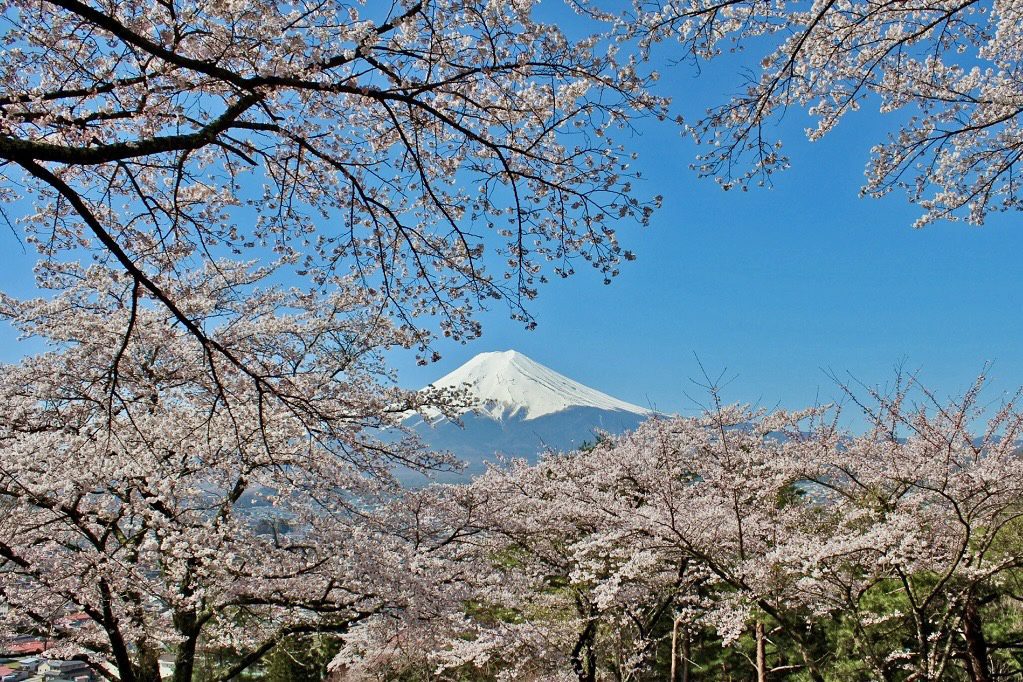
And there she was: Mount Fuji. Perfectly symmetrical. Snow-capped. Rising above low cloud like a deity granting a brief but dignified audience. At 12,388 feet, Fuji is not merely a mountain; she is an icon. A presence.
We eased into Odawara precisely on schedule. No fuss. No drama. Just punctual grace. On the platform stood my guide — no more than five feet tall in his stockinged feet but armed with a handshake like a vice.
“Hi Mr John. My name is Hari — like Harry Potter!” he beamed. “Come, the bus is waiting.”
Bundled — there is no other word — into a compact minibus, I found myself wedged between two exuberant South African couples armed with cameras, biltong and enthusiasm somewhere north of Table Mountain.
At the wheel sat Gombe. Gombe did not smile. Gombe did not chat. He stared ahead with the serene intensity of a man who could reverse up a mountain pass without blinking. Compact, impassive, immovable — he bore an uncanny resemblance to Odd Job from a Bond film (mercifully without the lethal hat).
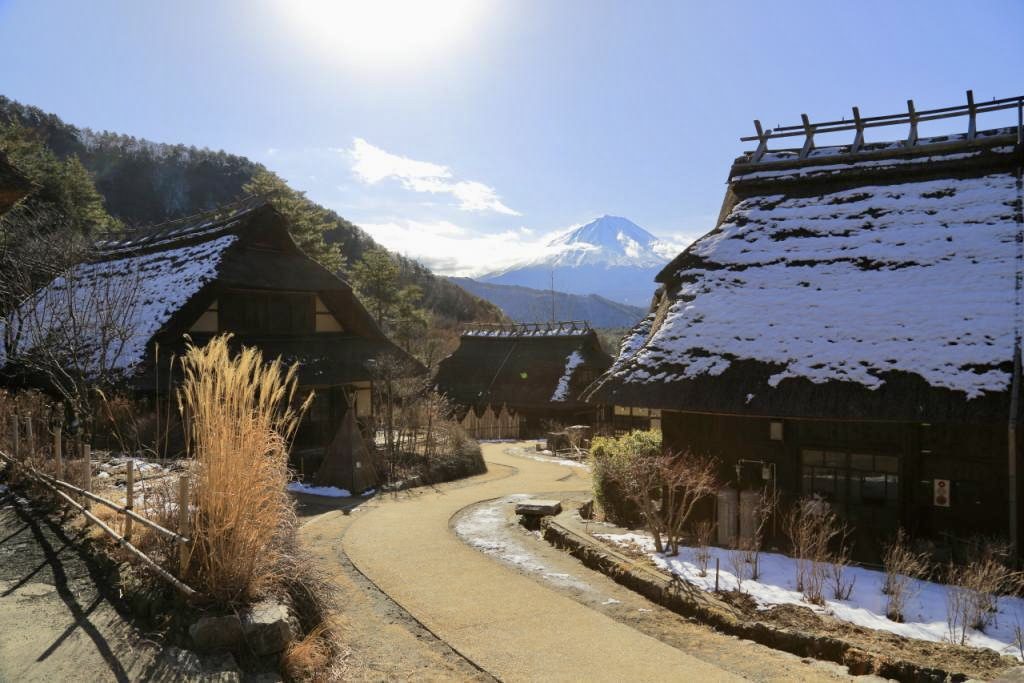
As we rolled towards Fuji’s lower slopes, Hari swung round in his seat. “Right everyone — cameras ready — because we’re not just looking at a mountain… we’re looking at Japan’s most revered icon!”
“Now, how sacred is Mount Fuji?” asked bearded, ginger-haired “Griz,” the elder of the South African husbands.
“Short answer: very,” said Hari earnestly. “Long answer: it’s been holy for well over a thousand years — and not in a dusty museum way. In a living, breathing, people-still-come-here-to-pray way.
“In Japan’s native Shinto belief, mountains are home to spirits called kami. Fuji is linked to the blossom princess: Konohanasakuya-him. So yes — for many Japanese people, this isn’t just scenery. It’s hallowed ground.”
“Any danger of it erupting while we’re there?” chirped Griz’s wife, half joking.
“Don’t worry ma’am,” assured Hari. “The last time Fuji exploded was in 1707.”
“But what happens if it does?” she pressed.
Hari didn’t blink. “You run like f*ck, ma’am!”
The bus exploded with laughter. I noted Gombe did not.
Winter meant we could only ascend to around the 3,000-foot mark, where a metal barrier barred the snow-bound road and uniformed guards gave the scene the faint air of a Cold War checkpoint.
Looking up at the summit and fumbling for our iPhones to take snaps, our little party realised the magnificent snow covered cone was more than a national emblem.
The tour continued into the volcanic heartland. Fuji sits within Japan’s Ring of Fire, and we drove on to Hakone where sulphurous fumes swirled and caught the back of the throat. Later we boarded a modern galleon that skimmed across a mist-shrouded lake — theatrical, faintly surreal, entirely glorious.
By early evening, Hari delivered us to a resort hotel for dinner. A long table groaned under a seafood display worthy of maritime royalty: ruby slabs of tuna and translucent yellowtail fanned over crushed ice; whole sea bream grilled until the skin crackled; miso-glazed black cod flaking at the touch; crab legs split open; clams steaming in sake.
I piled my plate high. Then I noticed a tureen labelled: “Octopus balls.”

“I didn’t know they had balls,” chuckled Griz as we each spooned some onto our plates. Delicious!
Dinner done, Hari waved me into a taxi for the return to Odawara and the bullet train that waits for no one.
In the fading dusk, as the car curved away, I caught one last glimpse of Fuji’s summit — faint, immense, eternal.
A goddess’s home. A pilgrim’s journey.
An ancient mountain watching quietly for 10,000 years as the 200mph future rushes past below.
Photos by the author and the Yamanashi Tourism Organisation
Travel Facts
Typical London to Tokyo return air fares: Economy: £550 – £950 Business: £2,400 – £4,200
JAL https://www.jal.co.jp/uk/en/ BA: https://www.ba.com ANA: https://www.ana.co.jp/en/gb/
Typical Tokyo hotels per night:
Budget: £30 – £110 (capsules/hostels to basic business hotels)
Mid-Range (3★–4★): £110 – £320
High-End / Luxury (4★–5★): £320 – £600+