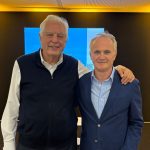
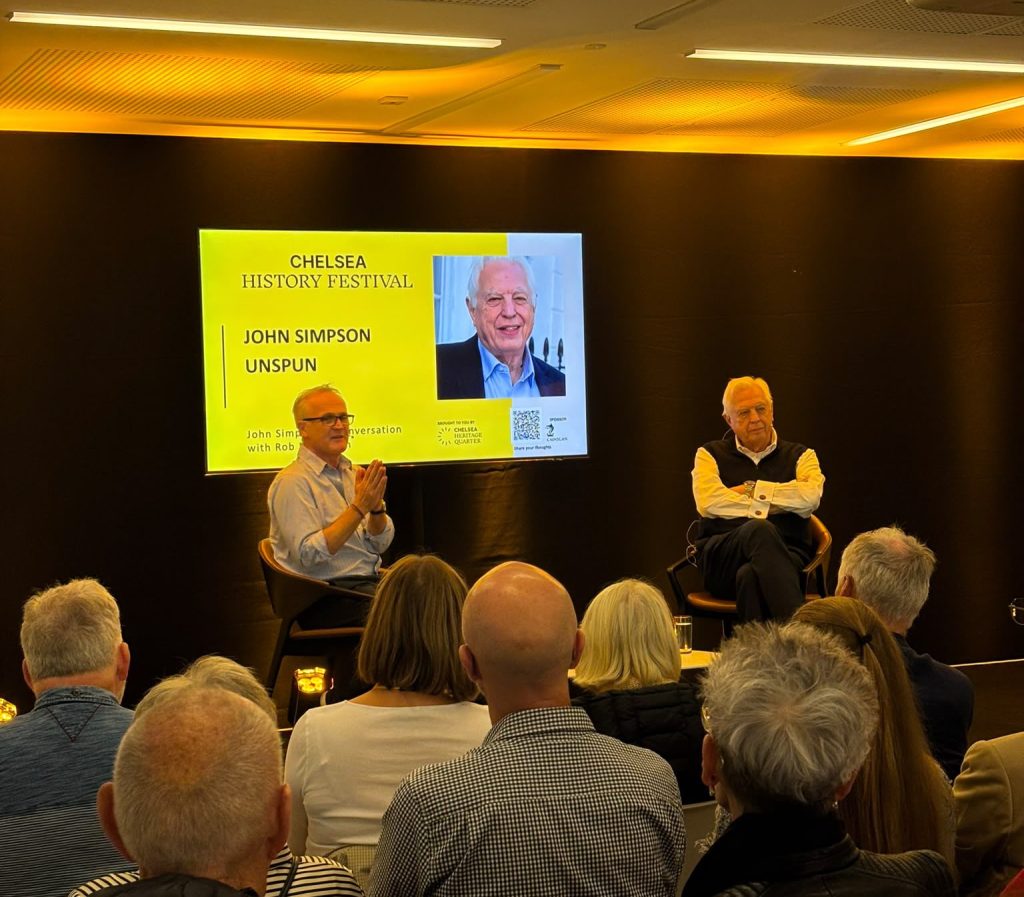
BBC broadcasting veteran John Simpson was among the headline acts at this year’s Chelsea History Festival, drawing a packed audience to the National Army Museum for an evening of extraordinary stories, candid reflections and plenty of laughter.
Taking to the stage, the BBC’s World Affairs Editor was in conversation with Rob McGibbon, editor of The Chelsea Citizen.
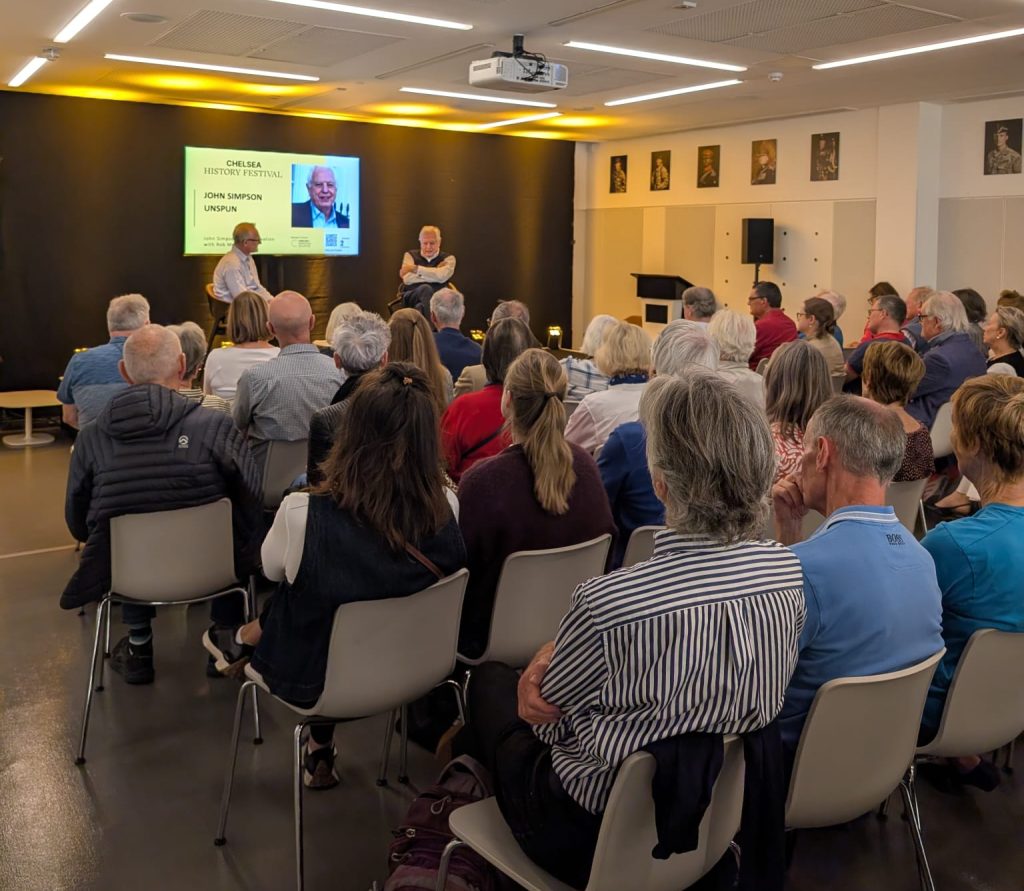
Spanning six decades of reporting from some of the world’s most dangerous places, the conversation oscillated his times working in the combat zone and meeting notorious dictators, to the heartbreaking estrangement from his mother, to an uncertain future at the BBC.
For a man who has witnessed so much history first-hand, it seemed fitting to begin by asking which historical events Simpson would most like to have reported on. His answer took the audience to the turn of the 20th century, particularly the Boer War and the Russian Revolution.
“I would love to have been there for the Russian Revolution,” he said. “I’d give serious money to be able to go and see that.”
Asked which historical figure he would most like to interview, Simpson settled on William Shakespeare, although his line of questioning might have surprised the playwright.
“I’d like to say: what were you doing in those missing years? What were you really thinking about your wife?”
Then came the question that prompted laughter from the audience: “And I asked him: are you gay?! Well, you can’t not ask him, can you?” Simpson added, chuckling.
Despite having switched from choosing to study History to English at Cambridge, Simpson explained that history remained his greatest intellectual fascination.
His career has, of course, given him an extraordinary perspective on its importance. From the fall of the Berlin Wall, to Nelson Mandela’s release from prison, Simpson has witnessed moments that have shaped the modern world. Many of his accounts as an globetrotting foreign correspondent have indeed become the first accounts of history itself.
Reflecting on those experiences, he described how journalism had transformed him from a reserved young man into someone far more emotionally open.
“You can’t experience these appalling things, and other things that are supremely exciting and positive, like Nelson Mandela’s release from jail… and not be changed.”
An extraordinary childhood
The conversation then turned to Simpson’s childhood, revealing a deeply personal story behind one of Britain’s most recognisable broadcasters.
At the age of six, Simpson was confronted with an extraordinary choice when his mother announced she was leaving his father.
Returning home from the Festival of Britain in 1951, he found her waiting with a suitcase. Shockingly, his father then suggested they ask the young Simpson which parent he wanted to live with.
His mother already had two children from a previous marriage, while his father had none.
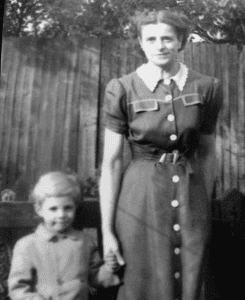
Simpson, aged four. with his mother, Joyce
“I thought, in that rather foolish way that children have, that having children was a good thing. So I said, ‘Well, I’d better stay with Dad because he hasn’t got any kids.’”
The decision shaped much of his childhood. Growing up in south London, Simpson was frequently left alone while his father worked and even pretended to school friends and adults that his mother was at home to avoid appearing different from other children.
“I was a latchkey kid from the age of six,” he recalled.
Although he credited his unusual upbringing with developing the resilience that would later serve him in war zones, he admitted that the emotional consequences were considerable.
“Of all the things in my life that I regret — and I regret a hell of a lot — I think the thing I regret the most is not really being able to be close to my mother.”
The emotional cost of reporting
Discussing his own experiences as a father, Simpson explained that his childhood had made him determined to give his three children emotionally happy lives. He has two adult daughters from his first marriage and a 20-year-old son called Rafe from his second marriage.
Simpson became visibly moved when recalling how, when was little, Rafe reacted to his frequent departures for Iraq during the height of the conflict.
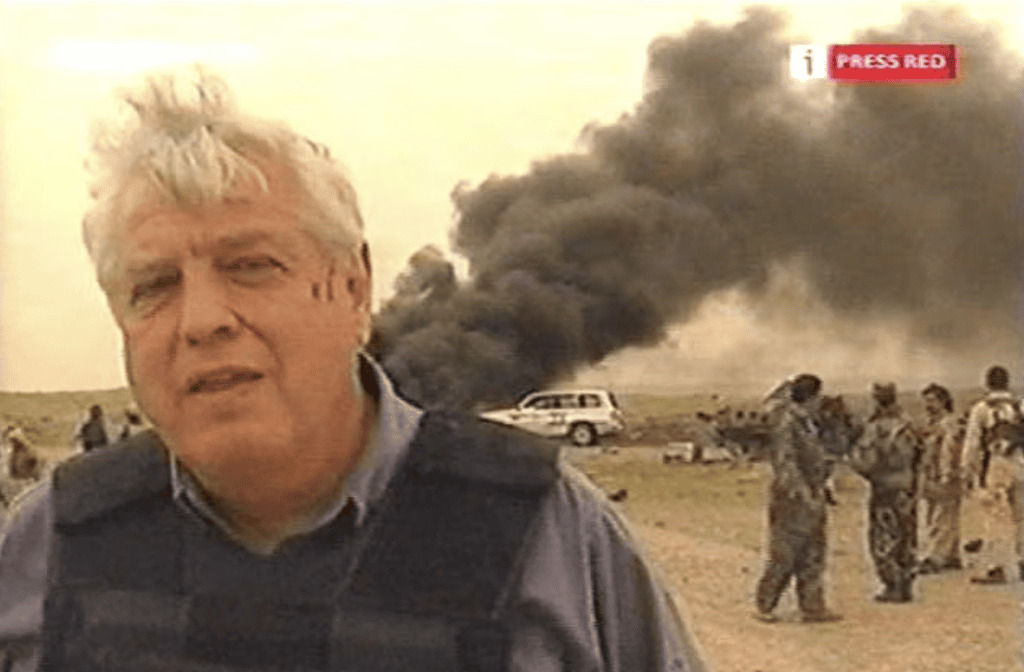
“The little guy used to stand at the front door with his arms across it to try to stop me,” he remembered. “What can you do?”
Simpson admitted that years spent witnessing suffering, courage and extraordinary acts of humanity had made him increasingly comfortable expressing emotion.
Asked what makes him cry, his answer was surprisingly simple.
“Watching films and stuff where people are nice to one another. Niceness, more than anything else.”
Dictators, danger and Piers Morgan
From family life, the conversation moved to the extraordinary cast of world leaders Simpson has encountered throughout his career. Among the names raised were Saddam Hussein, Muammar Gaddafi and Vladimir Putin, alongside one rather unexpected addition: former newspaper editor and YouTuber Piers Morgan.
McGibbon reminded Simpson that Morgan had once branded him a “pompous old prune” for criticising his interview with Donald Trump on Twitter.
Yet Simpson was unexpectedly conciliatory. “I quite like a lot of the things he says, and I like it that he’s so outspoken,” he admitted, before adding that Morgan had “got better with age”.
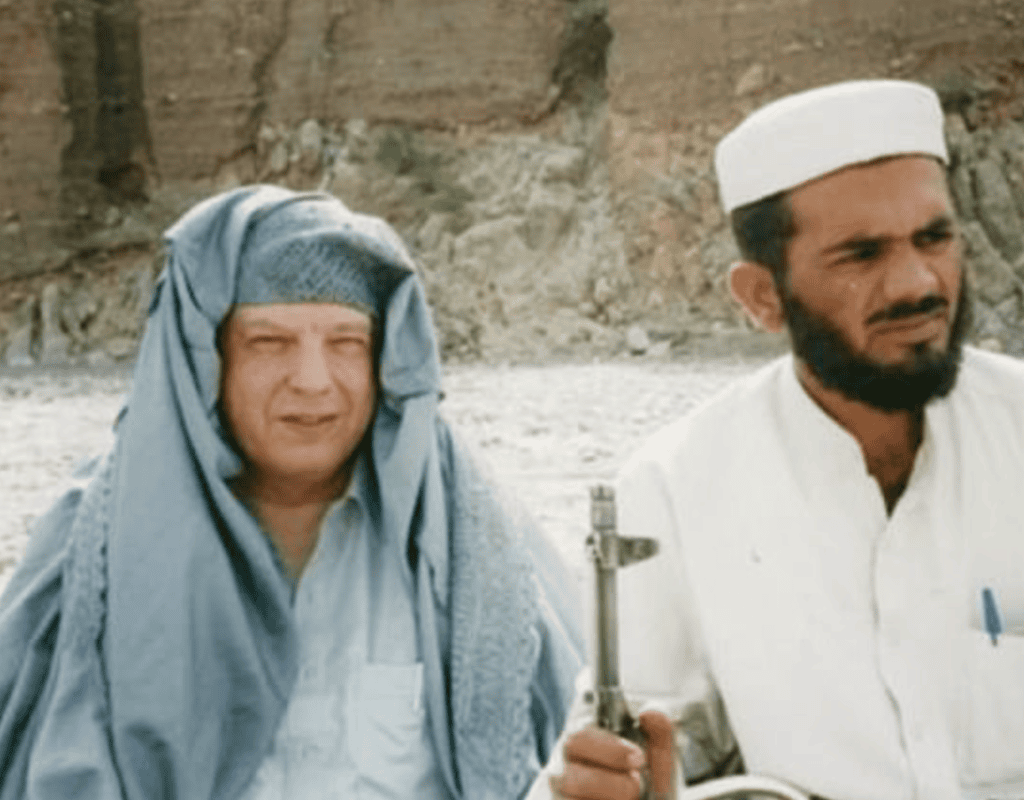
The conversation then returned to Afghanistan, where Simpson famously entered Taliban-controlled territory disguised in a burqa after Western journalists were threatened with death.
His reporting from the country was among the many examples of his determination to witness events from the ground, regardless of the danger.
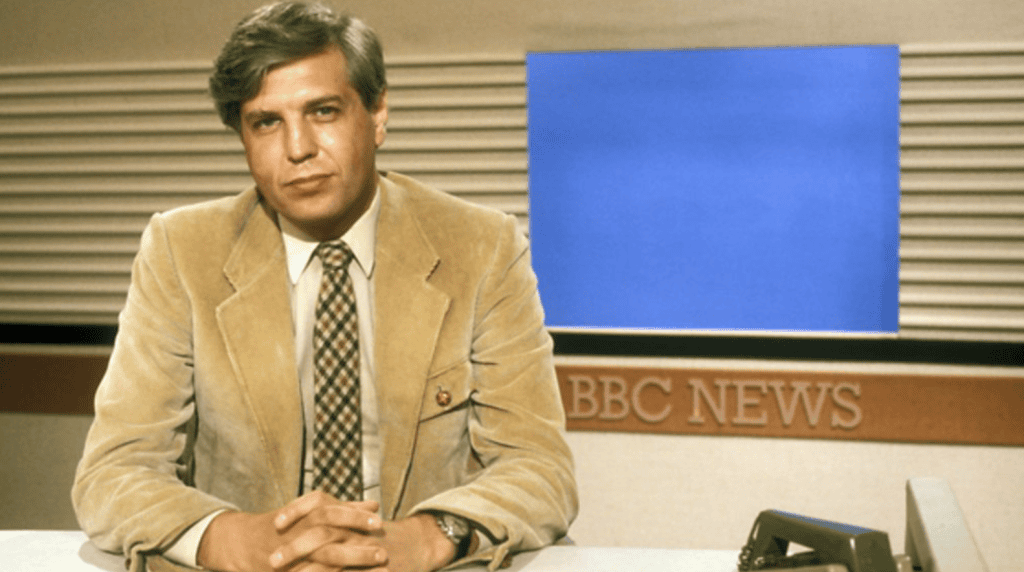
Discussing Saddam Hussein, Simpson recalled attending every session of the former Iraqi dictator’s trial and developing an extraordinary unspoken understanding with him across the courtroom.
Although unequivocal in his condemnation of Hussein, Simpson reflected on the dignity he displayed when facing execution.
“Even bad people sometimes have dignity,” he said.
There were lighter moments, too. Simpson recalled interviewing Colonel Gaddafi, whose increasingly bizarre behaviour over the years had left a lasting impression.
During one particularly memorable interview, Gaddafi repeatedly broke wind, prompting Simpson to recount how a newspaper editor later gave his column the headline: “Warm wind of compromise blows.”
The anecdote brought some welcome comic relief to a discussion otherwise dominated by the darker side of international affairs. Turning to Vladimir Putin, Simpson described his first encounter with the future Russian president during his early political career in St Petersburg.
He recalled initially thinking he would never need to see the relatively unknown politician again. “And, of course, history proved me wrong.”
Despite describing Putin as “highly intelligent”, Simpson suggested that surrounding himself with people unwilling to challenge him had contributed to his decision to invade Ukraine.
Finding solace in Chelsea
Perhaps the most moving moment of the evening came when Simpson reflected on what he described as the worst experience of his life.
While reporting in northern Iraq in 2003, he and his colleagues were caught in a devastating friendly-fire incident when an American fighter jet dropped a bomb close to their position. Simpson survived with shrapnel injuries, but his young Kurdish translator, was killed.
“I couldn’t get my head around this. Why him? Why a lovely kid of 25 with his whole future ahead of him?”
The experience brought Simpson to Chelsea Old Church, where he would sit quietly, struggling to make sense of what had happened. He eventually found comfort in conversations with the vicar, whose compassion helped him process the tragedy.
“It wasn’t even, I think, anything he said particularly. It was just the way he listened, the way he sympathised.”
Simpson revealed that he still keeps a photograph of his translator on his desk. “I couldn’t bear the thought of forgetting somebody, because I’d hired him and I’d brought him with me.”
The future of the BBC
As the conversation opened to questions from the floor, audience members raised subjects ranging from Donald Trump and the influence of news on everyday life to the future of the BBC.
Simpson admitted that, despite spending his career reporting on global crises, he now avoids watching too much television news before bed.
“I don’t want to go to bed being depressed,” he explained. “We’ve got to be informed. If we’re not informed, then we’re in serious trouble. But if we allow it to get to us, then I think we’re in even more trouble.”
McGibbon also pressed the veteran broadcaster on his own future at the BBC, amid continued concerns about cuts and redundancies. Simpson’s response was characteristically matter-of-fact.
“I would be quite surprised if I own a job in two weeks’ time,” he said. “The axe is being polished and sharpened as we speak.”
Asked whether he was prepared for the possibility of leaving the corporation after six decades, he was philosophical. “What can you do? You’ve just got to take what life gives you, really.”
He nevertheless remained a passionate defender of the BBC and its journalists, rejecting suggestions that political figures exercise direct control over its editorial output.
Recalling George Orwell’s time at the corporation, Simpson quoted the writer’s appreciation that nobody had ever tried to make him say something he did not believe was true.
One final question…
Throughout the evening, Simpson proved as compelling a storyteller as he is a broadcaster, moving effortlessly between extraordinary encounters, sharp observations and deeply personal memories.
But McGibbon had one final question up his sleeve.
Having faced dictators, dodged bombs and reported from some of the world’s most dangerous places, could Simpson’s next adventure be a rather different kind of challenge?
McGibbon pressed him on whether he would be appearing in the next series of The Celebrity Traitors. The audience erupted with laughter, as did Simpson, but then the veteran broadcaster let it slip that his agent has indeed been approached by the producers and that active talks are on-going.
So, will we see John Simpson swapping the world’s conflict zones for The Traitors castle? Only time will tell…
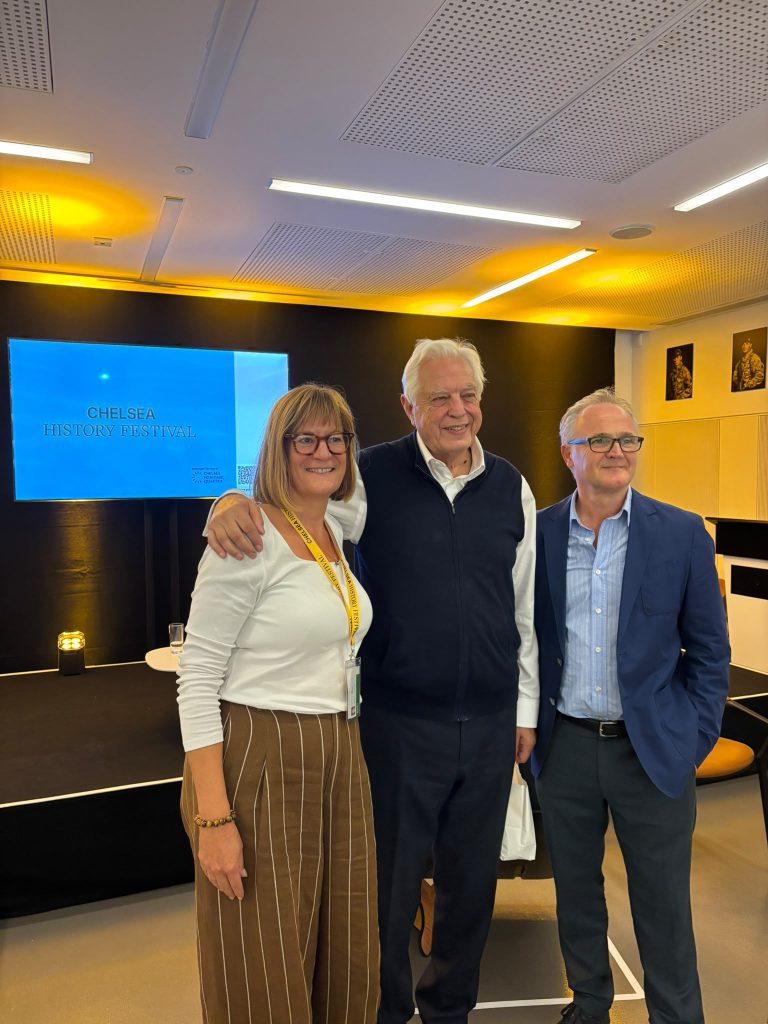
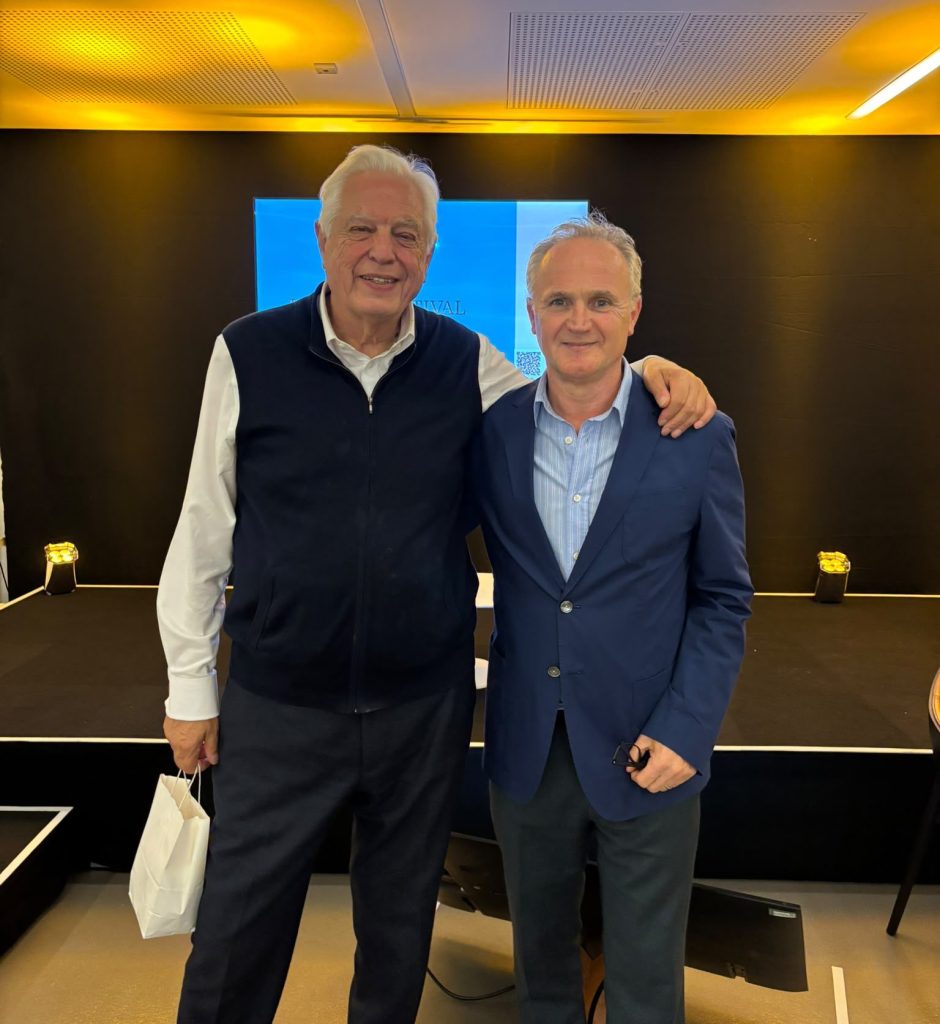
Simpson and McGibbon with Chelsea History Director Gill Webber