As Rupert Murdoch’s loyal lieutenant for 52 years, Les Hinton controlled the key levers of power in a global media corporation and was comfortable in the corridors of powers. He made and broke the careers of some of the sharpest operators in journalism, as well as any number of political leaders.
In more recent years, he has enjoyed an altogether calmer existence and has reinvented himself as an author. First came his 2018 memoir The Bootle Boy* and now he has published his debut novel, a thriller called Dying Days, which is set in the world of – you guessed it – newspapers.
Our palms crossed fleetingly once before, at a News International Christmas party** back in the early 1990s – a time when newspapers threw open bar parties for 300 thirsty hacks. The fortunes of newspapers have been up-ended so much since then that these days those journalists would be lucky to get a Greggs sausage roll in a doorway for a Christmas knees up.
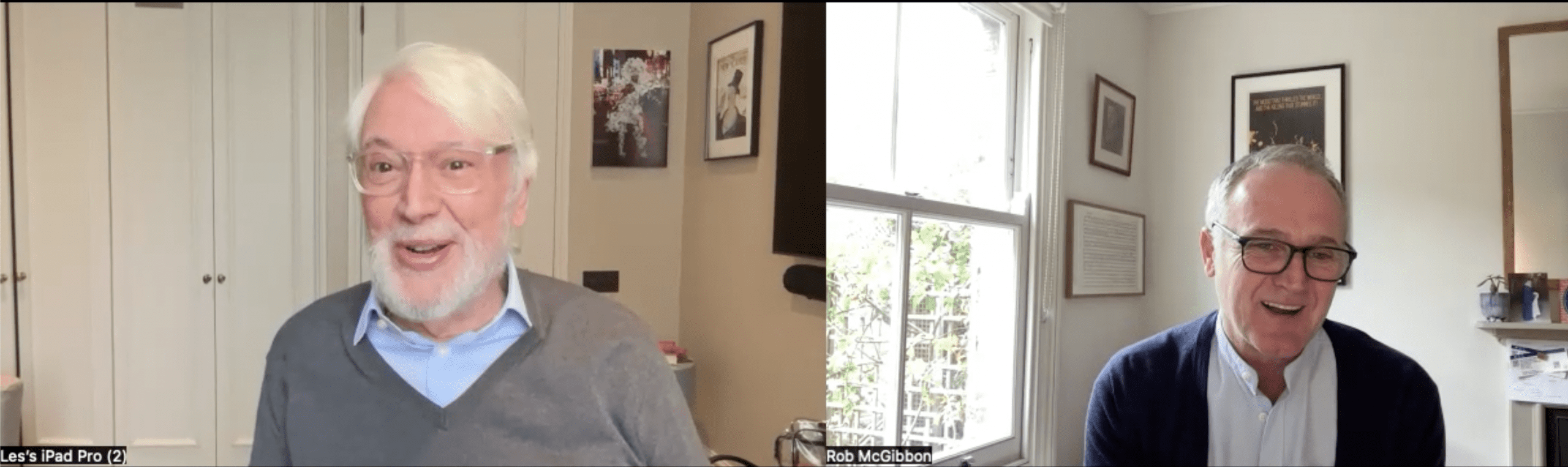
In contrast, Hinton has survived pretty well and has floated through multiple storms with debonair aplomb (call up the cuts). Now 81, he beams in to Citizen HQ via Zoom from his flat in Belgravia, where he rests his Gandalf-white locks and beard when he’s not conjuring up word wizardry in his other homes on the Upper East Side and the Hudson Valley.
Our necessarily speedy chat skipped through various subjects – writing, rejection, Rupert, the News of the World, and, of course, Chelsea. The full interview may be broadcast on CCTV – The Citizen’s forthcoming YouTube channel – in the New Year, but for now, here are some excerpts…
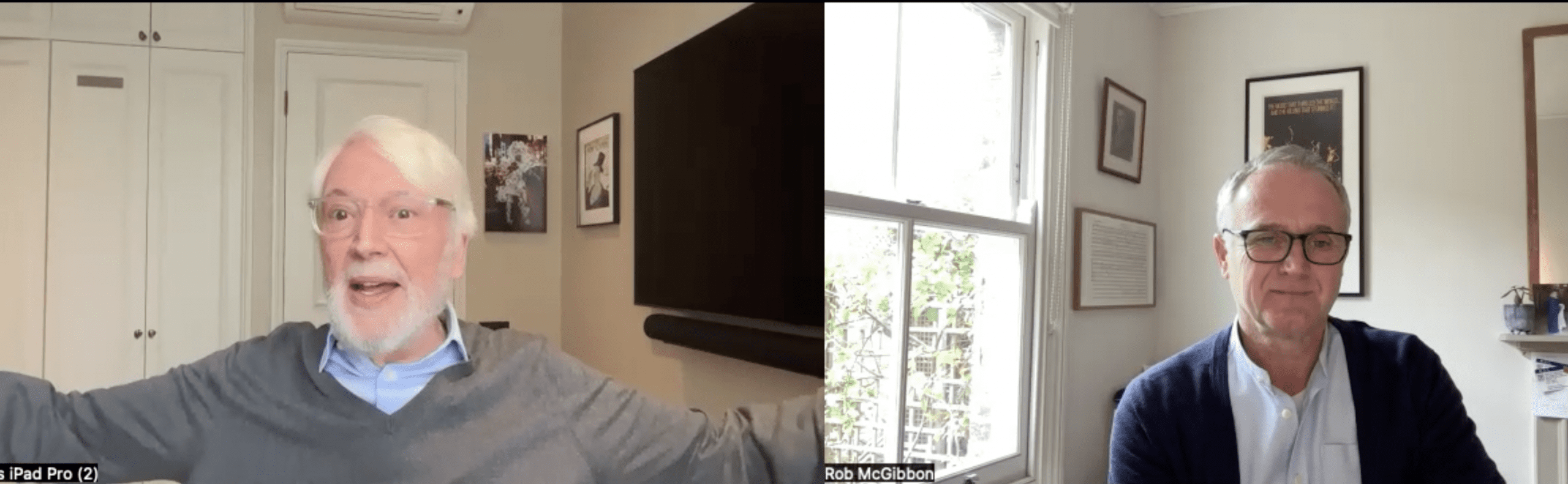
Meeting of minds: The newspaper proprietor and rising media tycoon and the humble self-published author
Life as a lonely writer after being a high-flying media player
“Frankly, when you’re not in a full-time job, you need something to absorb you. I wrote a memoir which absorbed me for a few years. And after that, I just wanted to try fiction. I’m not expecting to be earning my living from it. I’m not expecting to be John Grisham or anything else. But it was simply a pleasure, an obsession.
“I just enjoyed sitting down with a blank piece of paper, as well as being scared by it, knowing that I could do anything I wanted, and having that freedom to sit there and create these characters, some of which would be recognisable, some of which aren’t. I enjoyed making fiction out of my experiences. I love sitting in a room on my own.
“As a kid, and as a journalist, I always wanted to be a war correspondent, but after some experience in Cyprus and Northern Ireland, I found out very quickly that it wasn’t for me. Then I got posted to New York by the company [News Corp], and I got sucked into management, which took over my life.
“When I wrote Bootle Boy, my biggest fear was for people to think it’s crap, badly written. But I think it got well received and I felt the confidence of it, so I started doing fiction. The whole thing absorbed me for about two years.
“I don’t miss the attention [of life in the media] or the characters I met. I was at the last News Corp party, but I don’t miss that life because I never really believed it. I didn’t really believe that when I was having a drink with Tony Blair or Gordon Brown that they actually liked me. I was someone that they needed to get along with.”
The pain of rejection and the joy of self-publishing
“I had a very good agent, who had given me some help on the book [Dying Days]. At the end of it, she was so enthusiastic, so certain it was going to work, that she said to me, ‘We’ll be drinking champagne by Christmas. I’m going to send it to 30 editors in New York, 30 editors in London, and I’m going to give them ten days to make bids’.
“I thought, Well, this is going to be an easy win, a slam dunk. She’d been a publisher of thrillers and had become an agent and she had no doubt at all. I thought, She ought to know. And there were NO bids! I got lots of letters complaining that the main character [veteran newspaper reporter Dan Brasher] was a misogynist and that it was all too male orientated. It just didn’t click.
‘It was crushing. I suppose I’ve got the kind of personality that is fuelled by other people’s approval. That’s a confession to make. So when I found myself so widely disapproved, I completely lost confidence in whether I could keep doing it.
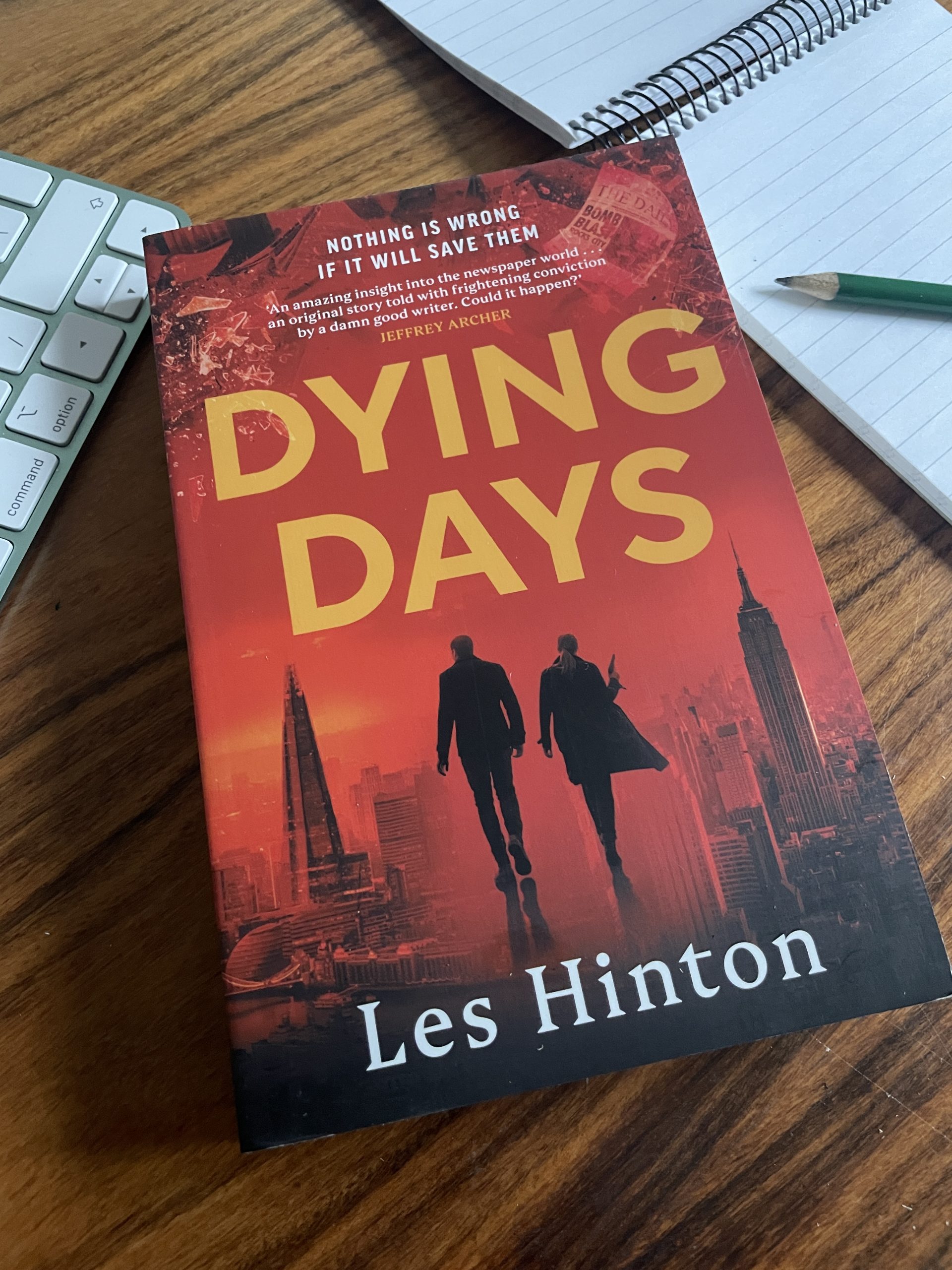
“I sort of licked my wounds for a bit, and then Kath [his wife] said, ‘You know it’s good. Spend a few months going over it and then let’s get it published whichever way we can and see what happens’. And that’s what we did and I loved the entire experience. [He self-published through Whitefox]
“The reviews couldn’t really be better. From the FT to the Daily Mirror, they’ve all said things that were very nice, so the book is clearly worth publishing. And I have already had a couple of approaches from production companies, but I’m not holding out much hope of getting a movie deal.”
On his current relationship with Rupert Murdoch
“It’s fine. I don’t see him an awful lot. I’ve seen him twice in the past year, I guess, and occasionally have an email with him.
“I said in the memoir that he could be both wonderful and very, very difficult. His enemies are divided into two regiments. There are those people he thwarted in business – the TV people, Hollywood people, in newspapers, the guys in his youth in Australia.
“Then there are those who don’t like his politics. Those are the two fronts that he has had to face. Frankly, I don’t like a lot of his politics either. I’m not nearly so conservative as he has become. But I do think that his whinging enemies have got nothing to blame but their own lethargy or lack of imagination.
“I think he just worked hard. He is smart. He had massive energy, which a lot of smart, successful people have and he also had big balls. He was very brave. And he had a restlessness, always looking for the next big chance.
“It’s funny because I was never actually afraid of Rupert. I had an old news editor called Ken Donlan. I don’t know if you ever came across him. He terrified me as a boss. I would actually do relaxation lessons if I was calling in from out of town, or from another country, before calling because I was so afraid. With Rupert, I never felt like that. I was always wary, that he was very powerful, but I was never really afraid of him. It was a different kind of thing.”
Closing the News of the World and the phone hacking scandal
“There was regret about it [inside News Corps about closing NoW]. It shouldn’t have been closed. It was a mistake. I’ve got a character in the book [that’ll be Dying Days, folks] who says it was an appalling paper, in his view, but it was so weak-kneed to have closed it down. But, they did, and that’s history.
“If you think of what’s happened since, in particular, the disclosures. That chap who’s making a fortune [David Sherborne], he said that the wrong-doing at the Mirror Group makes what happened at the News of the World look like a Sunday picnic, or something like that.
“It’s always difficult to talk about this, because you feel as if I’m making excuses, because I’m not. It [phone hacking] should not have happened, it was bad, it was hurtful. It was dreadful.
“It was a terrible thing that happened. I’ve got no personal sense of guilt over it or culpability over it. I’ve never felt that. In fact, of all the people that were called to Leveson, they never even called me. I mean, everyone – from Piers Morgan to David Cameron to John Major – I was never even called. So, you know, it was just a terrible, distressing thing for the company to have to go through. And it damaged it a lot.”
Was there a cover up at the News of the World?
“Well, there was no cover up that I was responsible for. I mean, you know, clearly, when it was all happening, people weren’t so forthcoming as they ought to be. I’m not even going to address it because I didn’t cover anything up.
“Essentially, the activity that was happening was being covered up – but a corporate cover up? Remember, I was running the Wall Street Journal for four years when all this began to blow up. So whether there were other cover ups, I don’t know. There was talk of emails being destroyed and everything else, but I don’t know.”
A ritual on every return to London is a curry in Chelsea
“We have a flat in Belgravia for when we’re in London – which is about half the year – so we’re just a short walk from Sloane Square. I first encountered Chelsea in the mid-sixties when I arrived from Adelaide, a city that was trapped in the past compared to London.
“Back then, Time magazine did a cover on “Swinging London” and described the King’s Road as if it were some kind of new Mecca. All the fashions and the swagger – and the shortness of the skirts – bowled me over. I dreamed of living there, but the economics of life as a hard-up 21-year-old reporter banished me to a far away basement flat in Teddington.
“Time magazine also mentioned the best places to go, so I went to the Guys `n’ Dolls coffee shop because Mick Jagger had been there and I remember standing outside the La Reve restaurant because it was the haunt of people like Terence Stamp, Michael Caine, and Jean Shrimpton. I think it became a Starbucks.
“As a young reporter, I remember knocking a couple of times on Mick Jagger’s door in Cheyne Walk for reasons I forget, and getting no answer.
I remember realising how the other half lived in high society London, doorstepping some weddings at Chelsea Town Hall and seeing dozens of unsmiling chauffeurs leaning on Rolls-Royces, dragging on cigarettes.

“I kept coming back to Chelsea over the years. There was a Mexican restaurant near Sloane Square where I discovered the joys of tequila, salt, and a bite of lime. And then, of course, the Chelsea Potter pub.
“Living nearby means that I visit all the time. The King’s Road doesn’t have quite the mad buzz of the Sixties, but Peter Jones has survived it all, and it is still packed with good places to eat or drink coffee. We are regulars at the Saturday market in Duke of York Square and we’ve discovered the best Indian restaurant in London — Kahani, which is hidden away in a basement in Wilbraham Place by Cadogan Hall. When we fly back from abroad, we always have our first meal there. It’s a ritual.”[Cue free poppadoms for the Hintons]
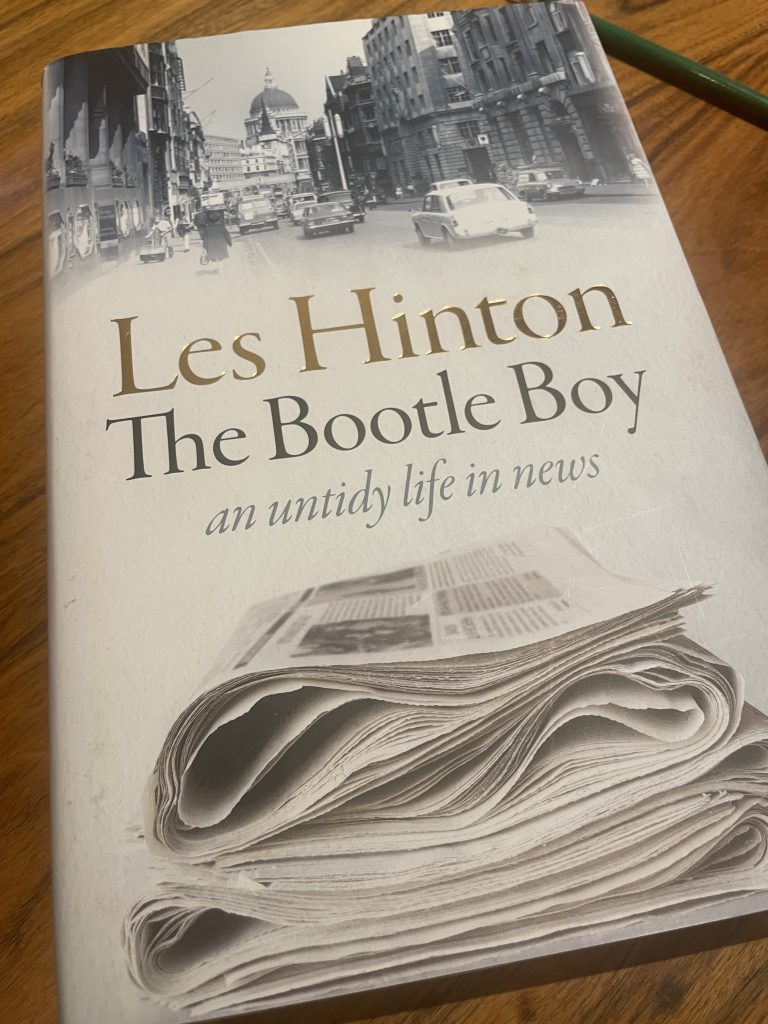
*The Bootle Boy – an untidy life in news: A hugely enjoyable memoir that tells of an incredible ascent to the heights of media power. Full of fascinating details and wry asides about life inside the court to The Sun King.
The disappointing downside is that the book withers at the critical juncture – the eruption of the phone hacking scandal. It races through that period in 50 measly, carefully worded pages (383-433). It’s a bit like the memoir of a man who was on the bridge of the Titanic when it hit a piece of ice, who writes all about his upbringing and early life as a sailor, then skips across the accident at sea by referring to newspaper reports.
Volume 2 of The Bootle Boy (The Upper East Side & Belgravia Boy?) could begin with the metaphorical media bomb [P.382, for enthusiasts] going off after that Burford Priory party – and end with the fictional bomb detonating at Chatstone House.
Just saying!
Buy The Bootle Boy HERE
What the critics say about Dying Days
‘HOLD THE FRONT PAGE, HINTON’S DEBUT THRILLER IS A BELTER’ – DAILY EXPRESS
‘A THRILLING TALE… CRAMMED WITH INSIDER KNOWLEDGE AND TOLD WITH VERVE’ – DAILY MAIL
‘A BRILLIANTLY FEASIBLE AND GRIPPING THRILLER ABOUT POWER, CORRUPTION AND LIES AMONG THE GLOBAL ELITE’ – DAILY MIRROR
‘A MUST-READ’ — FINANCIAL TIMES
‘SUSPENSEFUL AND WELL-PLOTTED” — SUNDAY TIMES, BEST THRILLERS OF THE YEARS SO FAR
‘AMAZING… AN ORIGINAL STORY TOLD WITH FRIGHTENING CONVICTION BY A DAMN GOOD WRITER COULD IT HAPPEN? – JEFFREY ARCHER
‘A WONDERFULLY FAST-MOVING, TENSE STORY THAT TWISTS AND TURNS THROUGH A MAZE OF LOVE, HATE AND SACRIFICE’ – WILLIAM SHAWCROSS
‘A BREATHTAKING NOVEL OF TREACHERY, MAYHEM AND CORPSES LITTERING THE WORLD OF NEWSPAPERS – WHO’D HAVE GUESSED? – MICHAEL DOBBS
‘A PROMISING START FOR A YOUNG DEBUT NOVELIST’ – THE CHELSEA CITZEN

Wolfman in darker times before seeing the light
**Behind the scenes “Enthusiasts Only” extra…
RM: Les, you won’t remember, but we met once…
LH: I can’t. I mean, I recognise your face really well, but I don’t remember when we met.
RM: It was at a News International Christmas party in the 90s.
LH: Oh, well, that’s a long time ago.
RM: Neil Wallis introduced us.
LH: Oh dear, Neil! Are you in touch with him still? I kept in touch with him for a long while because he went through a lot of strife, and in the end, I’ve lost touch. Now everyone tells me he’s found God and his life has changed quite a bit. Good luck to him.
RM: … and good luck to God!