Residents living close to a proposed 29-storey tower at Battersea Bridge yesterday warned that the development would deprive their homes of vital daylight.
Occupiers of apartments in Albion Riverside and Thames Walk said that the new building would cast significant shadow, as well as wipe out precious views of the river.
On Day Two of the public inquiry into Rockwell Property’s planning application for what is known as One Battersea Bridge, it was also revealed that people living in the Peabody Trust’s flats at 6 Hester Road – a block immediately behind the tower – would have their high-level outside garden totally overlooked by the new tower, leaving it devoid of direct sun all day.
Giving evidence for the developer Rockwell, planning consultant Jonathan Marginson rejected concerns over “access to light”, telling the inquiry there would be “no harm — and if there was, the level would be low”.
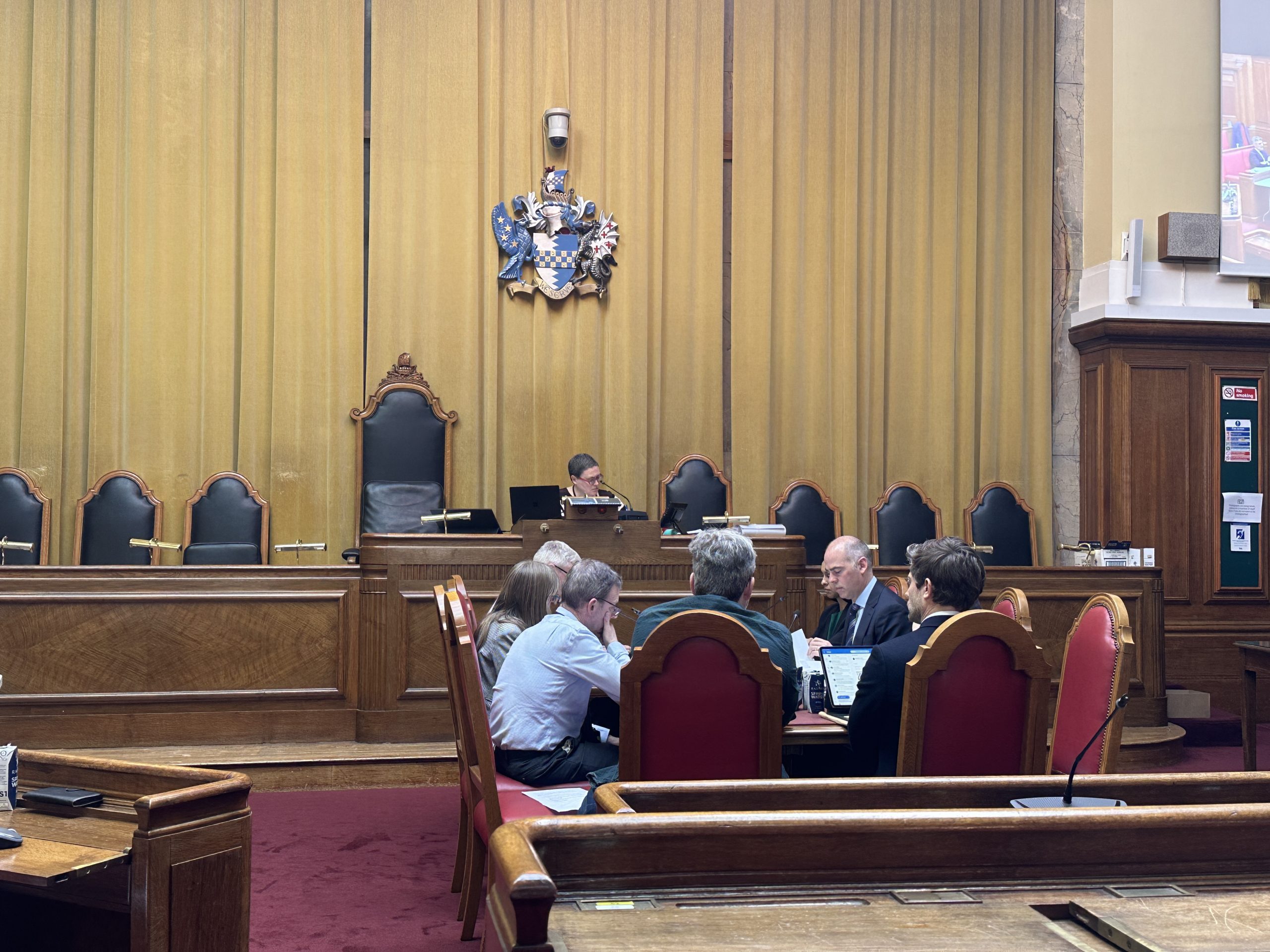
A “round table” meeting during the inquiry. To gain a seat in such a discussion costs £75,000 in legal fees
He also dismissed objections over privacy, arguing that nearby offices already overlook properties such as 6 Hester Road, and that the proposed tower would not materially worsen the situation.
The inspector, Joanna Gilbert, questioned the impact of construction traffic on Battersea Bridge, a route already prone to congestion. She raised the possibility of additional strain on the structure, as well as disruption to local traffic should the appeal succeed.
Mr Marginson responded that there was “no evidence” of structural risk and said that Transport for London had not lodged any objection to the scheme. This assertion had been challenged by a submission on a previous day because TFL’s lack of objection had been made long before Albert Bridge had been closed and, therefore, might be subject to change given the current traffic situation.
Away from the formal evidence, residents expressed frustration at the cost of participating in the inquiry. Amanda Hendricks, chair of the Thames Walk Residents’ Association, said her group had been unable to secure representation.
“It was going to cost us £75,000 in fees just to be heard,” she said. “It’s totally wrong.”
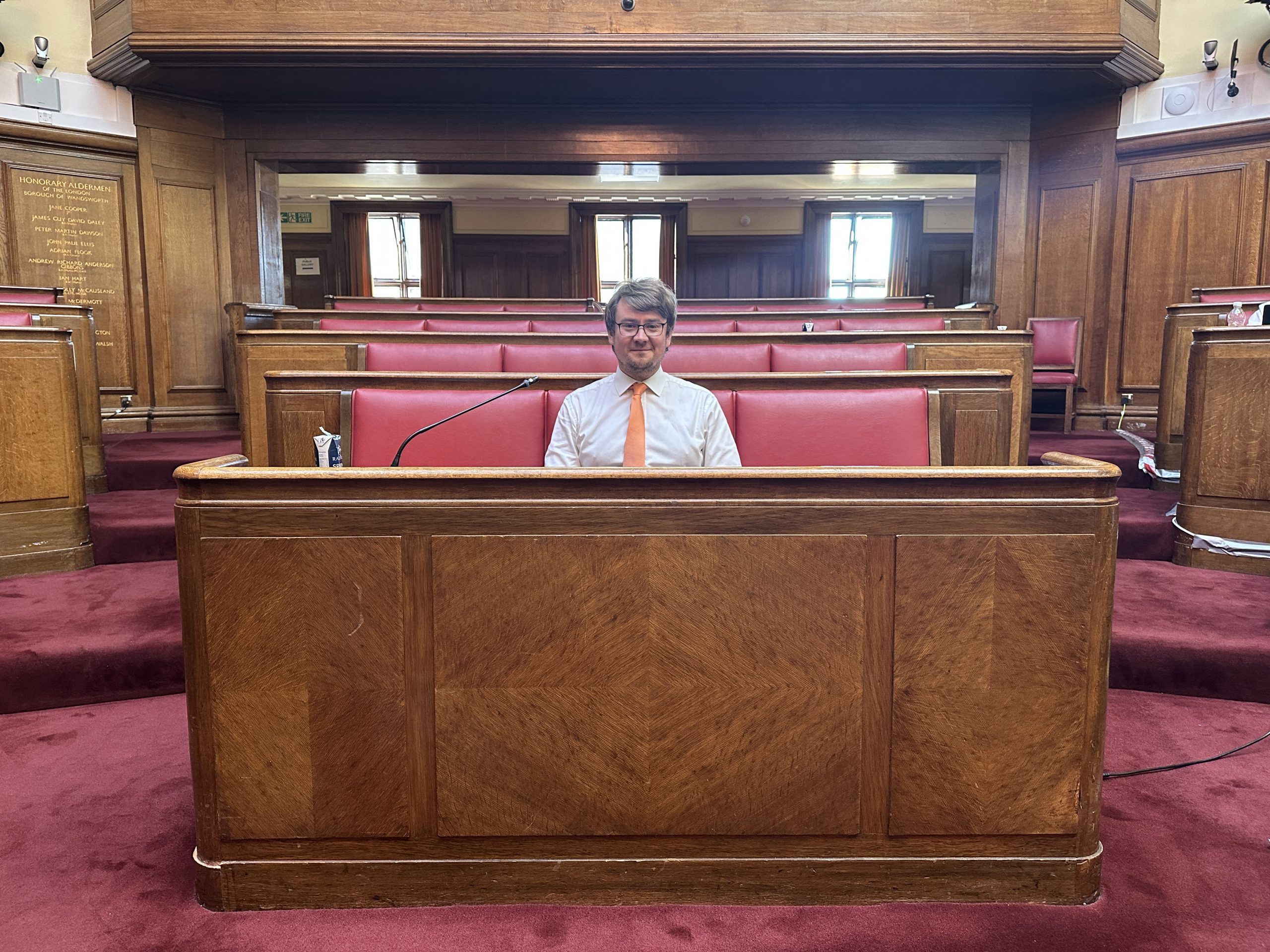
Mr Ben Eley, Wandsworth council’s conservation and urban design officer, before giving evidence
In the afternoon session, Wandsworth council’s conservation and urban design officer, Ben Eley, was cross-examined by Rockwell’s lead legal representative Russell Harris KC. The clash was often testy and ill-tempered and drew audible reactions from the public gallery.
Mr Harris disputed the council’s characterisation of the area around the proposed tower site as predominantly “low-rise”, pointing to nearby developments such as Albion Riverside, which is 11 storeys high.
Mr Eley defended the authority’s decision to refuse planning permission. He noted that the site falls within a mid-rise designation in the borough’s local plan, where buildings of around six storeys are considered appropriate.
A tower of the scale proposed, he said, would cause “acute, substantial and harmful” effects, including on views of the River Thames from multiple angles, not least along Chelsea Embankment – all the way from Chelsea Bridge to Cremorne Gardens. He said that the tower would adversely affect the “kinetic experience” of people walking from Chelsea Bridge.
Mr Eley acknowledged the presence of taller buildings nearby, including the 20-storey Montevetro tower and the 35-storey Tower West at Chelsea Waterfront on the north side of the river and said that such developments detracted from the area’s character. His assessment, he added, was consistent with the positions of Historic England and the Royal Borough of Kensington and Chelsea.
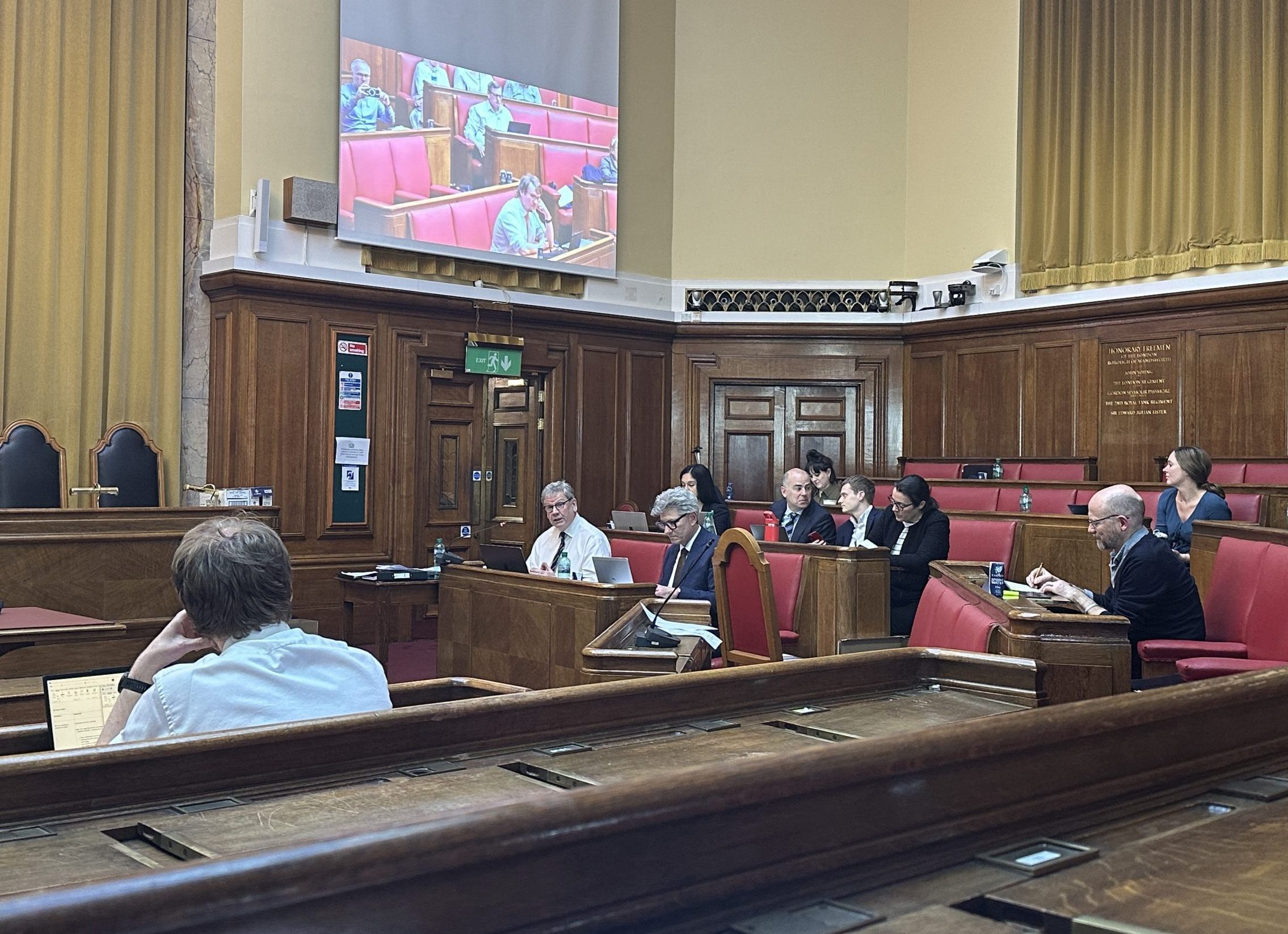
Mr Harris, in white shirt, grills Mr Eley in an often ill-tempered cross-examination ©Photo Rob McGibbon (visible on TV screen – who was (rightly!) reprimanded for taking this photo)
Mr Harris described the One Battersea Bridge proposal as a “landmark” development. In response, Mr Eley cited Historic England’s guidance that “not all tall buildings are landmarks and not all landmarks are tall”.
Challenging that position, Mr Harris argued that the scheme should be judged in the context of the wider townscape and that the existing Glassmill office building was out of date and needed replacing with a more coherent development. He said that there is an “opportunity to enhance the existing townscape experience”.
Mr Eley accepted that the current building appeared “forlorn”, but maintained that the proposed tower would be out of scale with its surroundings.
The inquiry continues