The long-running battle over the controversial Battersea Bridge tower roared back into life this week — with campaigners insisting they are quietly confident of seeing off the “monster” scheme.
As the high-stakes inquiry entered its second week, opponents said the tide appeared to be turning against developers Rockwell.
Veteran campaigner Dr Michael Jubb, of the Battersea Society, told The Citizen: “The final decision rests with the planning inspector, but I’m reasonably optimistic, after what we’ve heard so far.”
Jubb — who earlier accused Rockwell of peddling misleading claims of local support — doubled down, saying: “The reasons for refusal of planning permission remain sound. The scale of the harm from the development vastly outweighs the proposed benefits.”
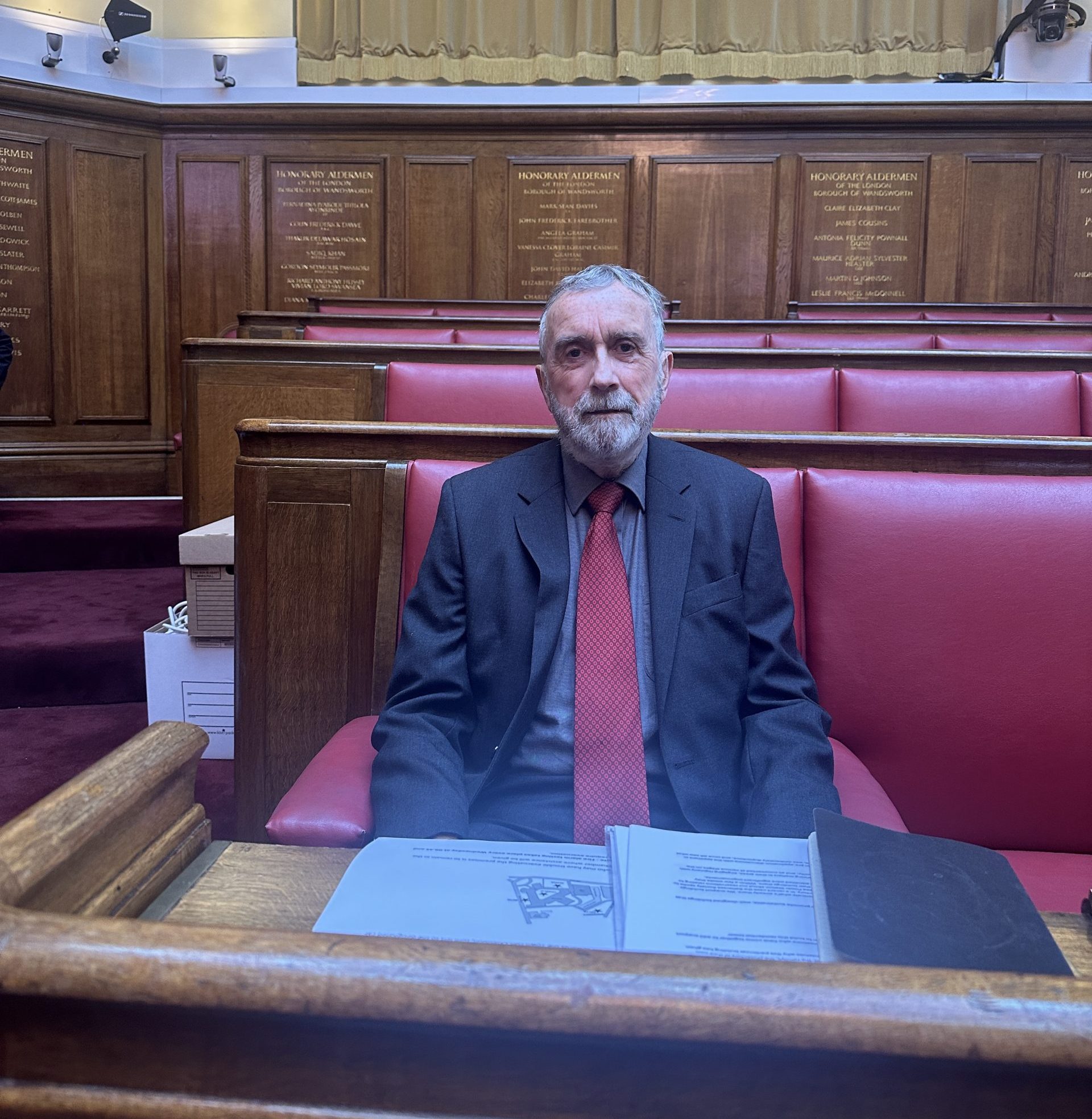
Dr Michael Jubb who is representing the Civic Societies Photo ©Rob McGibbon/TCC
Another campaigner, speaking anonymously, was even more blunt: “Rockwell are just dancing on the head of a pin. They won’t win.”
But inside the hearing room, the mood was anything but calm. Day Five saw a tense showdown as Wandsworth Council’s planning expert Joanna Chambers went head-to-head with the developer’s heavyweight barrister, Russell Harris KC.
Chambers took the stand to defend the council’s decision to throw out the 29-storey tower planned for beside Battersea Bridge — only to face a sustained and forensic grilling from the silk.
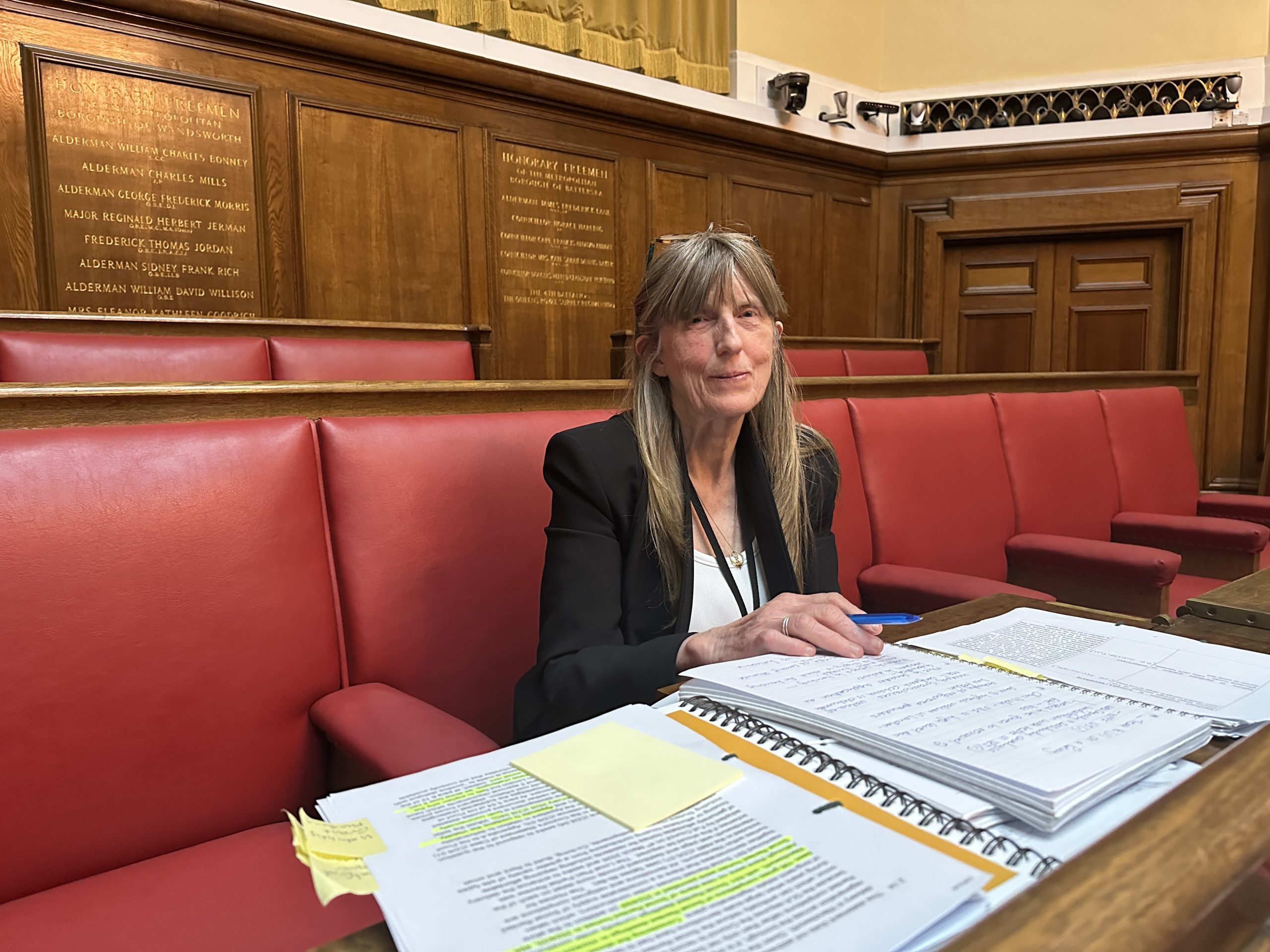
Ms Joanna Chambers, representing Wandsworth Council Photo ©Rob McGibbon/TCC
At the centre of the dispute is a stark question: is the tower simply too big, too bulky — and in entirely the wrong place?
The scheme, dubbed One Battersea Bridge by its architects Farrells, was rejected last year after fierce opposition from residents in Battersea, Chelsea and beyond.
Giving evidence, during which voices were raised between Chambers and counsel, she said the proposed skyscraper would be “overbearing” in a sensitive stretch of riverside defined by low-rise buildings — stressing the site lies outside any designated tall buildings zone.
She warned the development would cause clear harm to the character of the area and breach Wandsworth’s long-established planning policies.
“Brownfield land has to be developed, of course — but it has to be the right scheme,” she said.
Rockwell’s legal team hit back.
Harris argued the council’s own policies do, in fact, allow tall buildings beyond designated zones — insisting there is no blanket ban on height.
The developer’s case is that this is exactly the kind of landmark riverside site where a bold building can work.
Rockwell maintains the tower would be a striking addition to London’s skyline — not an overbearing intrusion — and says any negative impacts, including loss of sunlight to surrounding properties, would be minimal.
Backing the scheme, the developer’s planning expert Jonathan Marginson praised the design as “a building of the highest architectural quality”.
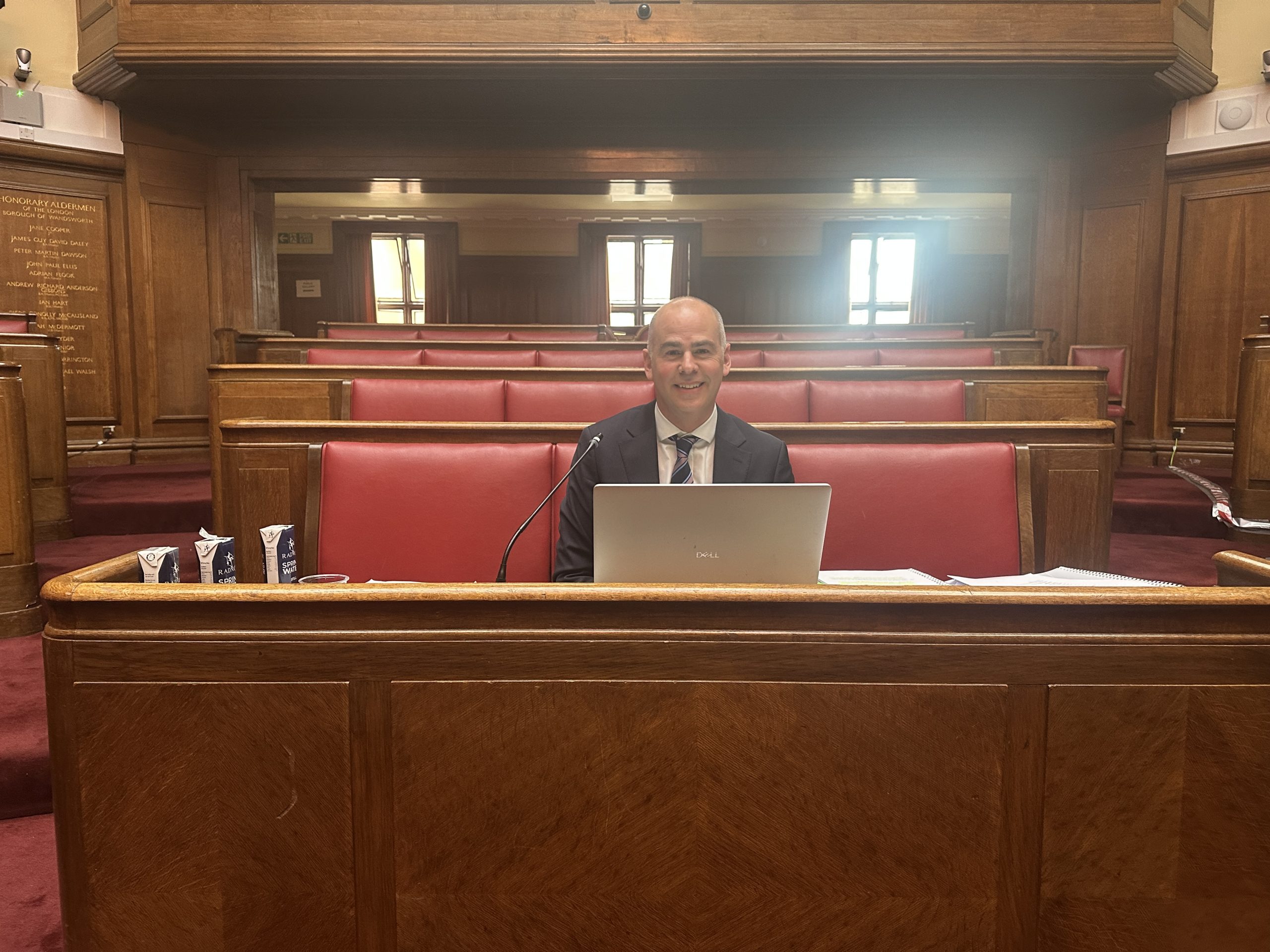
Planning expert Jonathan Marginson, represent gin Rockwell ©Photo Rob McGibbon/TCC
He said the project — delivering 110 homes, around half of them affordable — was “critical” in tackling London’s housing shortage.
The need for social housing in Wandsworth, he told the inquiry, was “pretty colossal”.
He added the scheme would make “a significant contribution to the growth of London, in particular housing”.
With both sides digging in, the planning inspector now faces a finely balanced decision.
The inquiry continues
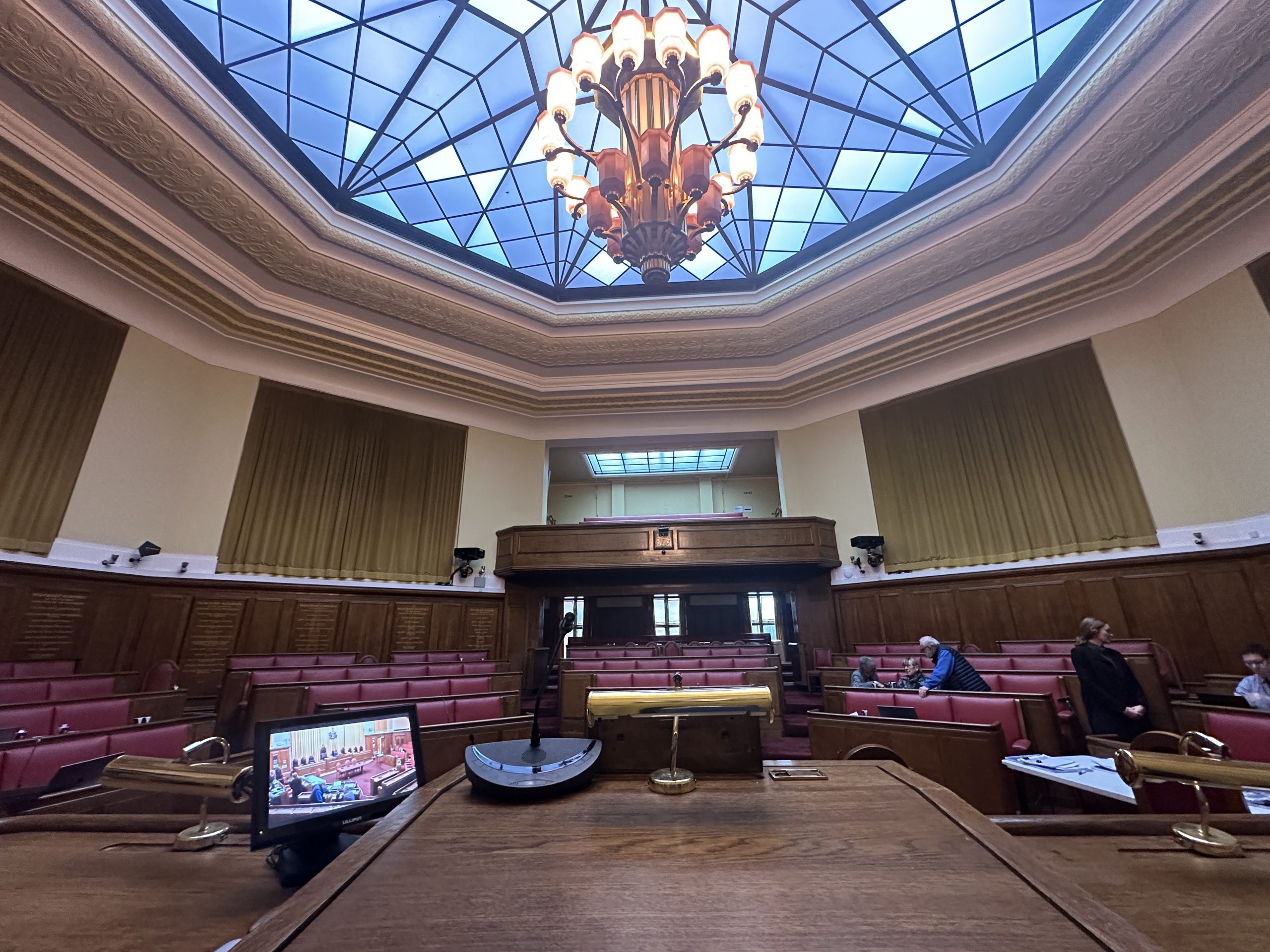
The Inspector’s view of the grand chamber at Wandsworth Town Hall ©Photo Rob McGibbon/TCC