Veteran Fleet Street journalist and campaigner Rob McGibbon yesterday launched a blistering broadside against the controversial Battersea Bridge tower — warning it will “blight homes” and “wreck lives”.
McGibbon, who is the editor of The Chelsea Citizen, delivered a strongly worded statement as an ‘Interested Party’ on Day Four of the public inquiry into Rockwell Property’s bid to build a 29-storey tower known as One Battersea Bridge.
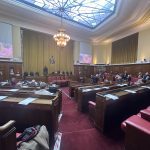
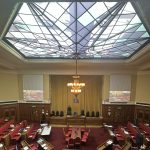
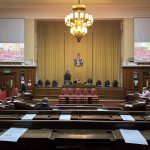
Reading from a prepared statement in the grand chamber at Wandsworth Town Hall, Chelsea resident McGibbon, 60, opened the day’s proceedings. He revealed that he had led the charge to stop the tower for the last two years and that he has – as a journalist – fully researched all aspects of the development proposals. And he didn’t hold back with his views.
Addressing his speech directly to Inspector Joanne Gilbert, he said: “One Battersea Bridge is wrong on every level. It has more flaws, than floors. It’s the Emperor’s clothes. We can all see it for what it is – except those to my right [Rockwell’s highly paid representatives], who will have you believe otherwise. And we know why that is.”
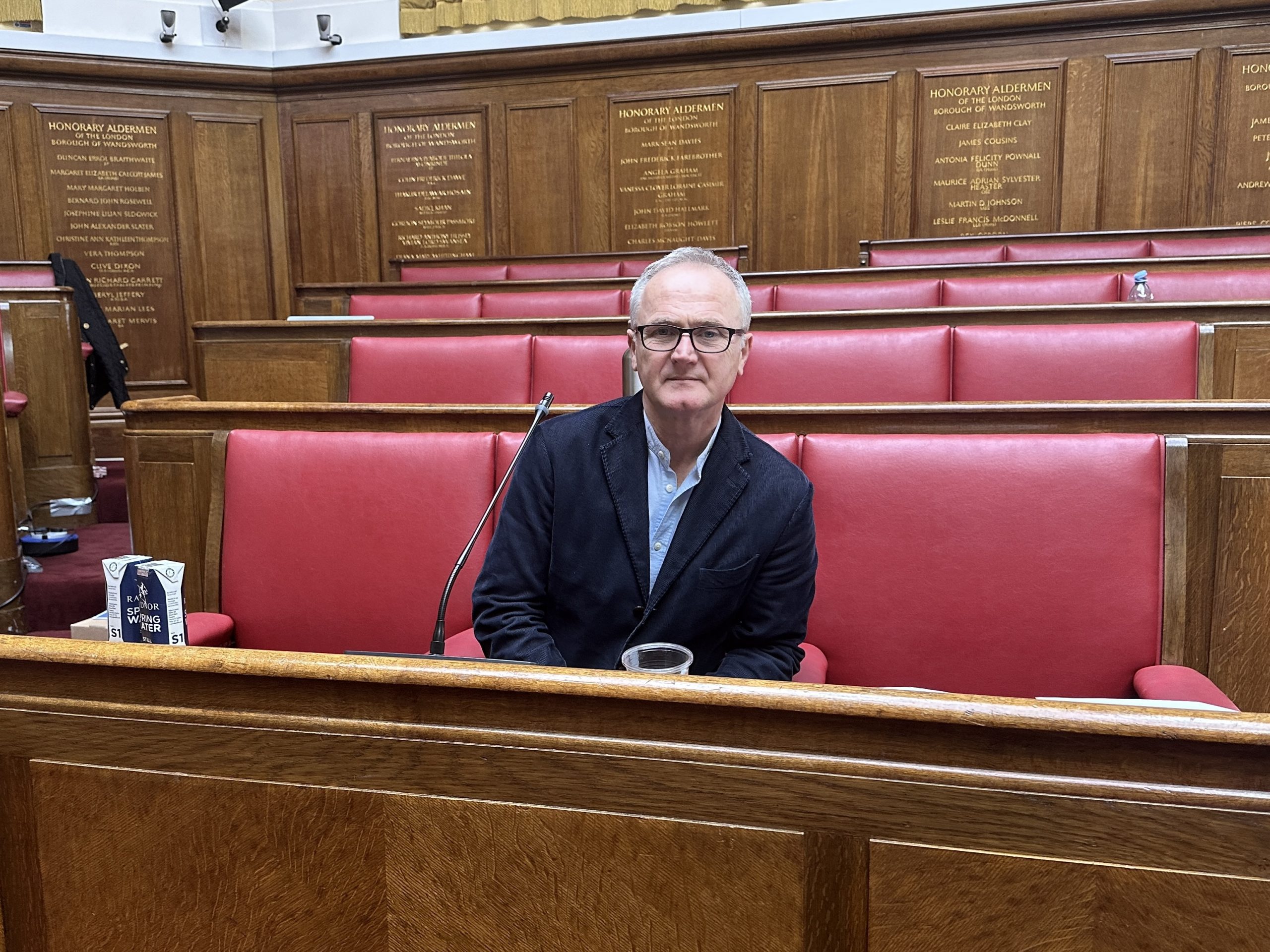
Rob McGibbon – campaigner and Citizen editor – in the council chamber after delivering his statement ©TheChelseaCitizen
In his statement, McGibbon summarised key junctures during he planning process. He said that local opposition is unanimous and overwhelming — with more than 5,000 people signing a petition and over 1,400 residents who had lodged formal objections to Wandsworth Council. McGibbon urged Inspector Gilbert to refer back to those early comments during her decision-making – rather the mass of technical “evidence” brought to the inquiry by Rockwell.
He said: “I urgently draw your attention to those early comments. These represent the very heartbeat of an anxious community – and they reveal far more to this inquiry than any CGI poster, or lofty ponderings about “receptors” and the “kinetic experience” of this area. These people live here. Many will have their homes blighted by this tower. Equity will evaporate. Lives will be wrecked.”
In one of the most explosive claims of the hearing so far, McGibbon accused Rockwell – ultimately owned by Monaco-based tax exile Donal Mulryan – of manipulating public support by paying a canvassing company to file hundreds of similarly worded letters of support to the portal – even from people as far away as Stoke and Rochdale. “The exercise deployed says a lot about the company that could own this land,” he said, scathingly
McGibbon told how he had written about the loading of the letters “contemporaneously” on his petition blog on change.org and urged Inspector Gilbert to read those posts as an inquiry research tool.
During the planning applications process Rockwell has leaned heavily on its headline pledge to deliver 50% affordable housing — but McGibbon urged the Inspector to treat the offer with scepticism.
He said: “Without any binding legal contract in place, we all know that this is simply a promise made with fingers crossed behind their back – by a company that wilfully skewed the democratic process of something as innocent as a planning comments portal. The promise must be treated with caution.”
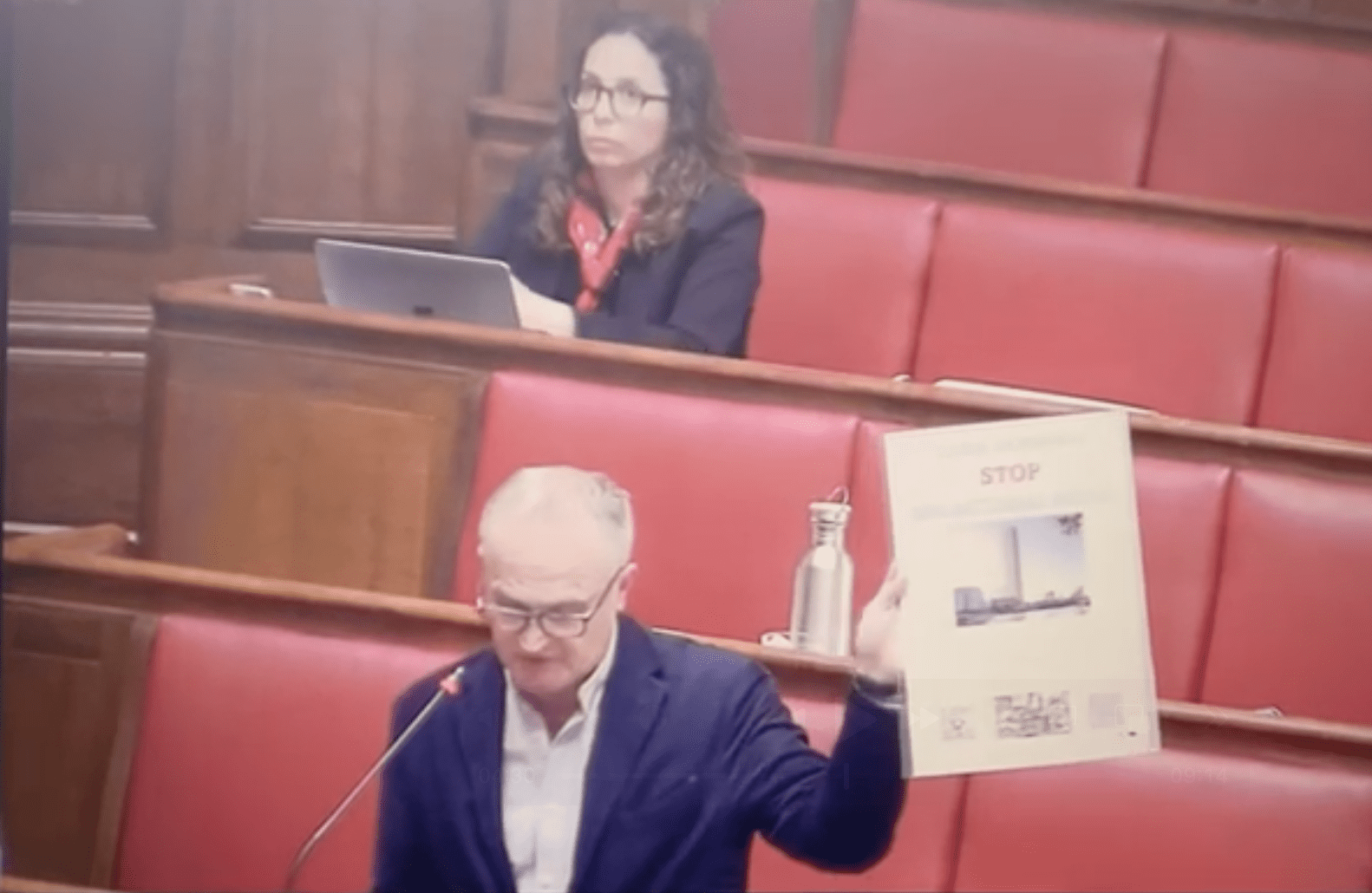
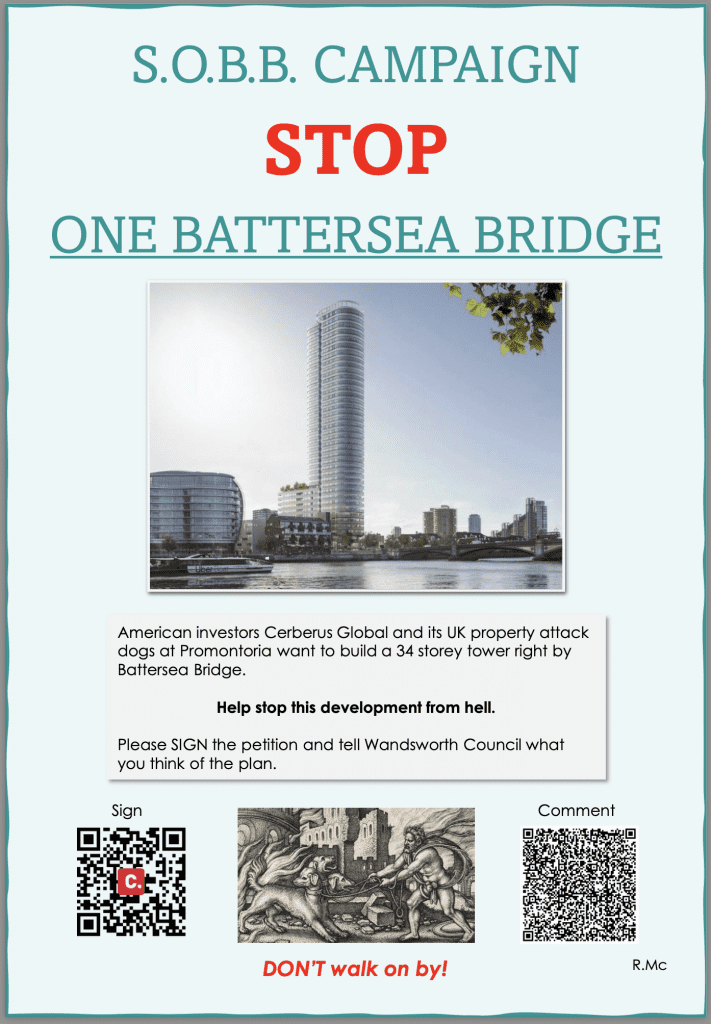
McGibbon holds up one of his old campaign posters during his statement delivery
McGibbon, who has been known on national newspapers for decades for writing big celebrity interviews, also shone a spotlight on the financial muscle behind the scheme — including US investment giant Cerberus, named after a mythical three-headed guard dog of the Underworld.
He implored Inspector Gilbert to look into the “alarming financial realities” of the companies behind the project. In a striking analogy, McGibbon added: “I only suggest this because it’s a bit like sending your favourite grandchild to stay with a family abroad. You’d like to know a bit about that family first.”
-

- McGibbon’s statement
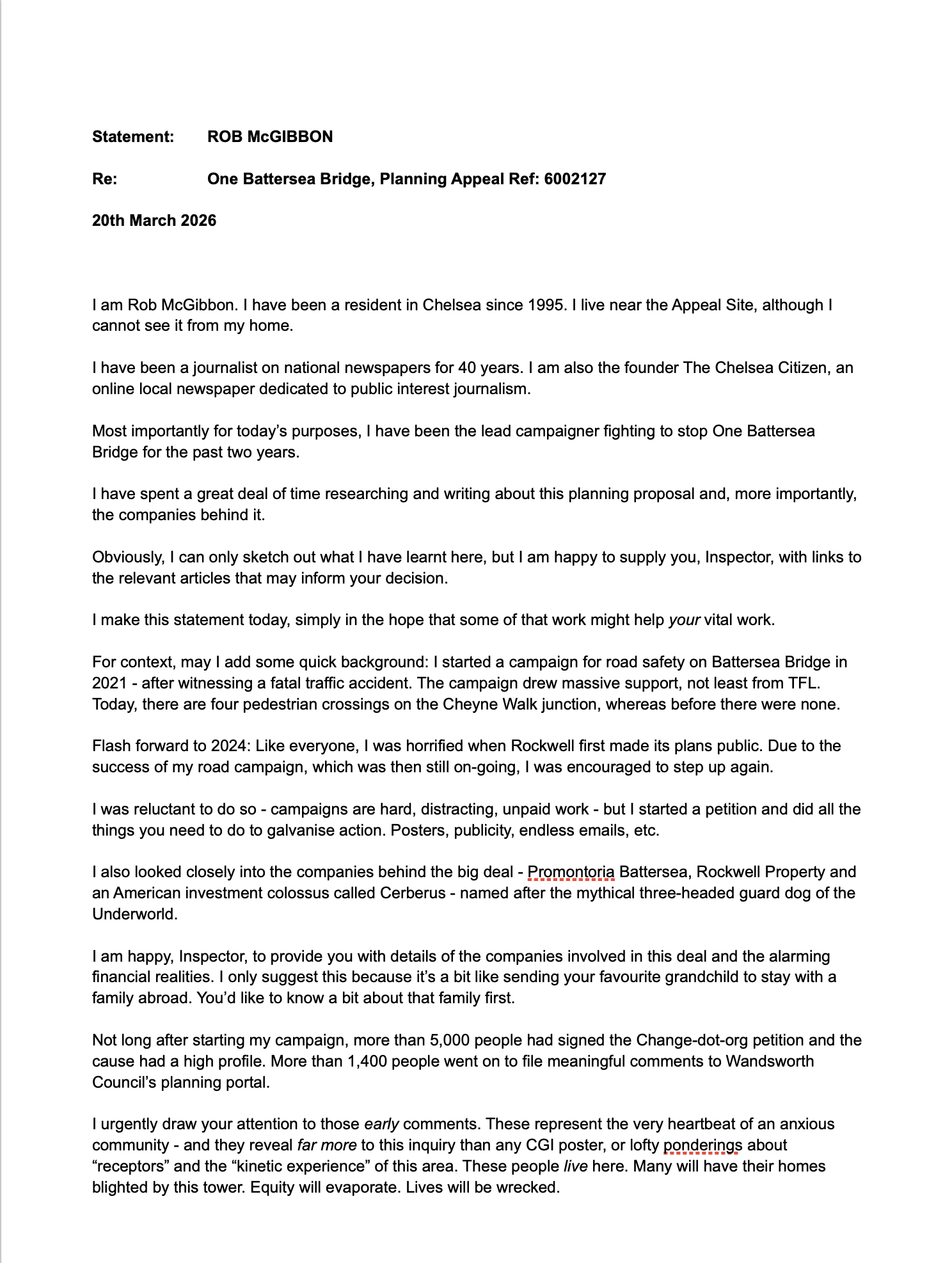
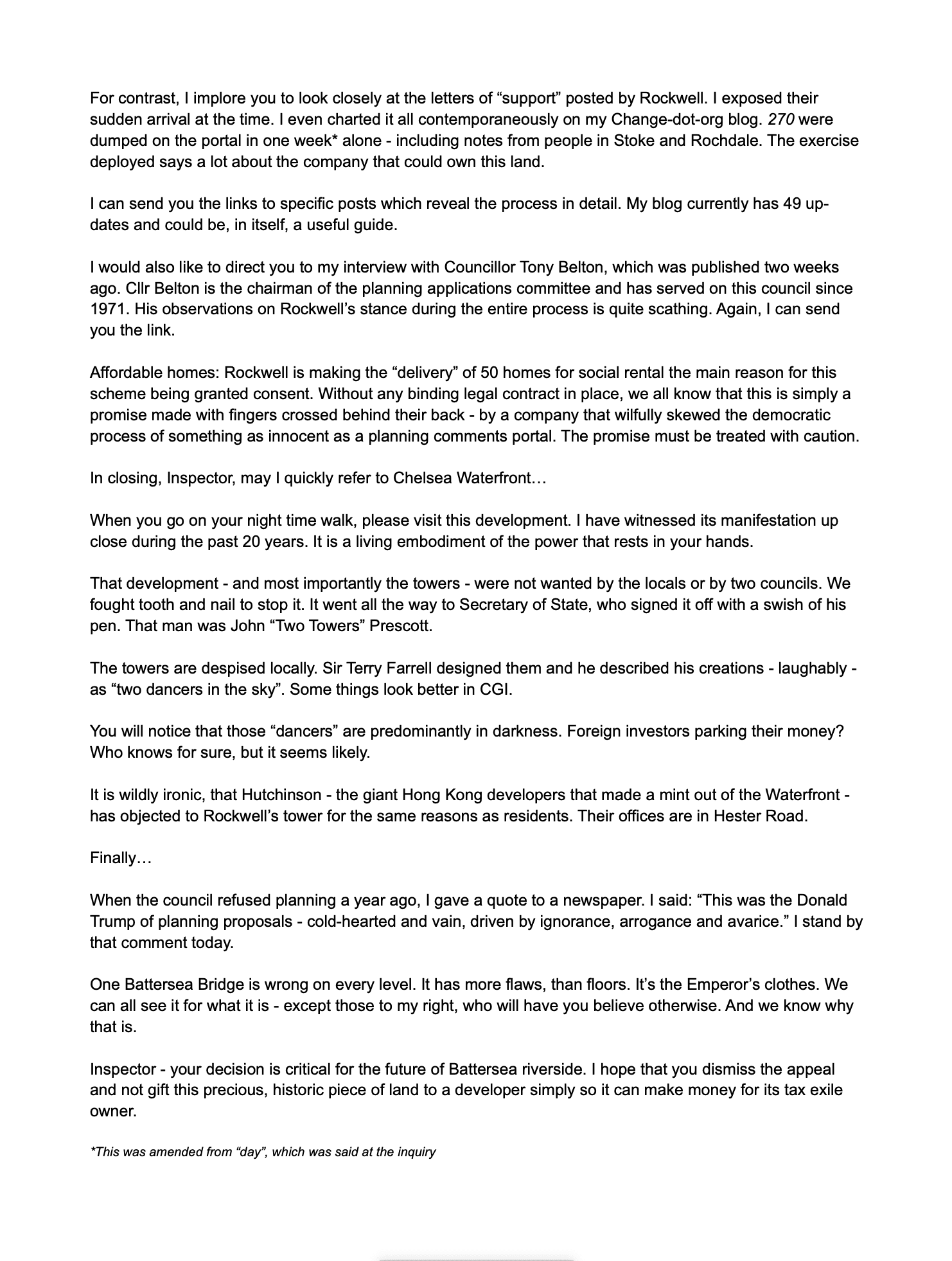
Drawing on his knowledge of local history, McGibbon issued a stark warning by pointing to the Chelsea Waterfront towers — approved against fierce opposition. Those buildings, he said, are now “despised locally” and often sit in darkness, hinting they may be little more than investment assets for absentee owners.
“Some things look better in CGI,” he said, taking a swipe at the late architect Sir Terry Farrell who created the towers and described them as “two dancers in the sky”. In a twist of irony, McGibbon noted that the very developers behind Chelsea Waterfront – Hong Kong property giants Hutchinson Whampoa – has objected to One Battersea Bridge.
McGibbon saved his fiercest attack for the closing section of his statement. He said: “When the [Wandsworth] council refused planning a year ago, I gave a quote to a newspaper. I said: ‘This was the Donald Trump of planning proposals – cold-hearted and vain, driven by ignorance, arrogance and avarice.’ I stand by that comment today.”
-
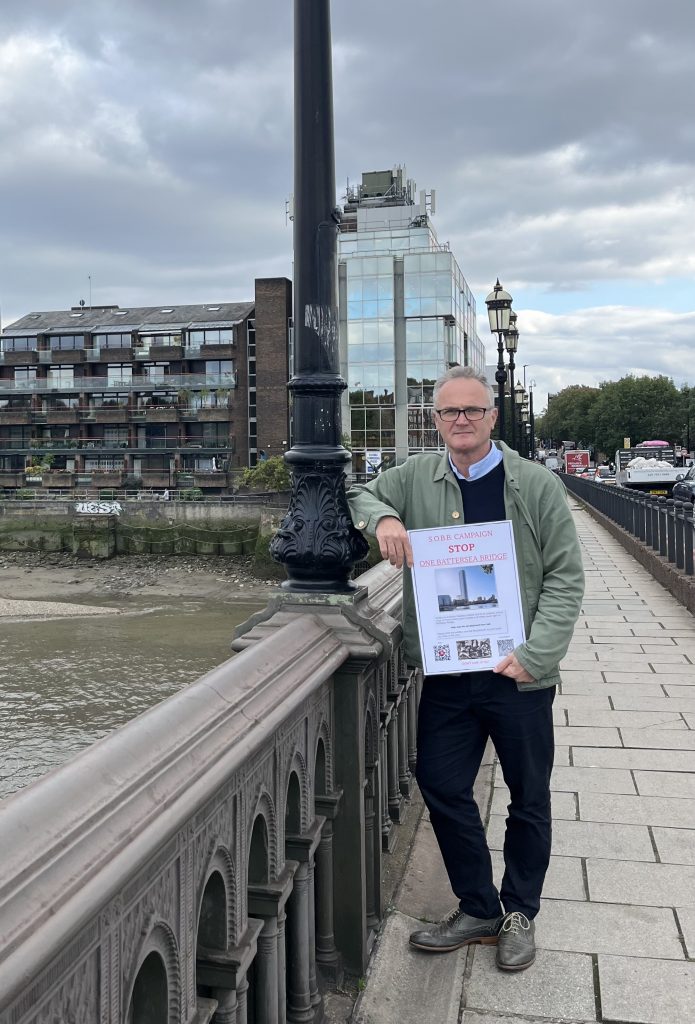
- Poster Boy: McGibbon near the Appeal Site in 2024
-
- A campaign poster – with etching of the mythical guard dog Cerberus
In a direct appeal to Inspector Gilbert, he warned that her decision would shape the future of the riverside for generations. He said: “Your decision is critical for the future of Battersea riverside. I hope that you dismiss the appeal and not gift this precious, historic piece of land to a developer simply so it can make money for its tax exile owner.”
In the afternoon session of the inquiry, a heavyweight planning expert stepped up to bat for the controversial tower — declaring it would be a “distinctive landmark” boosting the Thames skyline.
Rockwell’s star witness Dr Chris Miele, senior partner at Montagu Evans, insisted the much-criticised skyscraper would not dominate its surroundings — but sit “comfortably” within the broad sweep of the river.
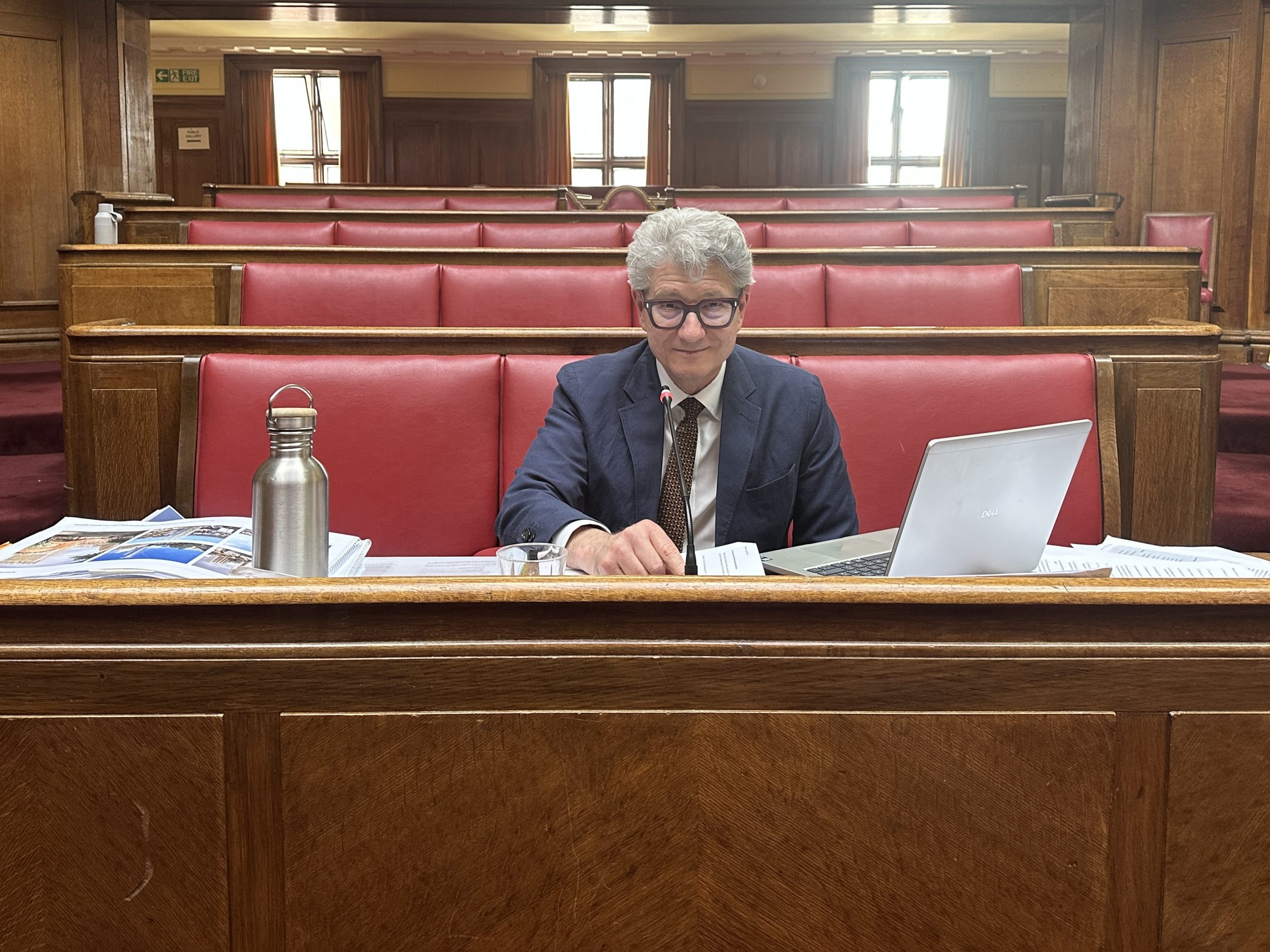
Dr Chris Miele, senior partner at Montagu Evans and witness for Rockwell
He told the hearing the building’s height was entirely appropriate, arguing its vertical design would create a “striking visual relationship” with the low, horizontal line of Battersea Bridge.
Miele said the lower levels of the scheme would blend in with neighbouring riverside blocks — including Albion Riverside — and claimed views from Battersea Park would be limited, with the tower only partly visible in winter and hidden by tree foliage in summer.
But his boldest pitch was that the scheme would become a recognisable London marker — a building that helps people get their bearings and anchors one of the capital’s key river crossings.
Waxing lyrical, he said those crossing the bridge would experience “a sense of arrival—a sense of destination.”
And of the 29-storey tower itself, he added: “I feel strongly that what is being proposed is remarkable.”
Under cross-examination from Wandsworth’s counsel Douglas Edwards KC, however, Miele conceded the building would indeed appear “prominent” — not just from Battersea Bridge, but across parts of the surrounding neighbourhood.
The inquiry also heard Historic England objected to the project, calling the skyscraper a “visually intrusive and incongruous addition to the townscape.”
The Royal Borough of Kensington and Chelsea had also weighed in, warning the tower would appear “discordant, dominating and oppressive” when viewed from across the river.
Planning officers concluded that the building would harm views and the setting of a number of protected sites, including Albert Bridge, Battersea Bridge, Battersea Park, the Royal Hospital Chelsea and St Mary’s Church.
The inquiry continues