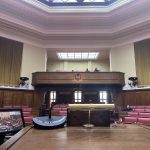
Seven days. One towering row. The planning inquiry that swung from dry technical detail to full-blown courtroom theatre finally reached its climax yesterday.
At precisely 1pm, Planning Inspector Joanna Gilbert — cool, yet affable and quick to smile, bespectacled and inscrutable — took her seat on the raised dais, scribbled a few final notes and readied to bring down the curtain on one of London’s most bitter planning battles.
Inside Wandsworth Town Hall’s oak-panelled chamber, the atmosphere could hardly be called electric. But it was certainly tense. There was stillness and quiet across the chamber, except for whispers and the occasional sound of important final ‘Closing Statement’ papers being anxiously shuffled.
On one side of the room, battle-hardened residents’ groups perched on the faded leather of red seats, daring to hope that the tide had turned against the controversial 29-storey tower that would be called One Battersea Bridge.
Opposite them sat the Rockwell top brass. Nicholas Mee – its camera-shy managing director – frequently had his head bowed over his iPhone. At other times, he appeared deep in thought. In front of him were his highly paid troops — led by the pre-eminent planning silk Russell Harris KC, architect Peter Barbalov and planner Jonathan Marginson.
First to fire for the opposition was The Battersea Society’s William Walton, with a family pack of Fruit Pastilles on his desk for comfort. And he did not hold back on his ire (or the sweets). He blasted Rockwell’s “deceitful” PR campaign ahead of last year’s council rejection, accusing the developer of “hoodwinking” the public with glossy newsletters and alleged bogus support.
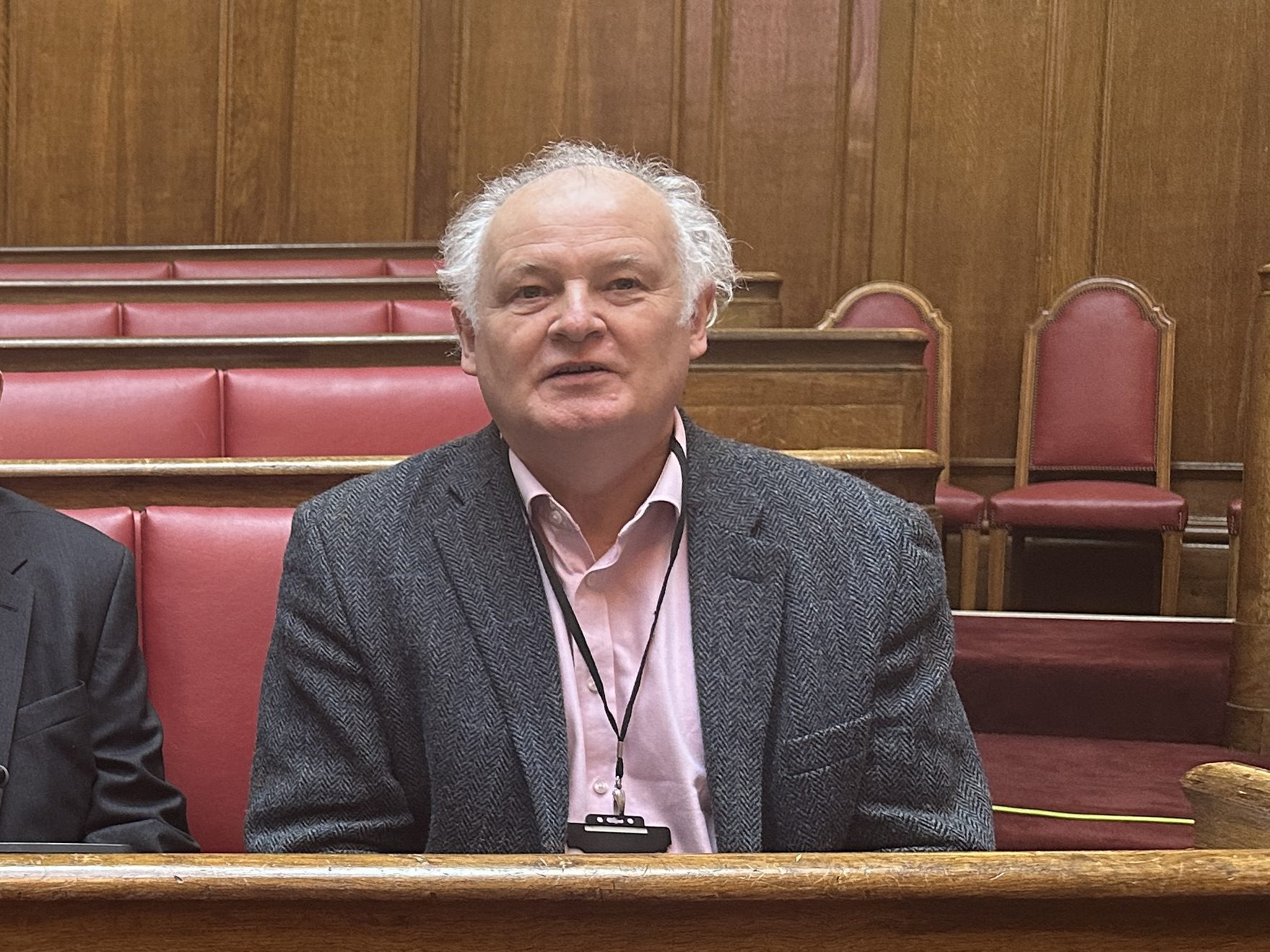
William Walton
“This… is little more than contrived support — what’s now known as ‘astroturfing’,” he told the hearing. “The very opposite of a genuine grassroots campaign.” He also cast doubt on Rockwell’s promise of 110 homes — half billed as “affordable” — questioning both the scheme’s location and its architectural merit. “We reject the notion that this is an exemplary design,” Walton said bluntly.
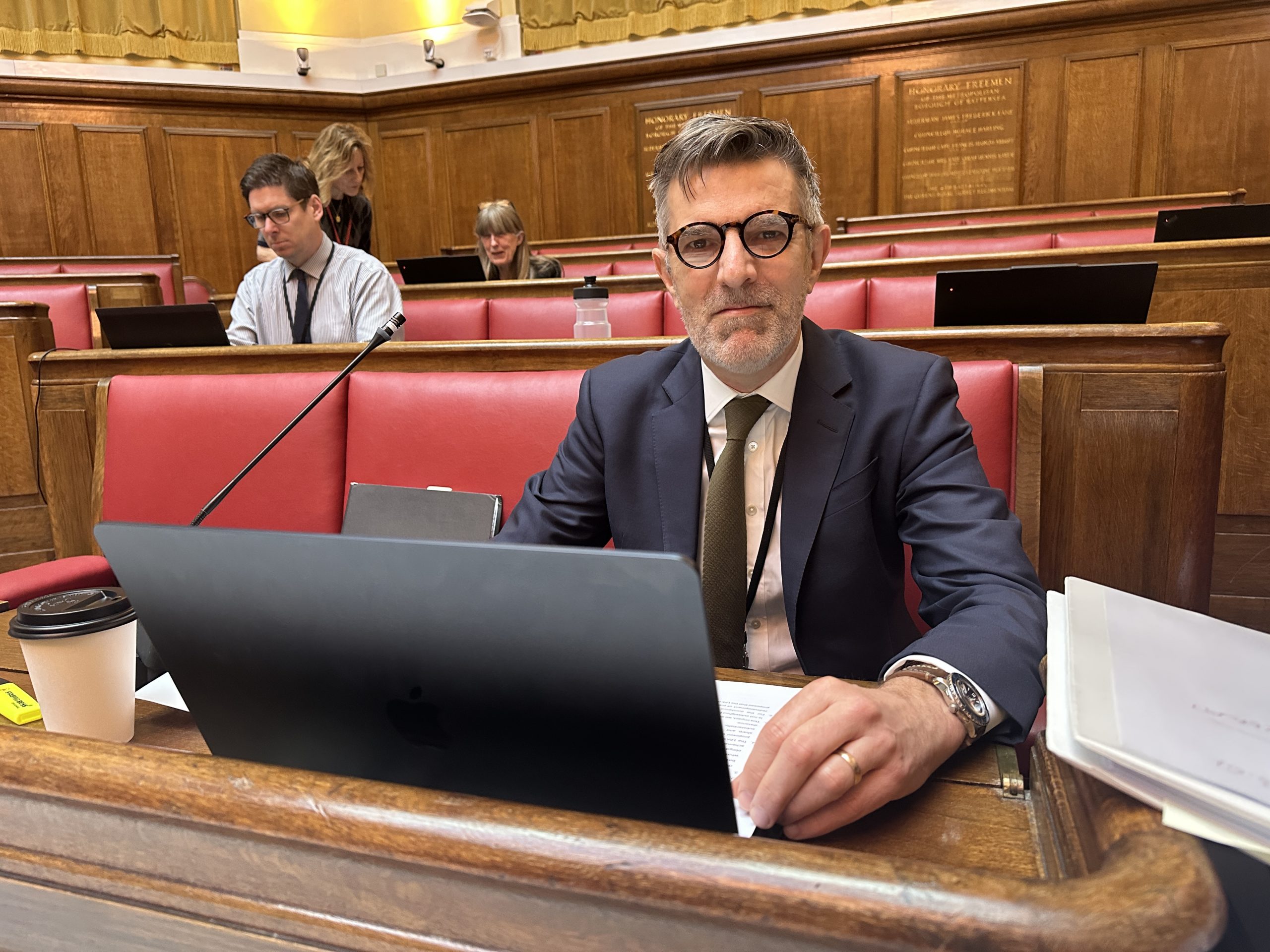
Douglas Edwards KC
Wandsworth Council’s barrister, Douglas Edwards KC, doubled down — repeatedly hammering home the scheme’s scale. The council had already branded the tower “grossly unacceptable” — and Edwards made clear that position had not shifted. He warned the Inspector the building would loom over a “sensitive” stretch of the Thames, taking in Battersea Bridge, Chelsea Embankment and Battersea Park. Historic England, he reminded the inquiry, had already condemned it as “harmful and incongruous” — and feared it could open the floodgates to more high-rises.
And in a key moment, Edwards pushed back hard on Rockwell’s housing argument. “London’s housing need is addressed strategically through the London Plan — not by individual speculative applications,” he said. His conclusion was stark: “The proposal causes substantial harm. Planning permission should be refused.”
During a break, murmurs rippled through the chamber — with many sensing the council and residents had landed heavy blows. But then came Rockwell’s counterattack. Up stepped Harris. Well, he remained seated, which was just as well because his speech would last one hour and 25 minutes (shared with an assistant). In a Welsh lilt, his delivery was crisp and polished as he retraced the case for the defence.
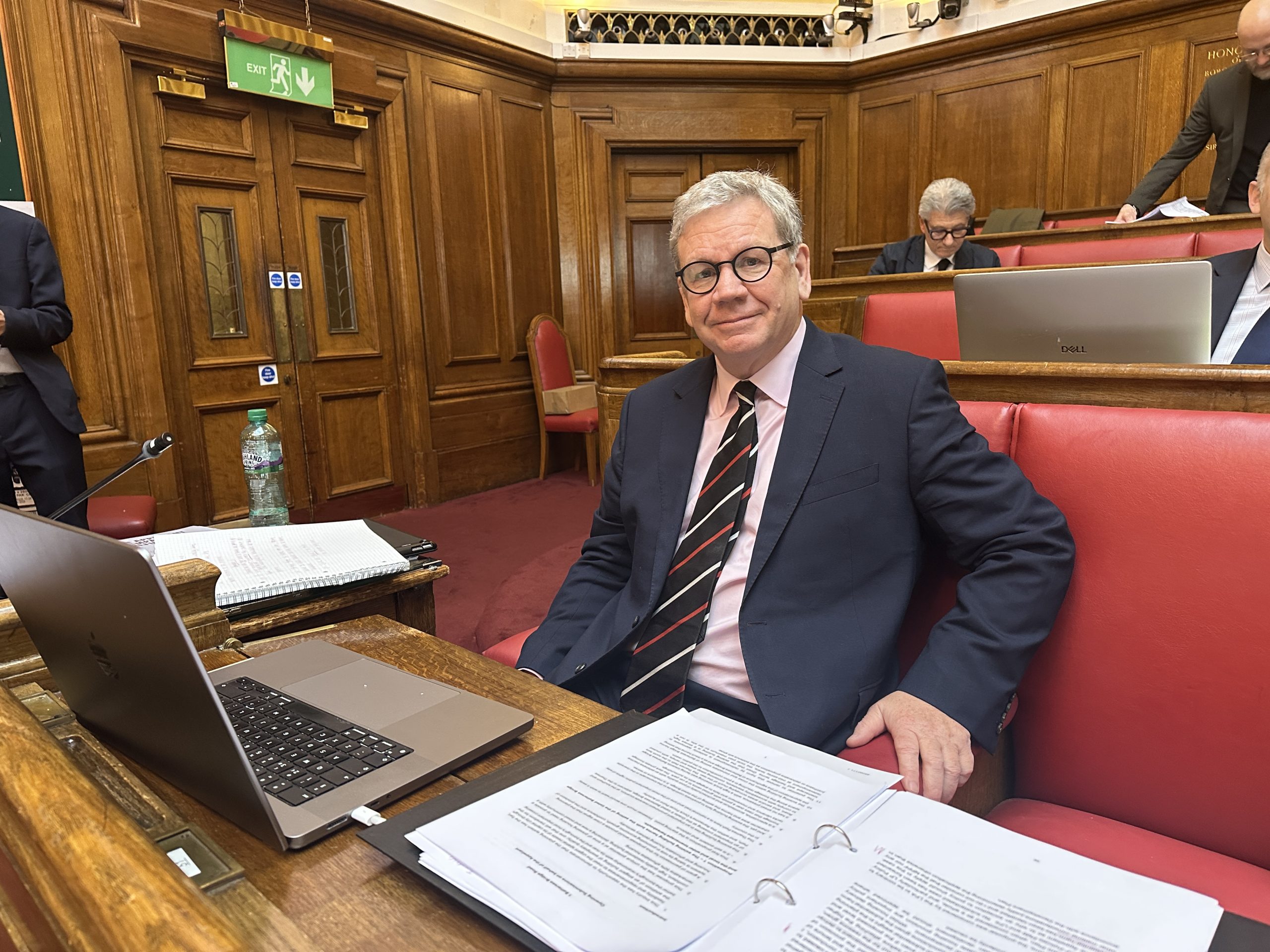
Russell Harris KC
In a touching aside, Harris told the inquiry that he had written his closing statement whilst sitting by Battersea Bridge, literally looking at the Glassmill building. Clearly, the sight of all that 1980s mirrored glass had not inspired affectionate prose. He went on to describe it as a “harmful” site, a “sad hymn” of which “all [should] be collectively ashamed”. No one during the inquiry had spoken in defence of Glassmill’s architectural merit, but Harris clearly felt it necessary to throw bricks at its glass.
On the wonders of Rockwell’s vision, Harris stuck loyally to the hymn sheet. This development, he insisted, was “a unique opportunity”. Far from dominating the skyline, the new tower would “enhance” the Thames and sit comfortably beside Battersea Bridge, which, he argued, “could take a tall building”. He also praised “the very talented” Terry Farell for his design, saying “this building represents his last work”.
Harris went on to say that the tower was a “building of strength” and would be “a literal front door to Wandsworth”. The certainty of his passion gave the impression that he held the key to that very door. Maybe Harris loves the tower so much that he secretly longs for it to be built near his own home.
Harris also went on the offensive and tore into Wandsworth’s planning rules: “The local plan is out of date… it is not a bar to tall buildings,” he declared. He also castigated the pre-application advice he claimed was given to Rockwell during “12-14 meetings”. He said that during that time there was “not a single request” for the tower to be of “mid height”. He dismissed ideas of building a lower tower at this location as “a confection”, “implausible and undeliverable”.
Housing was Harris’ central matter of mitigation. With London needing 66,000 homes per year, he said the scheme’s affordable housing offer was “integral” to its very design — and dismissed the council’s stance as dangerously complacent.
He also directly condemned two key council officers who had given evidence. Referring to council planner Joanna Chambers, who had suggested it wasn’t Wandsworth’s job to meet the London-wide need for housing, Harris shot back: “That is a staggering and, we fear, wrong-headed position.” He also took aim at another council witness Ben Eley, accusing him of overstating the tower’s visual impact.
Even a late intervention from the Environment Agency — demanding proof the build wouldn’t damage nearby Thames flood defences — failed to derail Rockwell’s case. Harris insisted a full flood risk assessment had been carried out and that the scheme posed no threat to the river’s protective barriers.
It is two years since Rockwell Property announced its plans for One Battersea Bridge. The inquiry has lasted seven days. Hundreds – maybe even thousands – of pages of notes and scores of A3 pages with computer images have been analysed and debated.
Now, the fate of the communities living along this strip of Battersea and Chelsea rest with one woman. Will Inspector Gilbert allow Rockwell’s appeal and grant permission, or dismiss it? She will deliver her decision in early May.
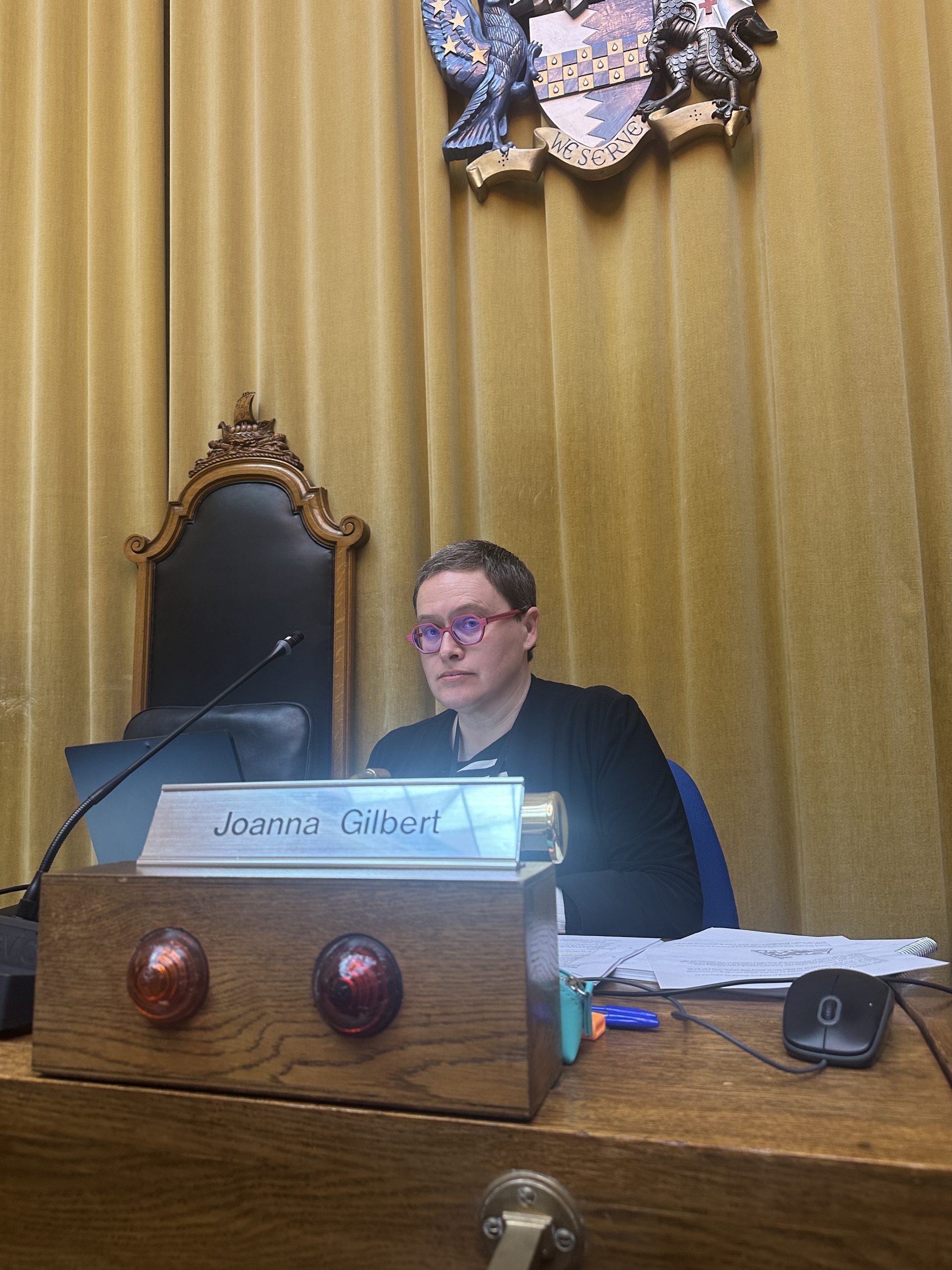
Inspector Joanne Gilbert