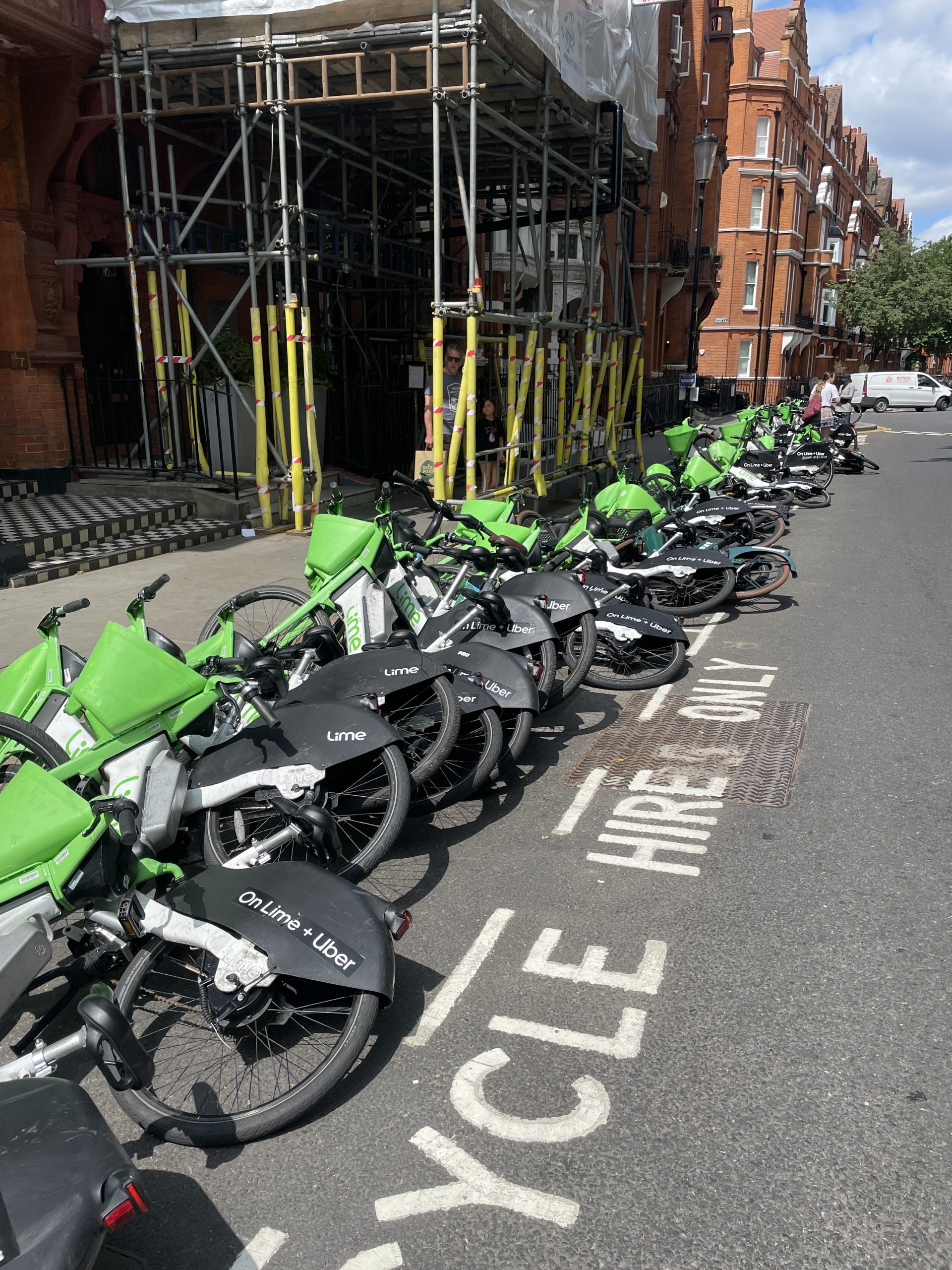
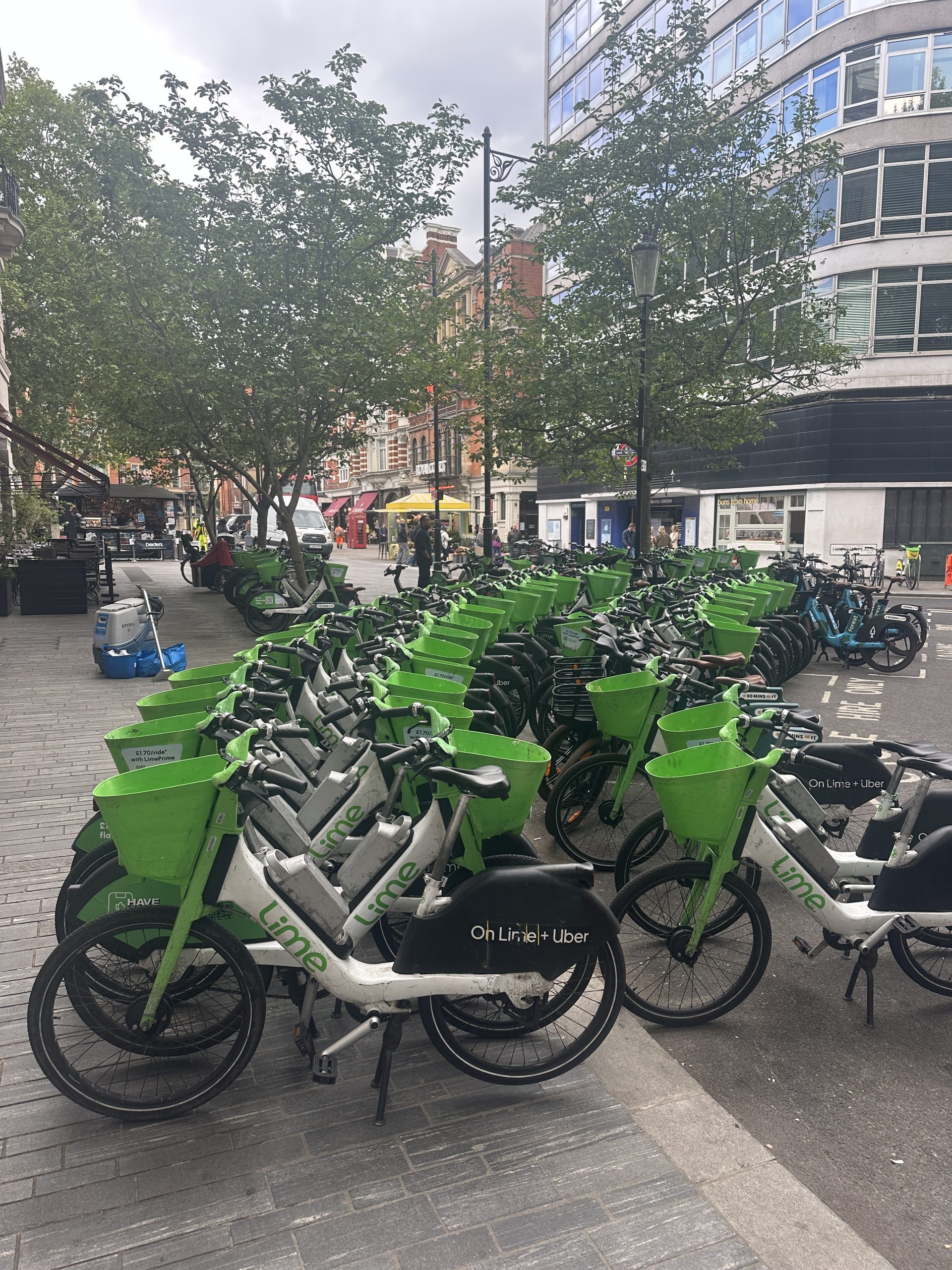
Rental giants have paid more than £381,000 after thousands of bikes were hauled off the streets—but fed-up residents are still finding pavements blocked.
Kensington and Chelsea Council has seized a staggering 3,330 dangerously or obstructively parked rental e-bikes in a major street-clearing crackdown.
More than 2,000 bikes have been removed in 2026 alone, according to figures published by RBKC on October 30. Operators have paid more than £381,000 in removal and storage charges since the crackdown began in January 2025.
The price of recovering a seized bike has now risen to £100 as the council battles the growing cost of collecting and storing them. But despite the huge haul, residents are still reporting bikes dumped across pavements and spilling out of packed parking bays.
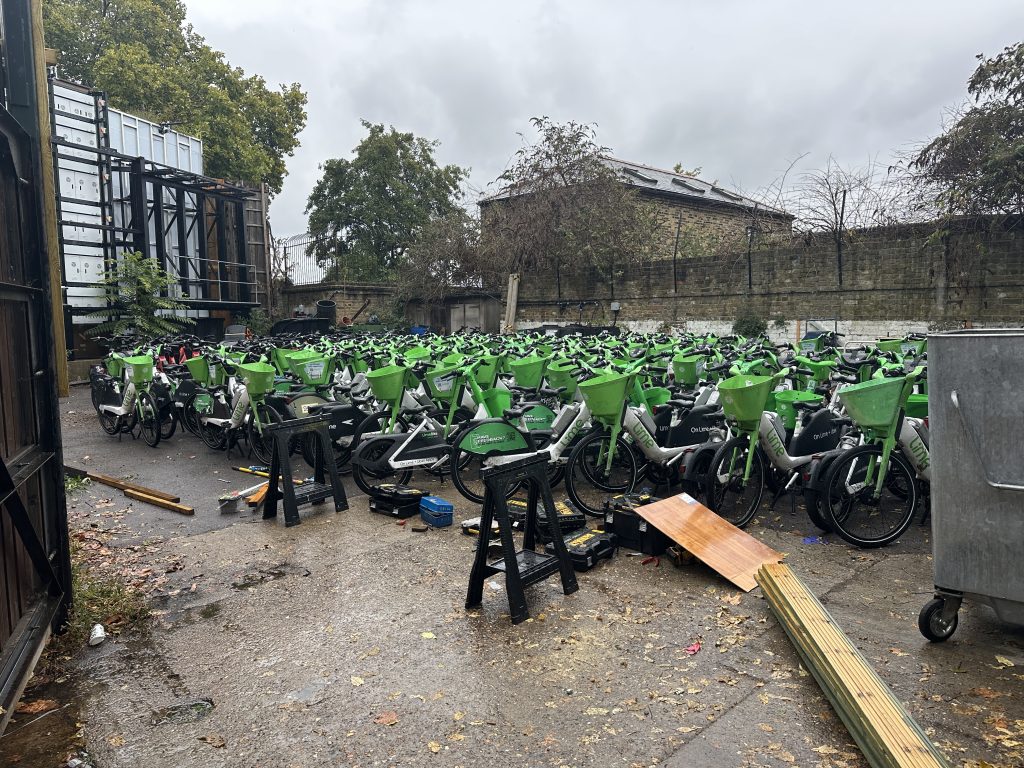
Kerching: Seized e-bikes at Lots Road storage centre ©Rob McGibbon/TCC
Now RBKC has written to rental giants Lime, Forest, Voi and Bolt, warning them to clean up their act. The council wants the firms to rein in the number of bikes flooding borough streets, stop bays overflowing and respond faster when bikes are abandoned.
It is also demanding access to live data so officers can check whether companies are sticking to agreed fleet limits. The four operators have agreed to meet the council before the end of November.
RBKC says tougher enforcement—and changes to its voluntary agreements with the firms—could follow if the mess continues. Cllr Johnny Thalassites (Holland, Conservative), lead member for resident services, planning and enforcement, said 3,330 seizures should have been a wake-up call.
But bikes are still being dumped across pavements, forcing some people to step into the road to get past. Disabled residents, older people and parents with pushchairs are among those particularly affected.
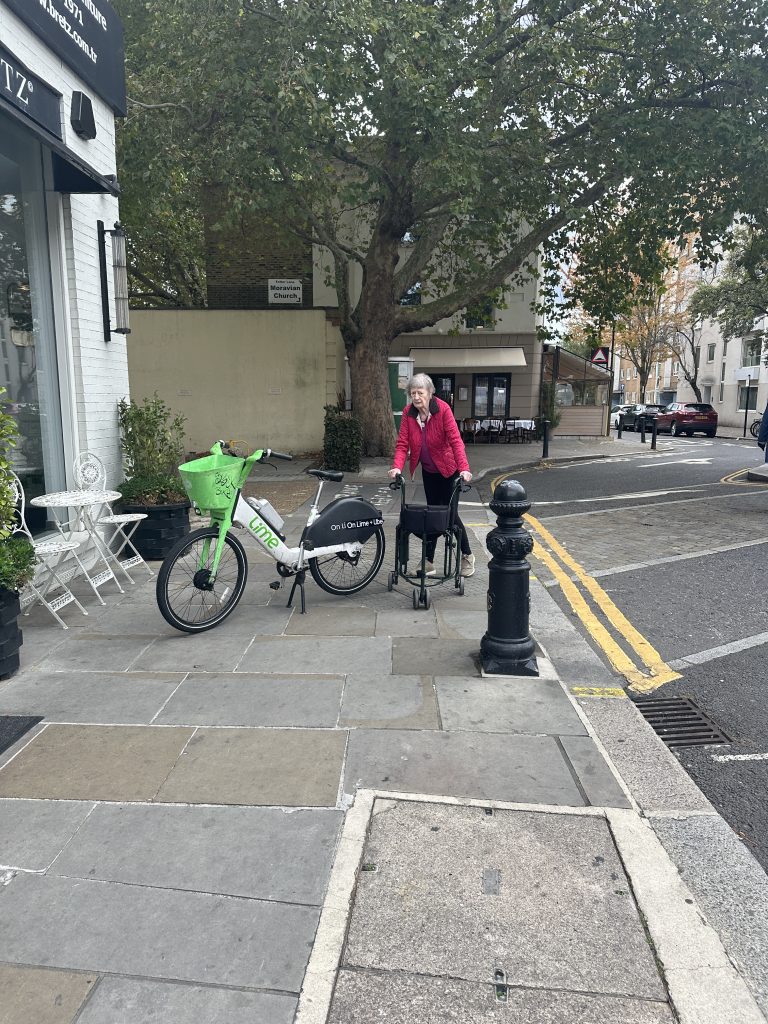
A vulnerable resident negotiates an inconsiderately parked Lime bike ©Rob McGibbon/TCC
The council is installing another 27 dedicated e-bike bays following a public consultation. However, Cllr Josh Rendall (Con, Stanley), lead member for transport, parks and clean streets, warned that more spaces alone would not solve the problem.
He said operators must take proper control of their fleets, respond quickly when bikes are badly parked and make sure riders follow the rules.
The latest figures raise a big question: is RBKC’s crackdown actually working?
By June, the council had seized 2,516 rental bikes. The new total means another 814 were hauled away in just four months.
Yet RBKC’s powers remain limited.
Its agreements with the operators are voluntary, meaning the council cannot legally stop a company trading in the borough, enforce maximum fleet sizes or prevent firms placing too many bikes in one area.
Officers can seize a bike immediately only when it poses a serious obstruction or safety risk. In less serious cases, the operator must first be given time to move it.
A promised London-wide licensing system should eventually give Transport for London stronger powers over fleet sizes, parking and data sharing.
But RBKC’s own guidance suggests the scheme may not begin until late 2028.
The council has not revealed how many of the 3,330 seized bikes belonged to each company.
It has also kept quiet about how much the operation costs, which streets are the worst hotspots and how often bikes are removed repeatedly from the same locations.
The Citizen has asked Lime, Forest, Voi and Bolt whether they accept the council’s figures—and what they plan to do before facing RBKC later this month.
-

- Sloane Square – ©Rob McGibbon/TCC
-
- Park Walk ©Rob McGibbon/TCC